
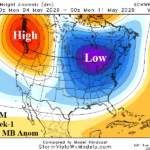
Major Snowmelt Warm-up in Southwest Canada Ahead!
04/28/2026, 4:45 pm EDT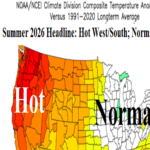
Updated Summer 2026 Outlook: Hot Northwest/West and Gulf States; Wet Midwest; Late Summer Drought Mid-south/Texas
05/04/2026, 5:28 am EDT
Climate Impact Company Week 2-4 Outlook
North America
Issued: Thursday, April 30, 2026
Highlight: Western warmth reluctant to spread east; Great Plains mostly drier than normal.
Charts of the day: Great Plains D2-D4 drought expansion in May; Risk of >90F PJM Sector.
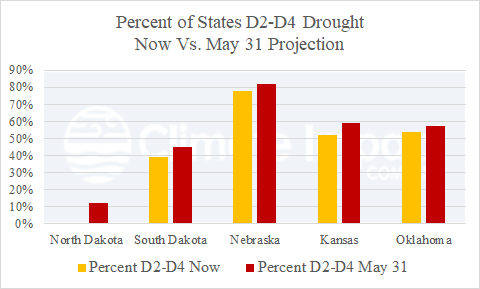
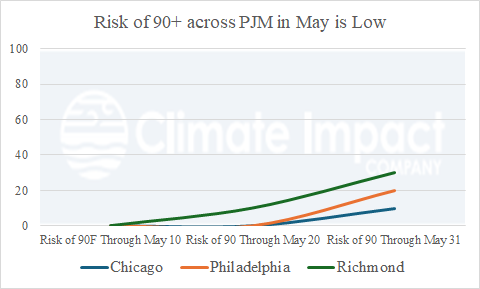
Discussion: During May, D2-D4 drought conditions develop in North Dakota and expand by 3-7% in South Dakota, Nebraska, Kansas, and Oklahoma. Across the PJM region stretching from Chicago to the Mid-Atlantic region, the risk of >90F is low during May.
Week-2 Ahead Forecast valid May 10-17, 2026: Dry pattern; Warmth continues West.
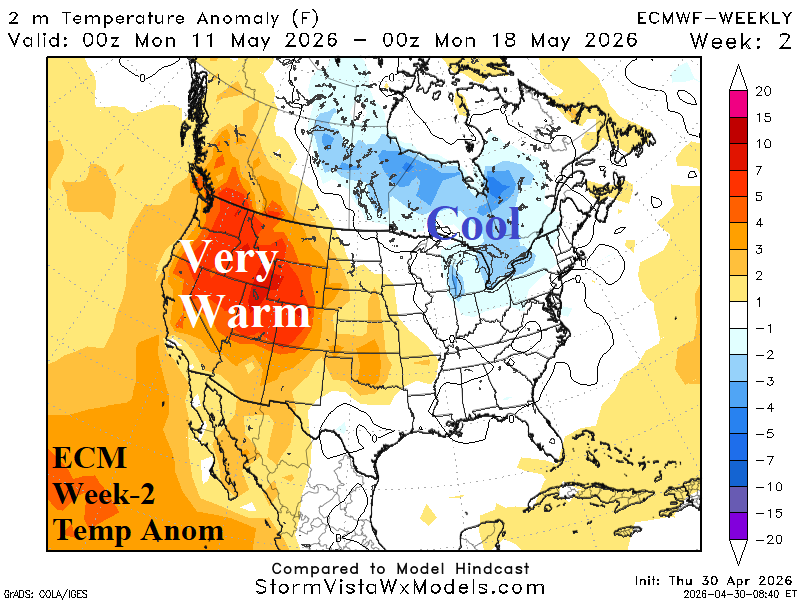
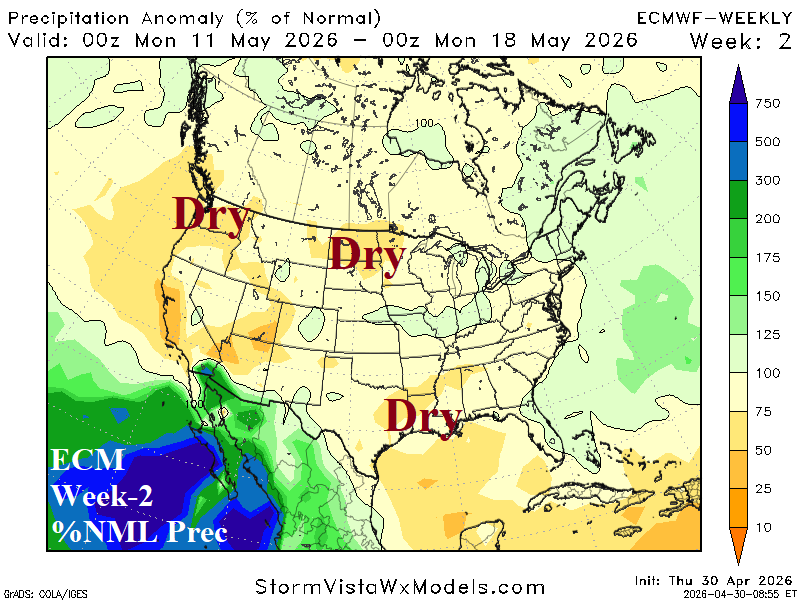
Discussion: Maintained is the warm ridge West and cool trough in the Great Lakes region. Much of the U.S. is cutoff from Gulf moisture therefore a nationally drier than normal regime into mid-May.
Week-3 Ahead Forecast valid May 17-24, 2026: Staying very warm Northwest and drier than normal Great Plains.
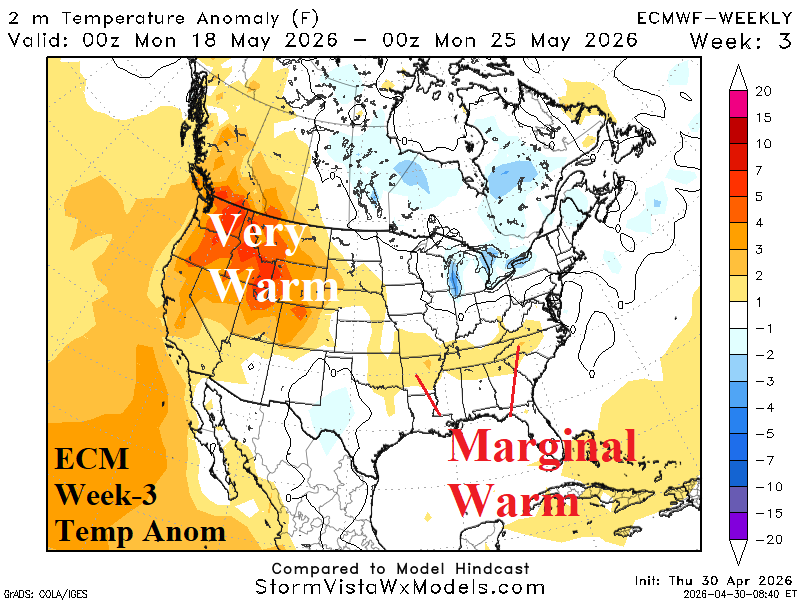
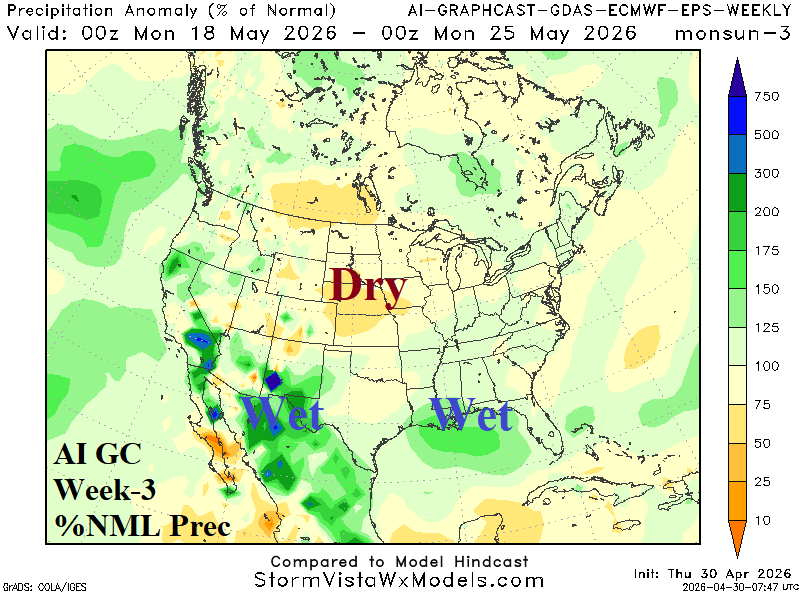
Discussion: Favored is a persistent Northwest U.S. high pressure ridge supporting a broad very warm pattern which moderates extending to the Mid-south States. Graph Cast precipitation outlooks favor a preferred dry persistence in the Great Plains with wet weather in the southern latitudes having limited intensity.
Week-4 Ahead Forecast valid May 24-31, 2026: Warm pattern expands; Patchy Great Plains thundershowers.
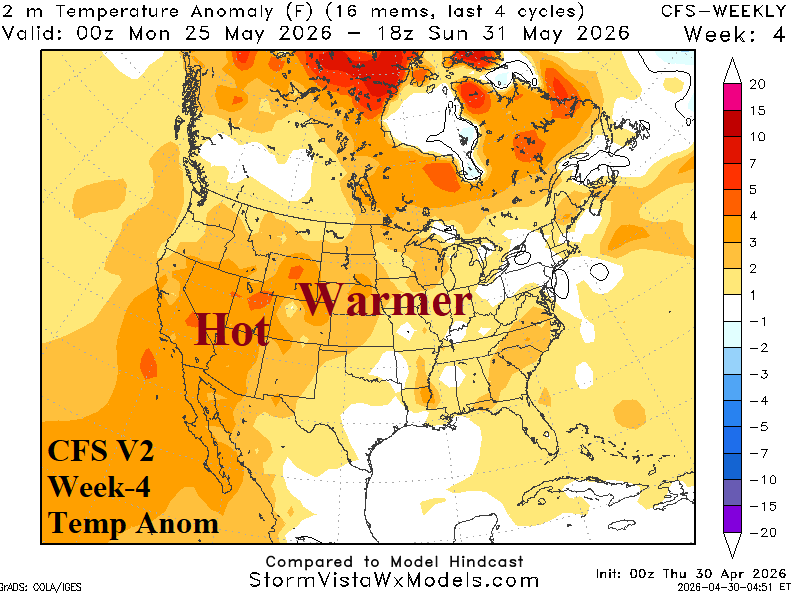
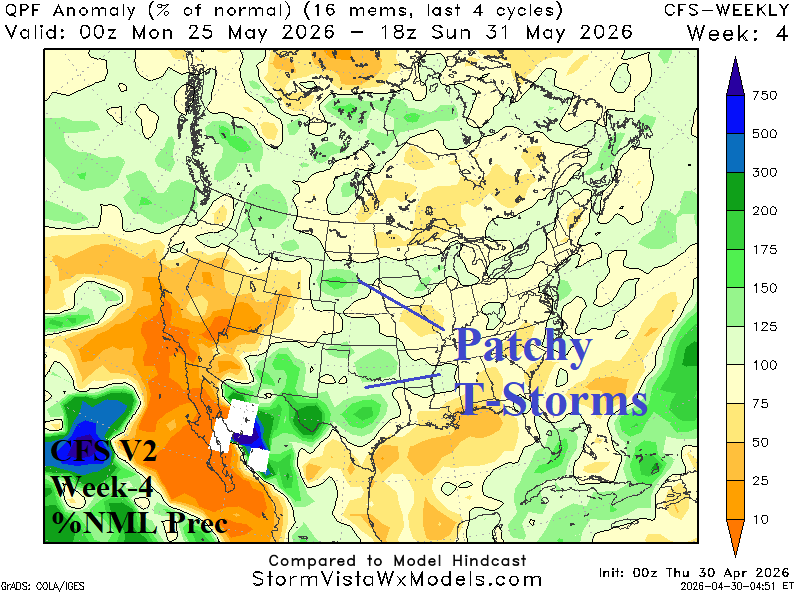
Discussion: CFS V2 parks the upper ridge over the West U.S. drought region allowing attendant anomalous warmth to expand eastward. Patchy thundershowers are indicated in the Great Plains while California and vicinity are dry. The Southeast U.S. shifts hotter.