04/30/2026, 12:17 pm EDT

Slow Expansion of Great Plains D2-D4 Drought

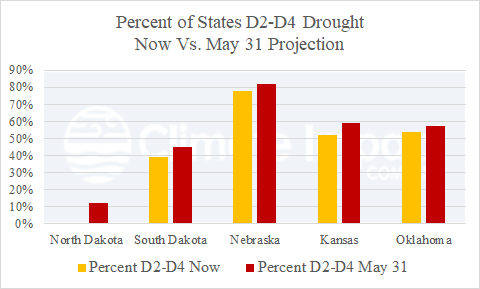
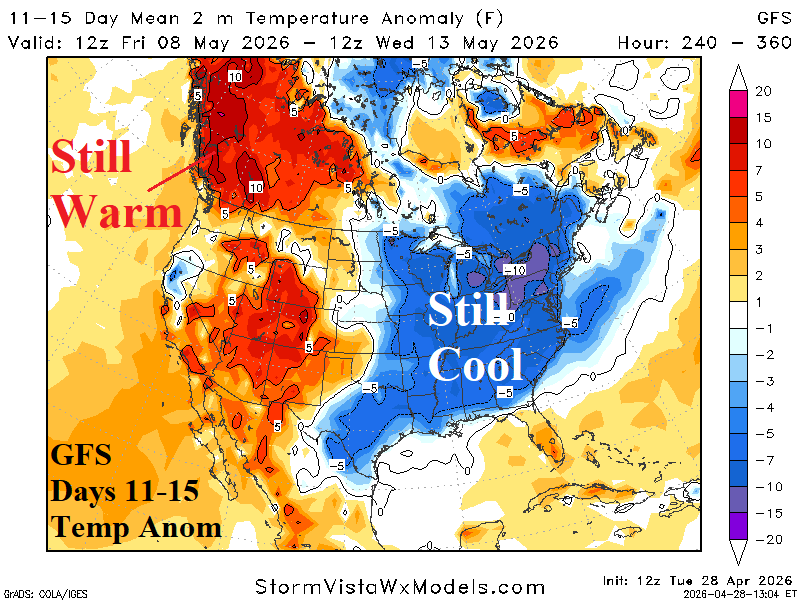
During May, D2-D4 drought conditions develop in North Dakota and expand by 3-7% in South Dakota, Nebraska, Kansas, and Oklahoma. The weeklies forecast for May indicate each state in the Great Plains is generally drier than normal with best chance of thundershowers later in the month when the pattern turns warmer than normal.
04/30/2026, 8:38 am EDT

Forecast Models Developing Strong Wet Bias in Midwest States

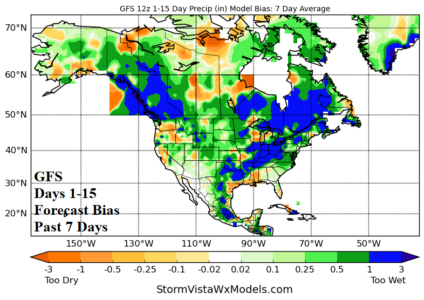
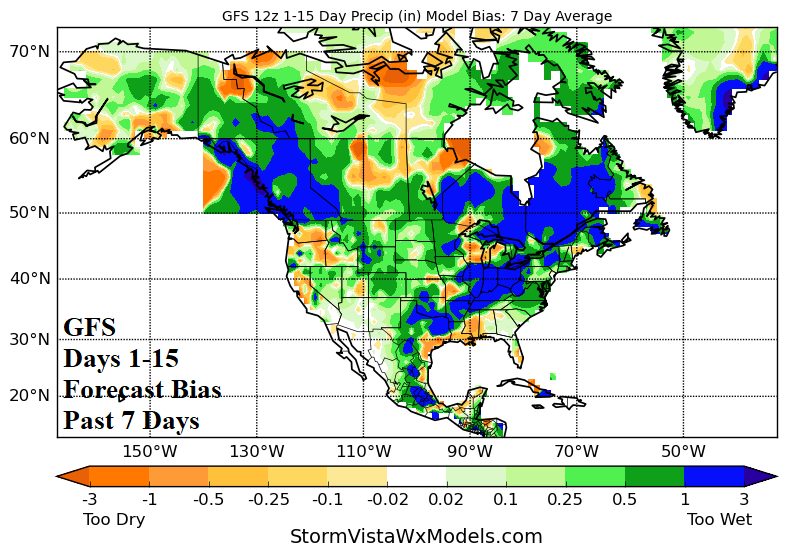
During the past week, wet weather was observed in California to the Great Basin, Interior Northwest, and Midwest U.S. The GFS precipitation forecasts for this period are notably too wet in Southwest Canada (where no rain or snow occurred) and the Mid-south to Midwest and Northeast States. The ECM ENS verification has a larger area of wet bias including the Southeast States and Great Plains.
04/29/2026, 5:45 am EDT

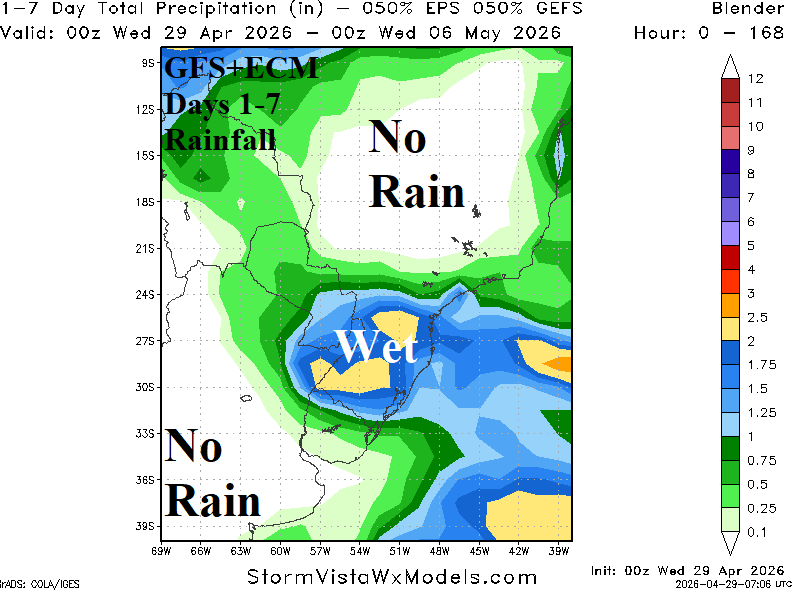
Very Dry Brazil (Except Southeast) and Midwest U.S. Ahead

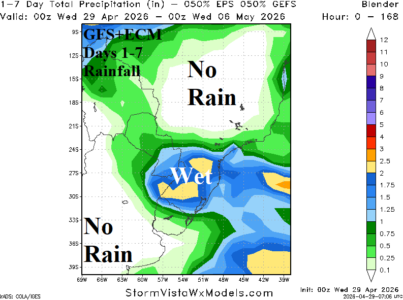
No rain is in the forecast for Central/East Brazil (and Central Argentina) through the next 7+days while heavy rain shifts across Parana. In the U.S. a cool and dry air mass spreads across the Great Plains and Midwest States .
04/28/2026, 4:45 pm EDT

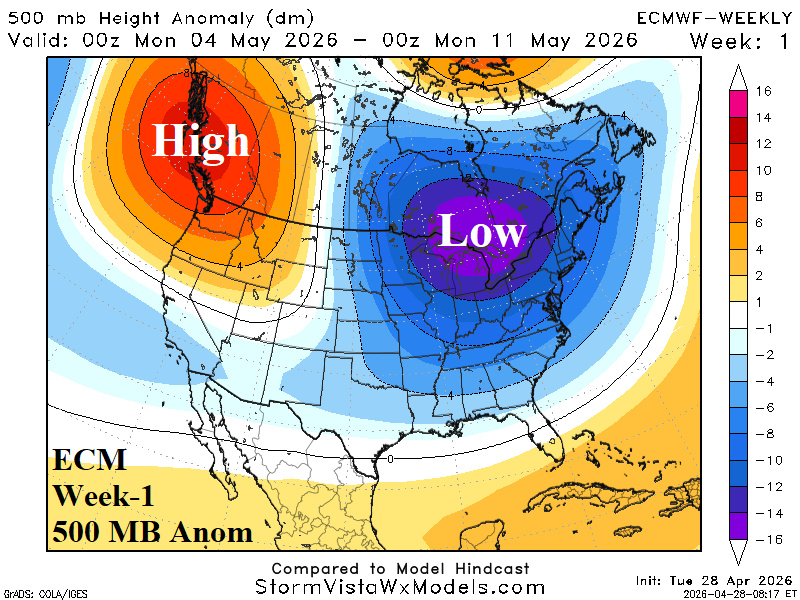
Major Snowmelt Warm-up in Southwest Canada Ahead!

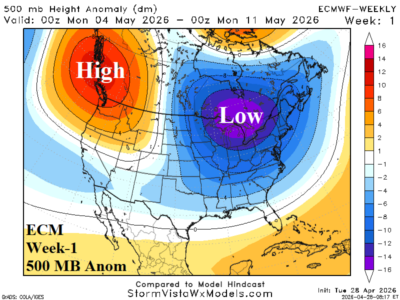
As the upper trough deepens in the East next week, a compensating upper ridge crests over Southwest Canada. Copious mid-to-high-level mountain snow melts with peak warming early next week. Serious flooding is possible in this scenario!
04/28/2026, 4:40 pm EDT

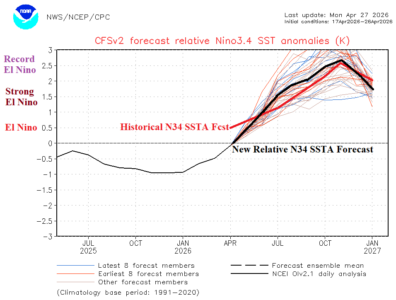
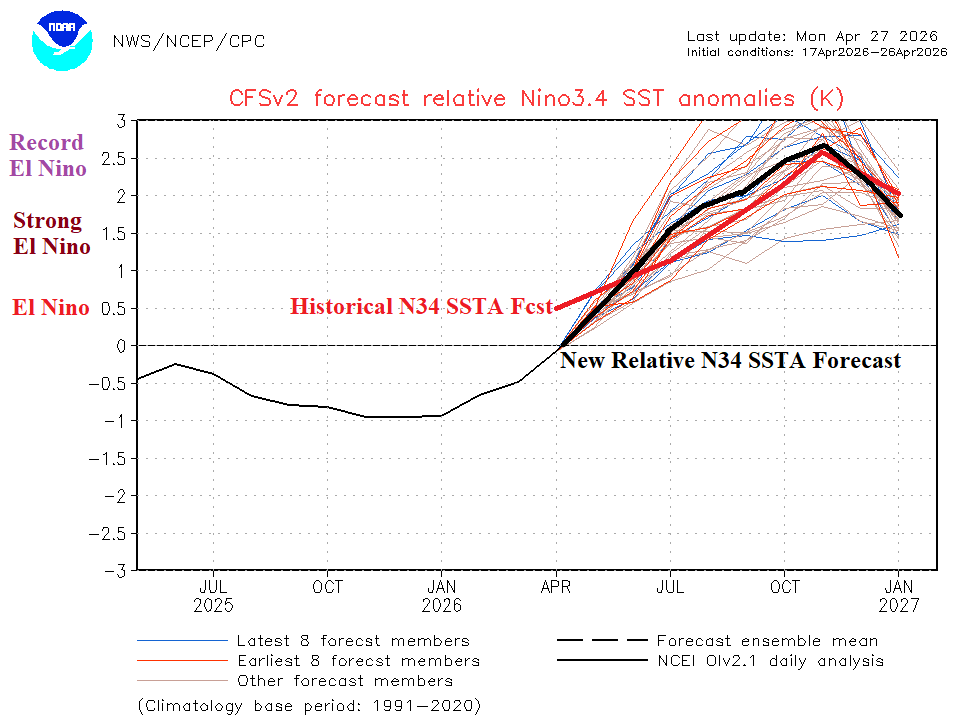
Relative Vs. Historical Nino34 SSTA Forecast for 2026

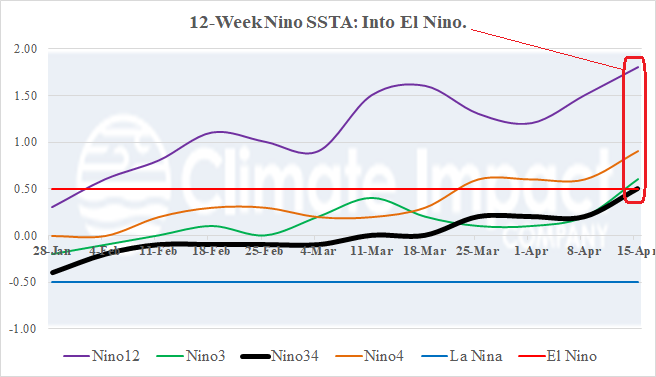
The traditional Nino SSTA weekly observations indicate the El Nino threshold is surpassed by all Nino regions. However, the new relative Nino index maintains neutral ENSO phase. The relative Nino SSTA are moderately cooler than historical indices. As of earlier this year, the relative Nino index is used to identify and forecast ENSO phase by NOAA and Australia Bureau of Meteorology.
04/24/2026, 8:43 am EDT

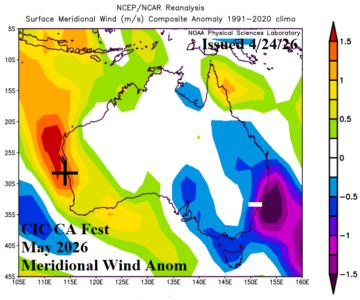
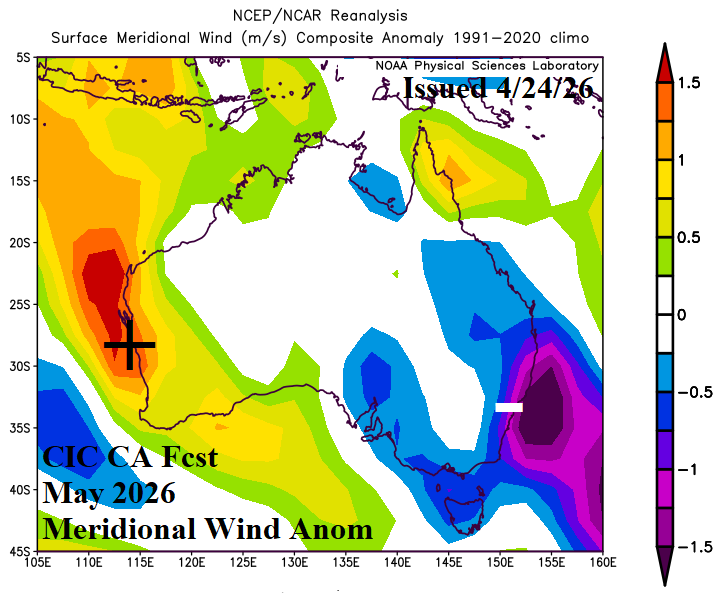
Comparing (Climate Impact Co.) Constructed Analog and (ECMWF) Probabilistic Wind Climate Forecast for Australia

The Australia month 1-3 ahead wind speed forecast is presented using two methodologies: 1.) Climate Impact Company constructed analog for zonal and meridional wind directions and 2.) ECMWF probabilistic outlook. ECMWF is generally indicating lighter than normal wind speeds for the 3-month period except above normal wind speeds for the Southeast Coast during JUN/JUL (agreeable to the CIC-CA outlook).
04/23/2026, 8:28 am EDT

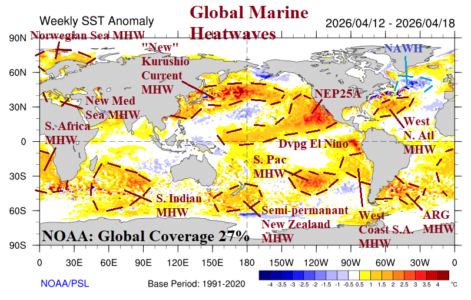
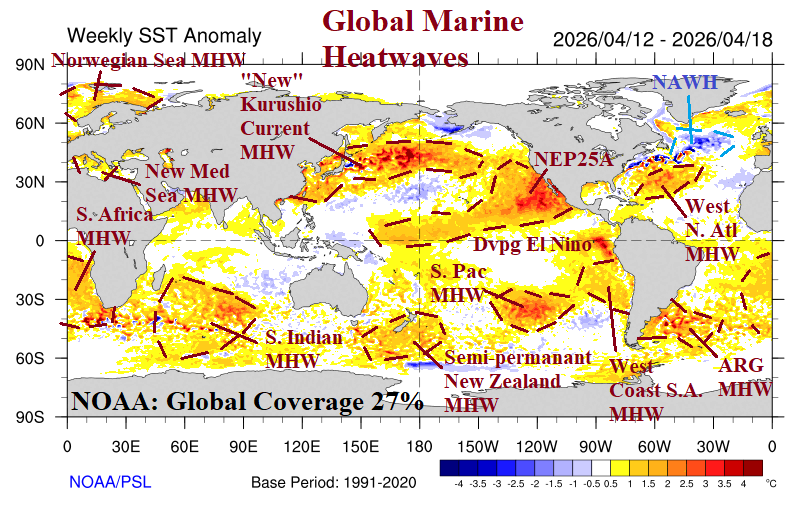
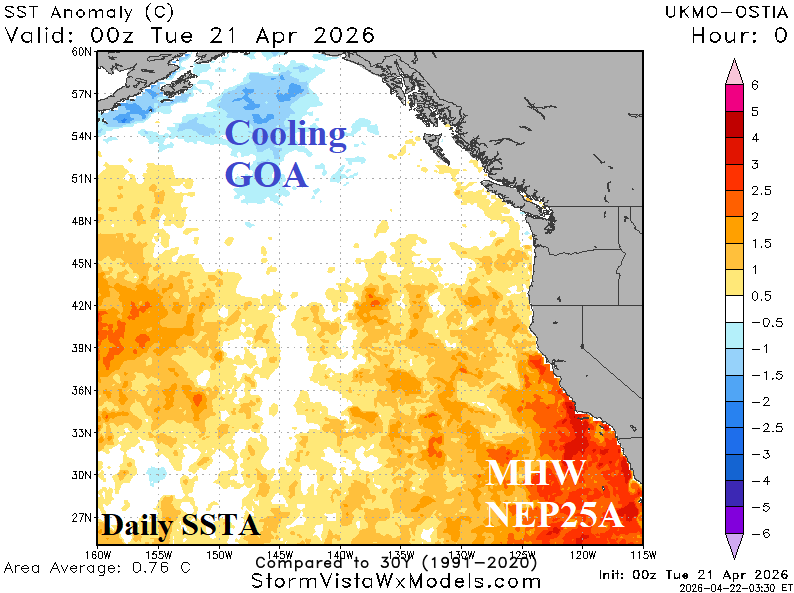
Global Marine Heatwave Aerial Coverage is 27% and Forecast to Reach 40% Q3/2026

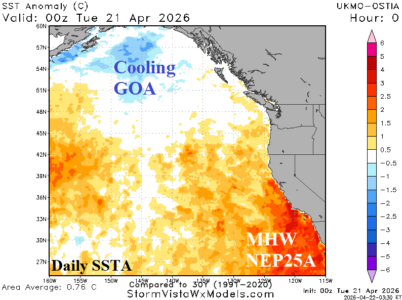
According to NOAA, aerial coverage of global marine heatwaves (MHW) is 27%. The forecast for aerial coverage from early this year, valid for March, was 23%. Consequently, MHW presence is over-achieving. NOAA is forecasting MHW aerial coverage to increase to 40% later this year, in part due to El Nino.
04/22/2026, 8:31 am EDT

Piles of Western Canada Snow; When Does it Melt?

In June, during development of the strongest El Nino’s on record (82-83, 97-98, 15-16, and 23-24), high pressure ridging has tendency to amplify and drop anchor on Southwest Canada leading to a dry and warm start to meteorological winter. West/Southwest Canada has endured a snowy 2025-26 winter snow season. A rapid melt would cause serious flooding.
04/22/2026, 7:02 am EDT

Wet +IOD Runs Some Interference on Dry El Nino Climate During India Monsoon Season

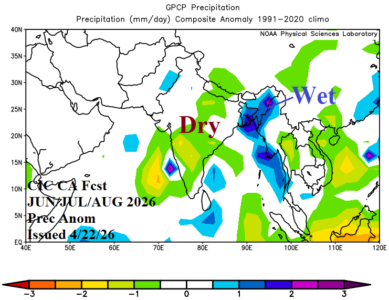
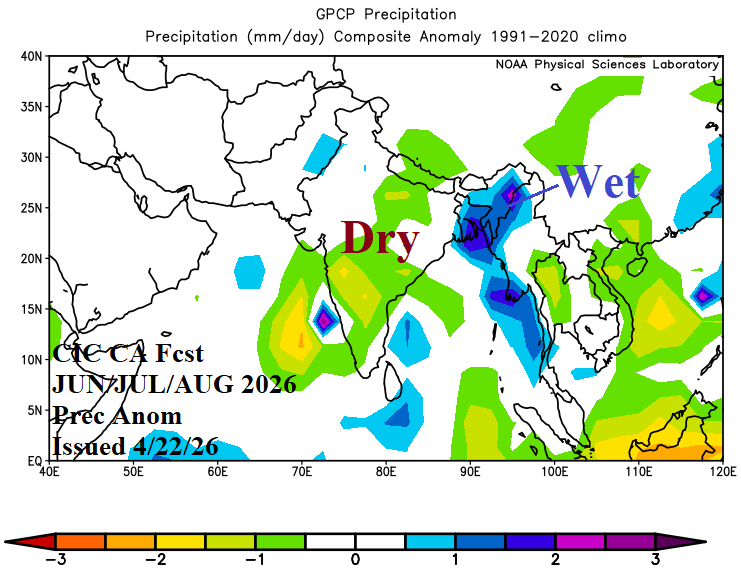
The Climate Impact Company constructed analog climate forecast for summer 2026 across India is issued. The forecast is confidently based on an emerging strong El Nino, which has a drying effect on India and a less confident evolution of positive phase Indian Ocean dipole, normally a wet influence on India climate. The JUN/JUL/AUG 2026 precipitation forecast across India is mostly dry according to CIC although with some locally patchy wet month-to-month areas.
04/21/2026, 11:05 am EDT

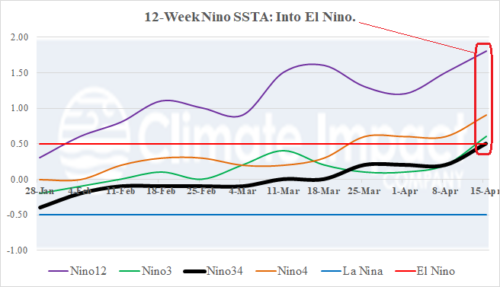
All Nino SSTA Regions Reach El Nino Threshold

The Nino SSTA regions have each passed the El Nino threshold. A NOAA announcement of El Nino onset should occur during May. The subsurface equatorial East Pacific anomalous warmth is immense, and the attendant Kelvin Wave continues to intensify.