
Wet +IOD Runs Some Interference on Dry El Nino Climate During India Monsoon Season
04/22/2026, 7:02 am EDT
Relative Vs. Historical Nino34 SSTA Forecast for 2026
04/28/2026, 4:40 pm EDT
Climate Impact Company Australia Month 1-3 Ahead
CIC Constructed Analog vs. ECMWF Probabilistic Forecasts
Highlight: CIC-CA and ECMWF are most agreeable on the Southeast Coast wind regime, lighter than normal MAY/stronger than normal JUN/JUL.
Executive summary: The Australia month 1-3 ahead wind speed forecast is presented using two methodologies: 1.) Climate Impact Company constructed analog for zonal and meridional wind directions and 2.) ECMWF probabilistic outlook. ECMWF is generally indicating lighter than normal wind speeds for the 3-month period except above normal wind speeds for the Southeast Coast during JUN/JUL. The CIC-CA outlook is (more) granular indicating combinations of lighter/stronger wind speed projections (also) favoring highest wind speeds on the Southeast Coast for JUN/JUL. Generally, CIC-CA indicates above normal wind speeds for western portions of Western Australia and lighter than normal wind speeds for Queensland in MAY and JUL.
May 2026: The CIC-CA outlook favors below normal wind speeds, mainly from the north and south direction, across east and southeast continent in May. The outlook features above normal wind speeds from both zonal and meridional direction across Southwest Australia. ECMWF probabilistic forecasts favor below normal wind speeds across southern continent. The CIC-CA and ECMWF outlooks are agreeable to below normal wind speeds across the Southeast in May.
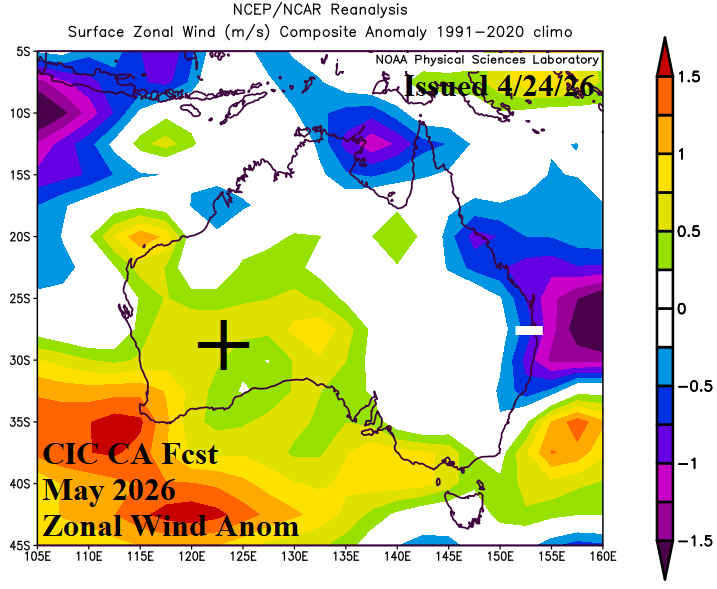
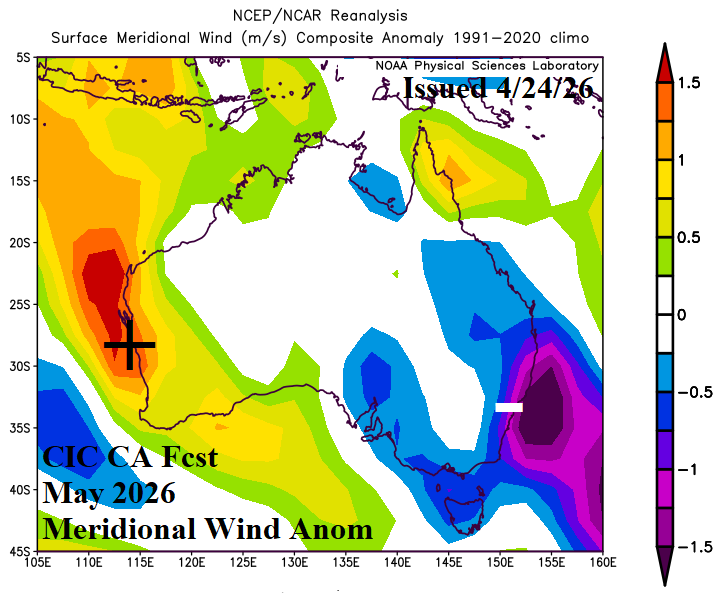
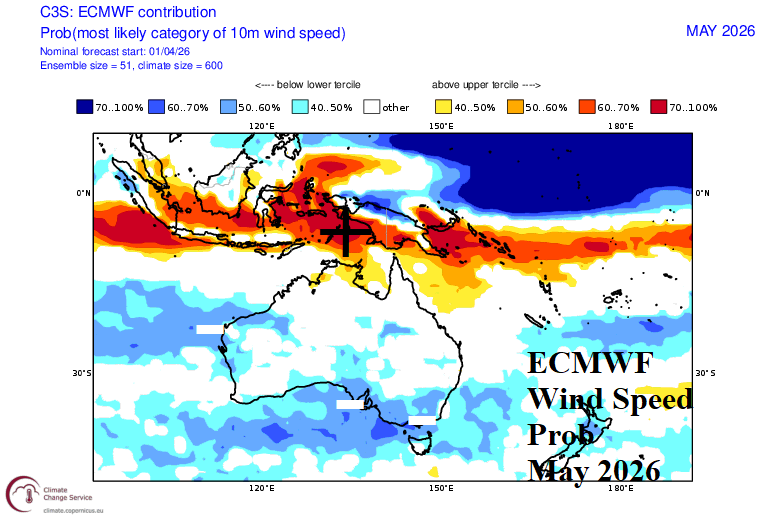
Fig. 1-3: The Climate Impact Company constructed analog zonal and meridional wind speed anomaly forecast for Australia during May 2026 compared to the ECMWF probabilistic windspeed forecast.
June 2026: The CIC-CA forecast supports above normal wind speeds in the Southwest, mostly from the north and south, while support for above normal wind speeds is (also) indicated along the immediate East Coast. The ECMWF probabilistic forecast emphasizes below normal windspeed risk, mostly across the northern half of the continent with above normal wind speed risk on the Southeast Coast. Combining CIC-CA and ECMWF, the highest confidence forecast is above normal wind speeds on the Southeast Coast.
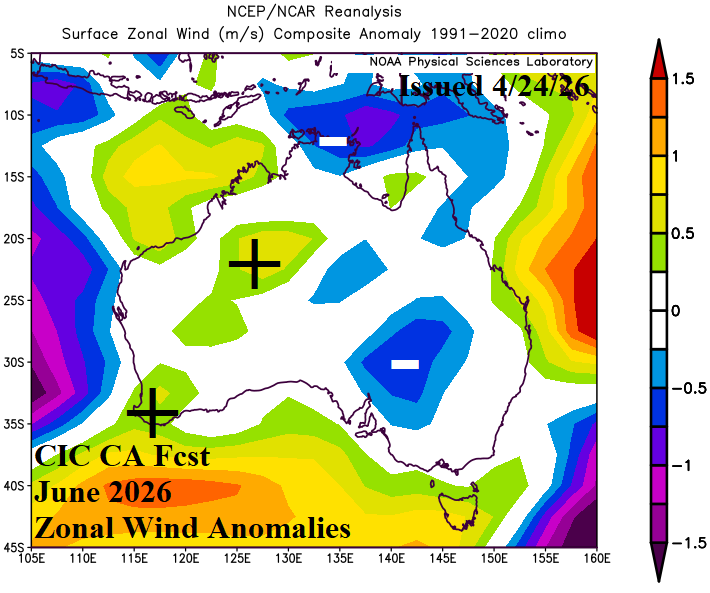
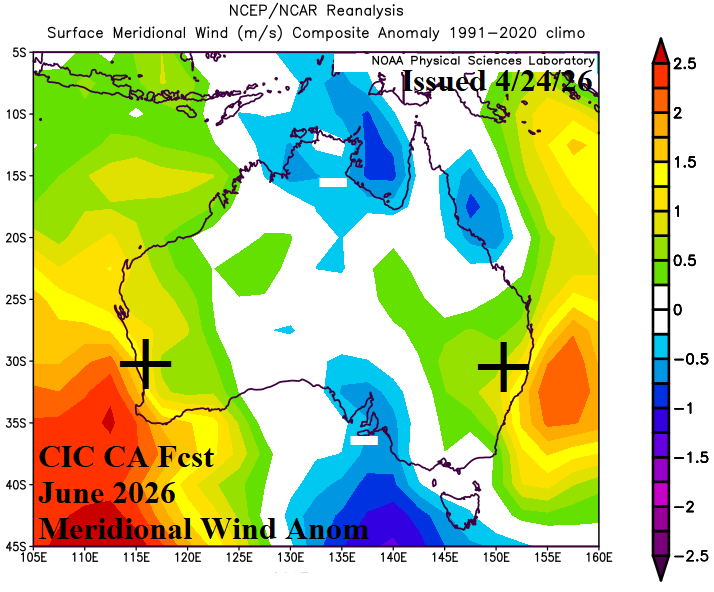
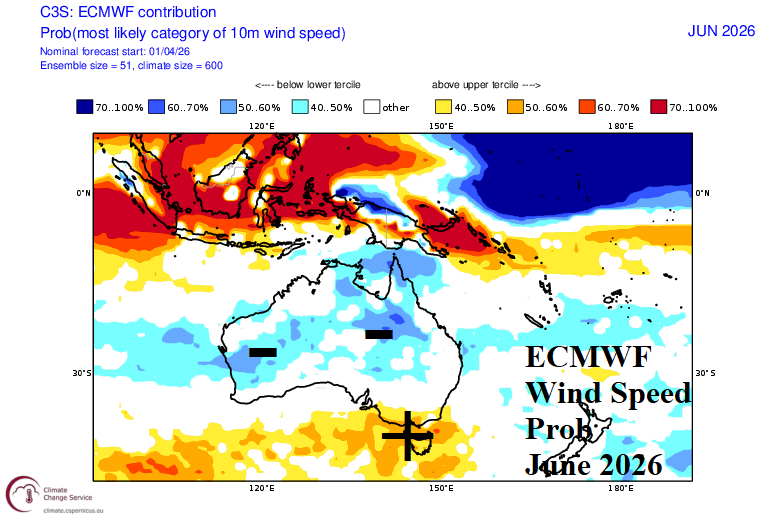
Fig. 4-6: The Climate Impact Company constructed analog zonal and meridional wind speed anomaly forecast for Australia during June 2026 compared to the ECMWF probabilistic windspeed forecast.
July 2026: The CIC-CA outlook favors below normal wind speeds across Queensland. Conversely, support for stronger than normal wind speeds are indicated on the West Coast of Western Australia although southwestern Australia has a sharp conflict between vigorous zonal wind and light meridional wind. Above normal wind speeds continue on the immediate Southeast Coast. ECMWF probabilistic projections maintain below normal wind speed risk except above normal wind speed risk on the Southeast Coast where forecast confidence is above average.
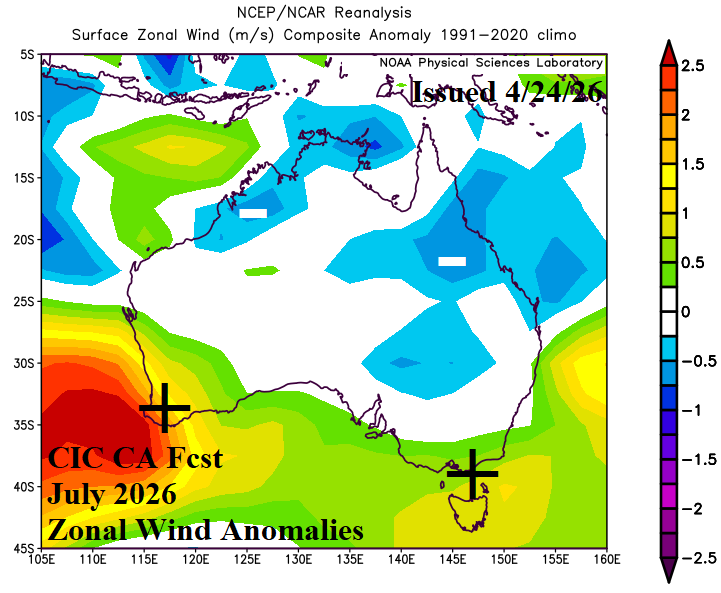
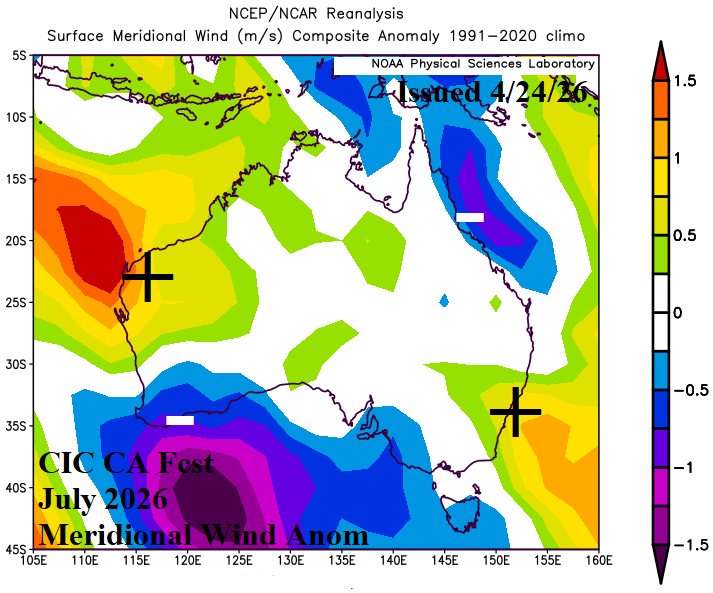
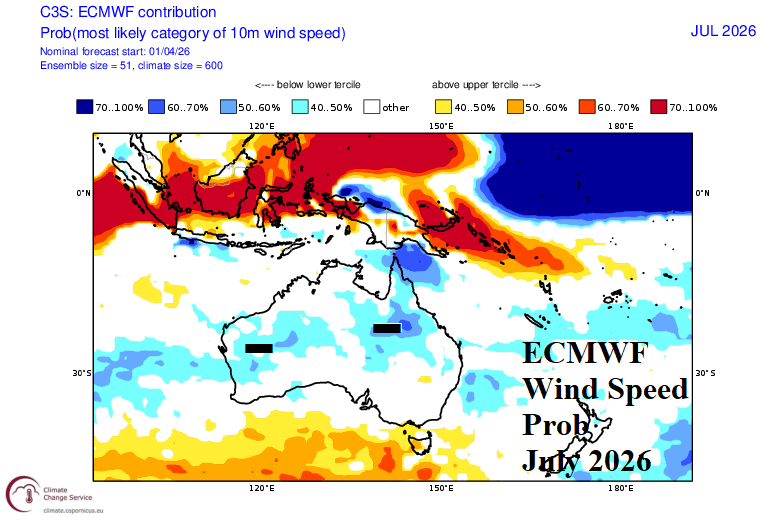
Fig. 7-9: The Climate Impact Company constructed analog zonal and meridional wind speed anomaly forecast for Australia during July 2026 compared to the ECMWF probabilistic windspeed forecast.