02/27/2026, 9:25 am EST

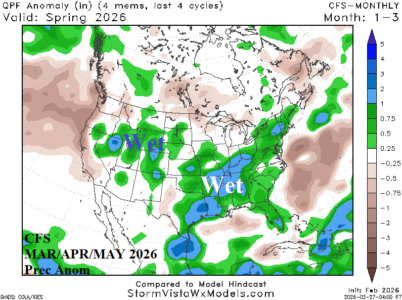
Comparing U.S. and Europe Springtime Rainfall Forecasts

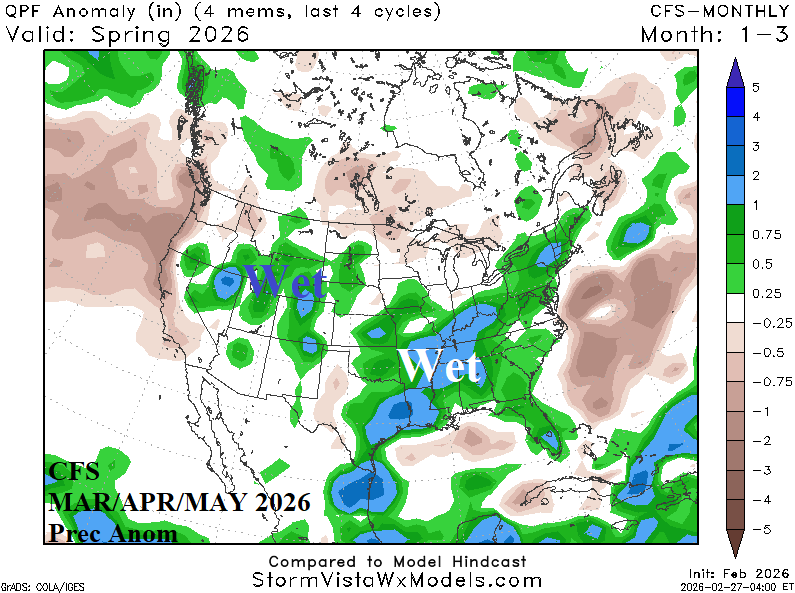
The U.S. meteorological spring 2026 precipitation anomaly forecast is wet biased across the Mid-south U.S. and vicinity stretching into parts of the East U.S. Above normal precipitation is (also) projected for the Great Basin. The Climate Impact Company constructed analog (CIC-CA) forecast is similarly wet across the Mid-south U.S. but drier in the Midwest U.S. Both forecasts are drier than normal on the U.S. West Coast.
02/26/2026, 12:09 pm EST

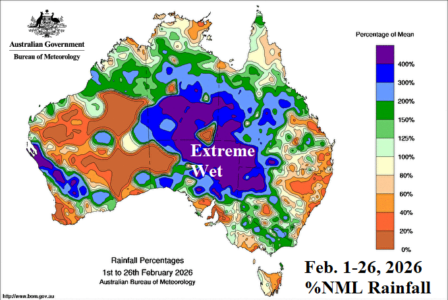
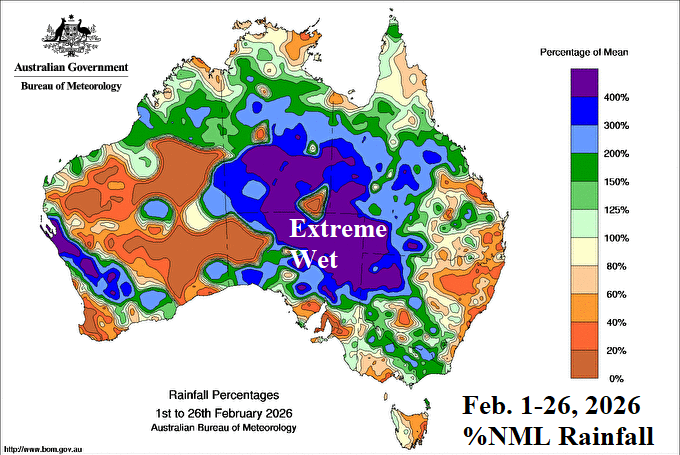
Extreme Rainfall in Australia during February 2026

Prohibitive rain has drenched Central and South-central Australia in February. Parts of northeastern New south Wales and interior Western Australia were drier than normal.
02/26/2026, 8:07 am EST

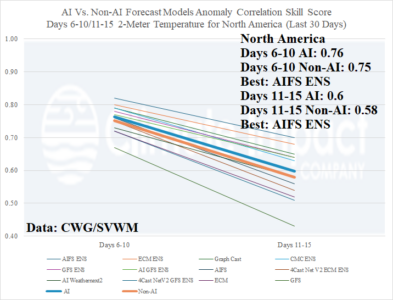
AI Models SLIGHTLY Better Than NON-AI Models Past 30 Days NA and EU

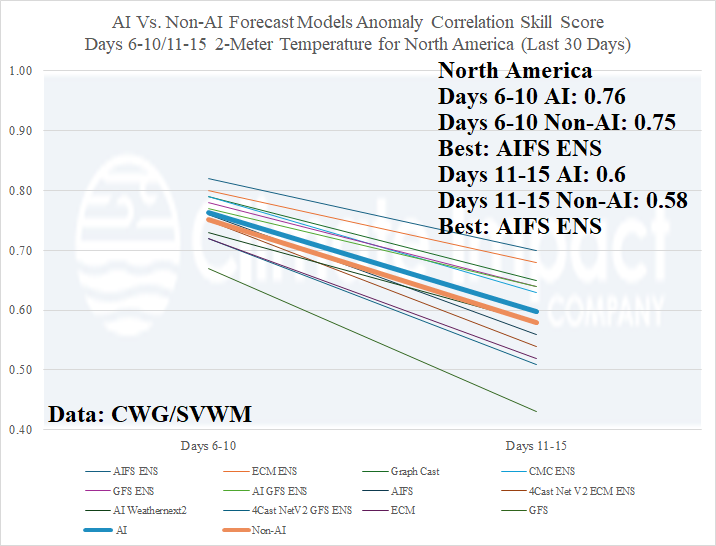
A comparison of anomaly correlation skill scores of 2-meter temperature forecasts between AI and NON-AI forecast models for North America and Europe yield extremely close results with AI edging NON-AI for both the 6-10-day and 11-15-day timeframes for North America while NON-AI managed to finish slightly ahead of AI in Europe for the 11-15-day period. The review is based on skill scores from the past 30 days.
02/25/2026, 8:15 am EST

MJO Supports Warm Expansion of the U.S. Pattern

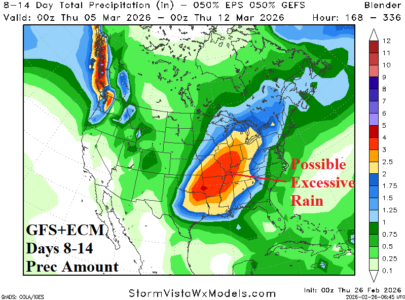
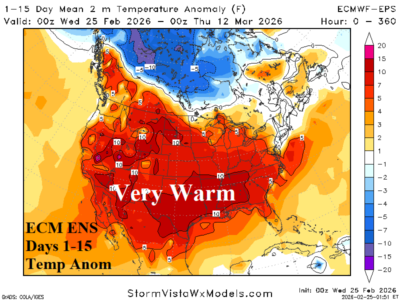
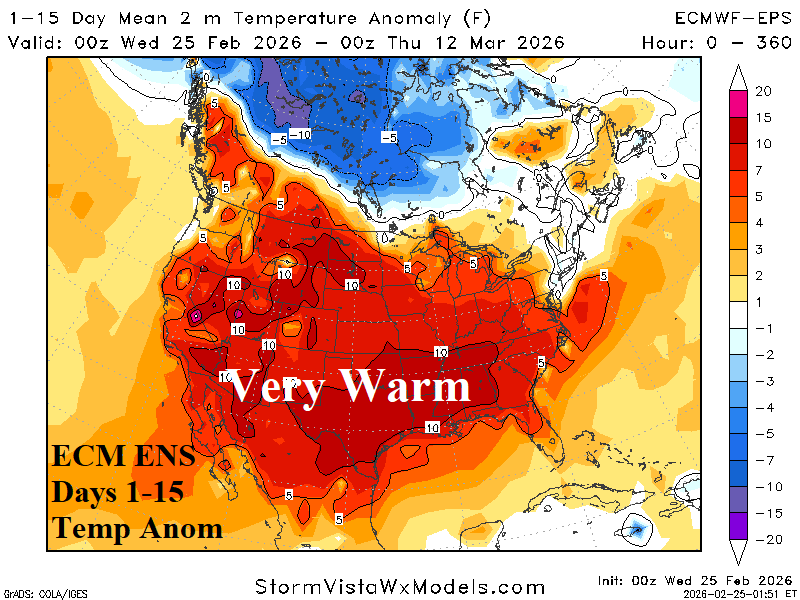
Eastward shifting of the Madden Julian oscillation from north of Australia to The Dateline over the next 2 weeks is increasingly likely and with intensity which will promote expansion of the warm U.S. pattern eventually including the snowbound Northeast U.S. The Central/East-central U.S. turn wet!
02/25/2026, 8:10 am EST

Positive Scandinavia Index Supports Warmer/Drier Europe Climate, But Will it Last?

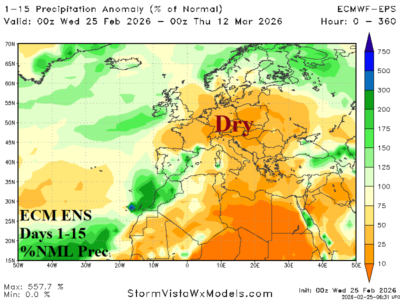
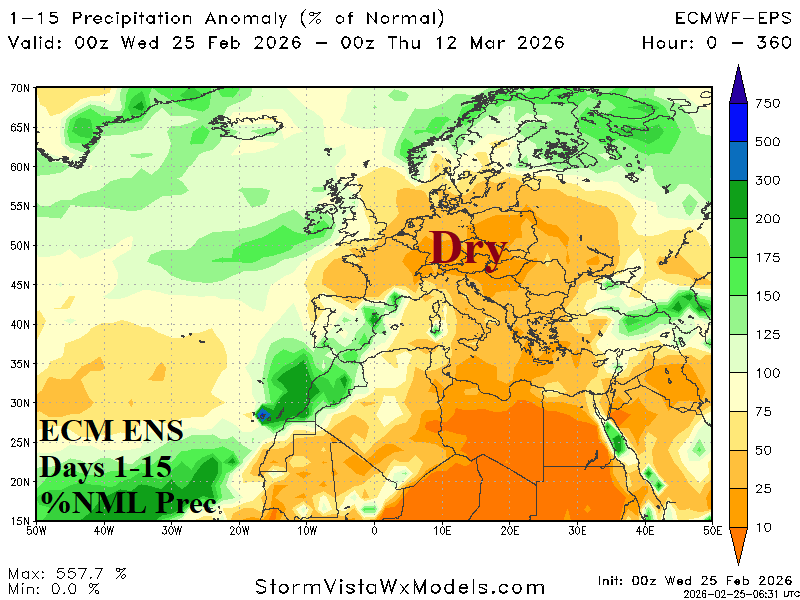
Positive phase of the Scandinavia index (SCAND) supports anomalous warmth and dryness across much of Europe through the next week. SCAND shifts to negative phase during the medium range which suggests a cooler and potentially wetter regime. The 15-day population weight Europe temperature forecast identifies the warmth through 10 days shifting cooler in the extended range.
02/22/2026, 1:31 pm EST

El Nino Analogs for U.S. Corn Belt JUN-SEP

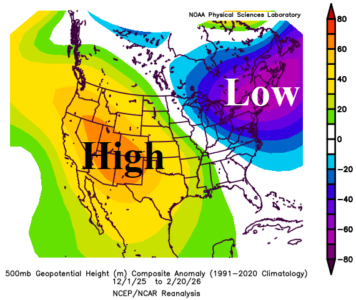
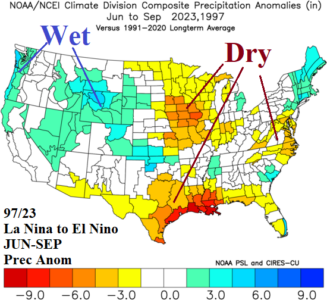
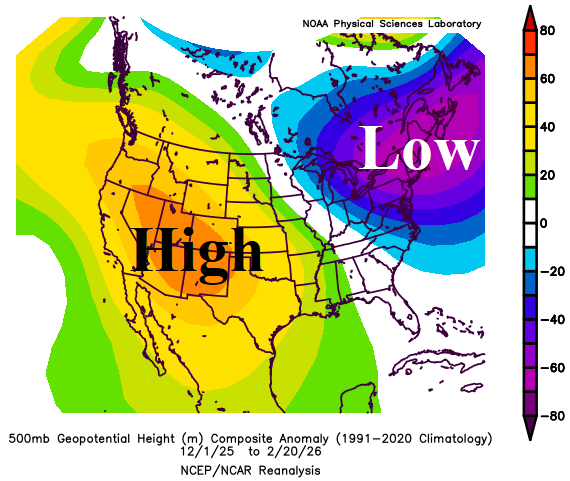
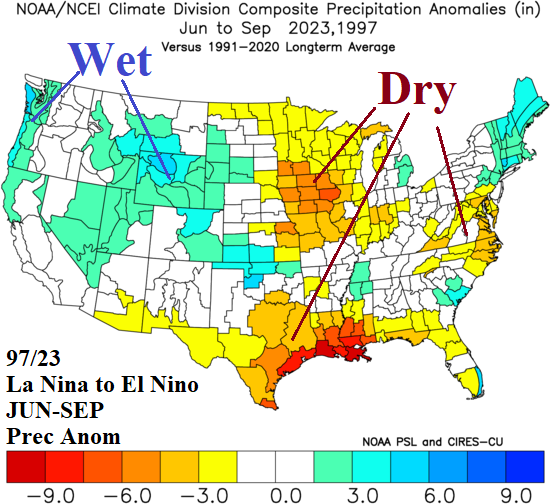
As of mid-February, 73.7% of the U.S. is in a dry-to-drought condition up from 66.2% in mid-December according to NOAA. Harsh D2-D4 drought is observed in 22.6% of the U.S., an increase of almost 10% during the past 2 months. The equatorial East Pacific subsurface is warming dramatically encouraging El Nino ahead! Two La Nina to El Nino first half of year analogs are 1997 and 2023 which featured dryness Iowa JUN-SEP having U.S. Corn Belt implications.
02/22/2026, 1:26 pm EST

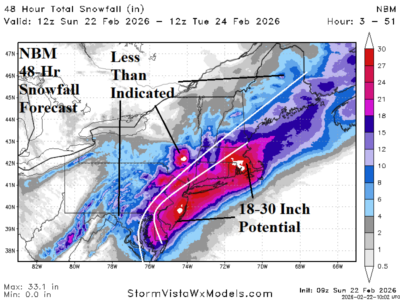
Northeast U.S. Blizzard; High Wind/Coastal Flooding/Widespread Power Outages

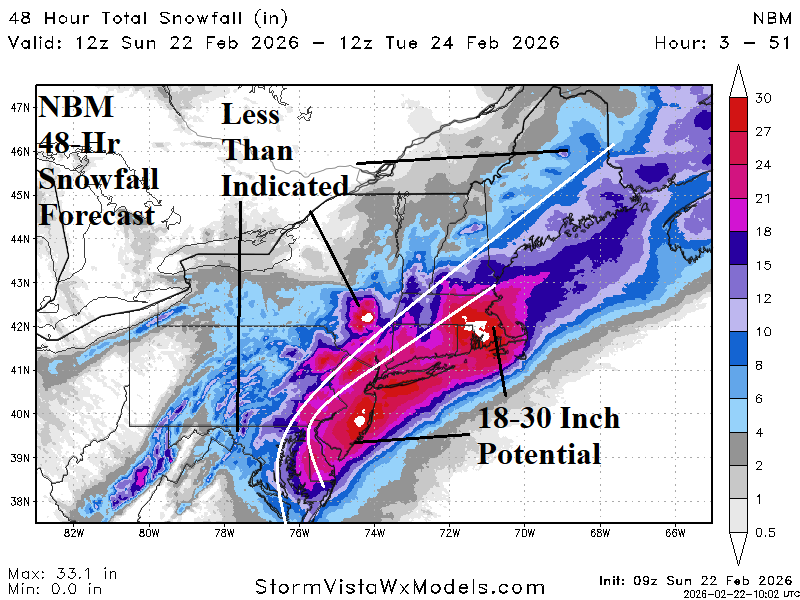
Focus is on the Northeast Corridor blizzard, the first widespread blizzard since January 2022. Blizzard Warnings extend from the Mid-Atlantic Coast to east and south portions of New England. The culprit is a coastal storm developing east-southeast of Norfolk, VA early this afternoon drifting slowly northeastward as a “bomb cyclone” with a central pressure near 970 MB south of Nantucket tomorrow at dawn.
02/21/2026, 1:38 pm EST

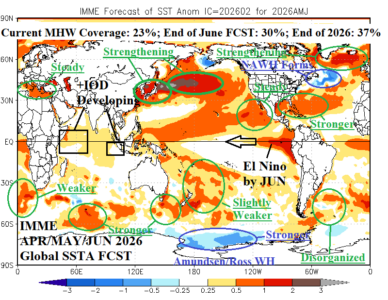
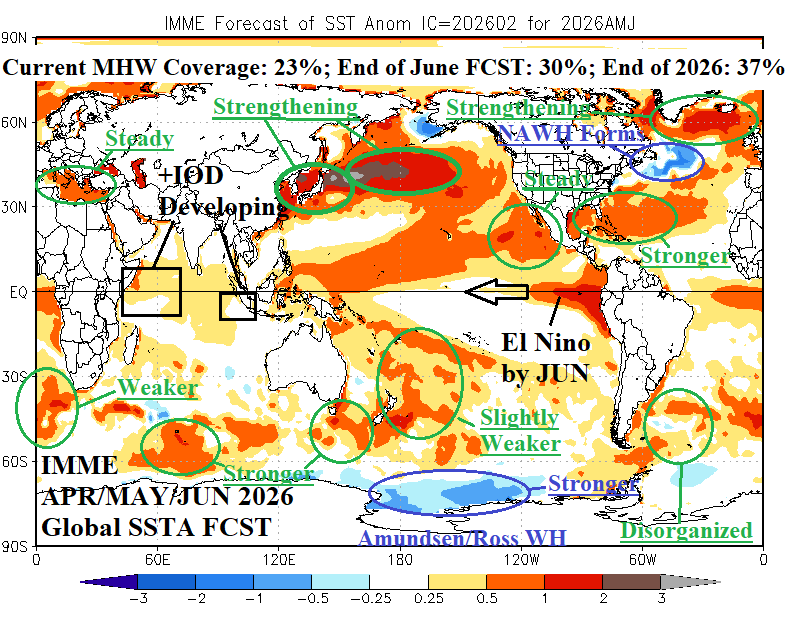
February 2026 Global Marine Heatwaves Outlook: Expect a significant increase in 2026

Combining NOAA and Climate Impact Company (CIC) identification of current global sea surface temperature anomalies (SSTA) and the International Multi-Model Ensemble (IMME) SSTA forecast for APR/MAY/JUN 2026 renders expansion of marine heatwave (MHW) risk for 2026. According to NOAA, aerial coverage of global MHW’s is 23% in FEB-26 and forecast to increase to 30% by mid-year and 37% by end of 2026.
02/20/2026, 9:05 am EST

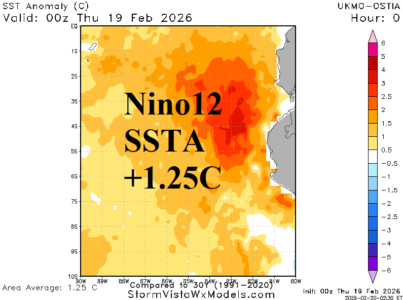
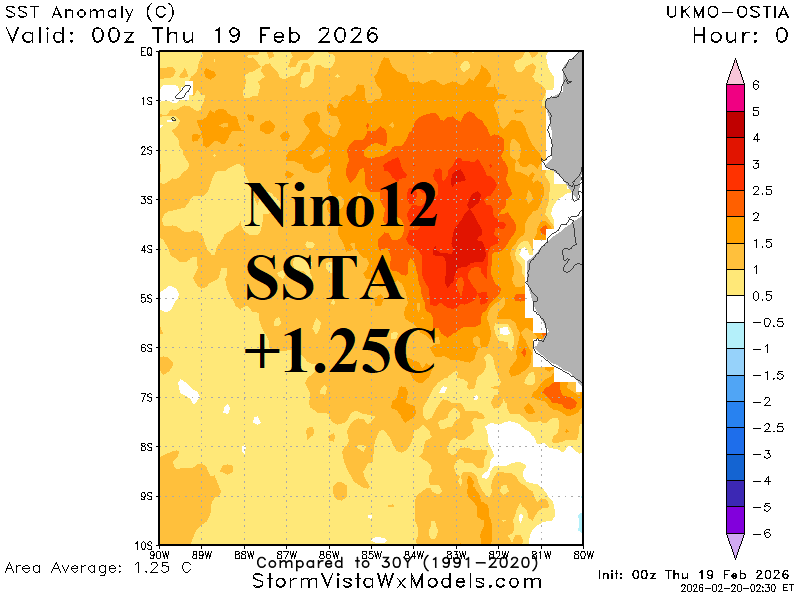
The Warming Nino12 SSTA Region Helps to Inspire Heavy Rain Ahead in Brazil

The rapid warming of the Nino12 SSTA region has caused a wet bias to western South America in recent weeks. However, the moisture from the warm water/high moisture source region is entrained into vigorous upper troughs moving across South America sweeping heavy rain into Brazil while leaving Argentina dry the next 1-2 weeks.
02/20/2026, 5:24 am EST

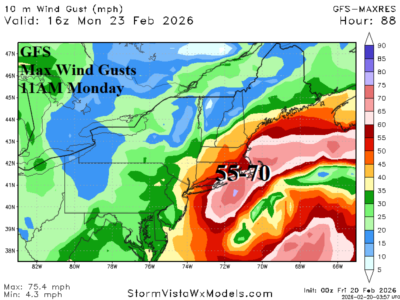
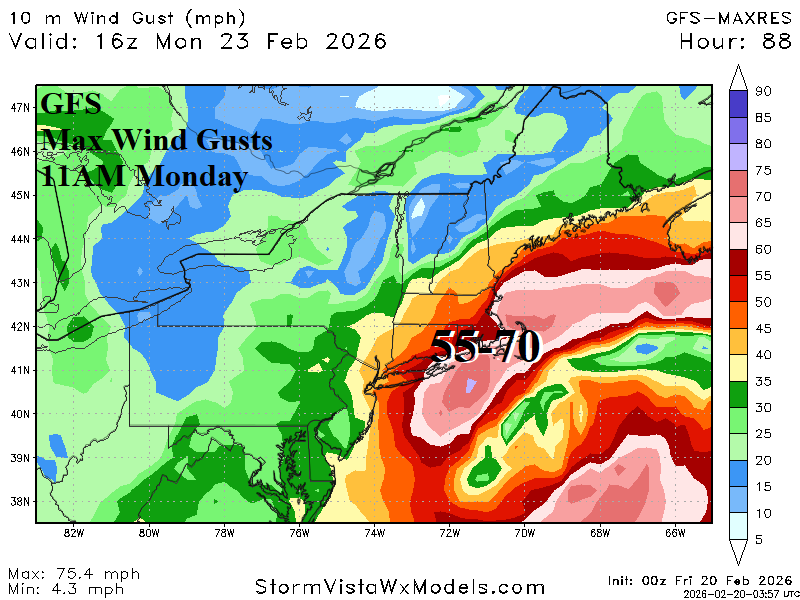
SUN/MON Northeast Coastal Storm Could Produce Blizzard Conditions

Given the low-pressure forecasts, high wind is a major issue with the SUN/MON Northeast Coastal storm. Utilizing the aggressive GFS forecast, wind gusts in the 45-65 mph range should be expected Sunday evening on the Mid-Atlantic Coast extending inland to I-95. By late Monday morning, wind gusts approach hurricane force across southeastern Massachusetts. High wind and heavy snow combination could produce blizzard conditions.