
AI Models SLIGHTLY Better Than NON-AI Models Past 30 Days NA and EU
02/26/2026, 8:07 am EST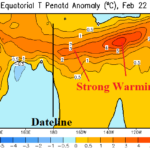
East Pacific Upper Ocean Heat Immense; Atmosphere Still in La Nina Mode
03/03/2026, 5:49 am EST
Climate Impact Company Early AG Market ALERT
Issued: Friday February 27, 2026
Highlight: Comparing U.S. and Europe springtime rainfall forecasts, incoming heavy rain for the Mid-south U.S., warm in Europe, South America rains.
Discussion: The U.S. meteorological spring 2026 precipitation anomaly forecast is wet biased across the Mid-south U.S. and vicinity stretching into parts of the East U.S. (Fig. 1). Above normal precipitation is (also) projected for the Great Basin. The Climate Impact Company constructed analog (CIC-CA) forecast is similarly wet across the Mid-south U.S. but drier in the Midwest U.S. (Fig. 2). Both forecasts are drier than normal on the U.S. West Coast.
The meteorological spring 2026 precipitation anomaly forecast across Europe/Western Russia by NCEP CFS V2 is very dry except for a wet bias across the South Europe Coast and especially Southeast Europe to the Southern Black Sea region (Fig. 3). The CIC-CA outlook indicates a matching wet bias across Southeast Europe to parts of the Black Sea region (Fig. 4).
Short-term forecasts project significant rain, flood risk, and severe weather across the southeast Great Plains, Mid-south States, and northeastward to the Ohio Valley (Fig. 5-6). The heavy rain is inspired by an eastward shifting Madden Julian oscillation (MJO) across the equatorial Pacific where upper ocean heat (to intensify MJO influence) is increasing.
In Europe, a mild weather pattern dominates the next 15 days while arctic chill hovers over Western Russia (Fig. 7). The South America 15-day rainfall forecast maintains short-term wet weather in East Brazil with wetter weather returning to Argentina in the medium range (Fig. 8). The 11-15-day forecast trend is wetter in Brazil.
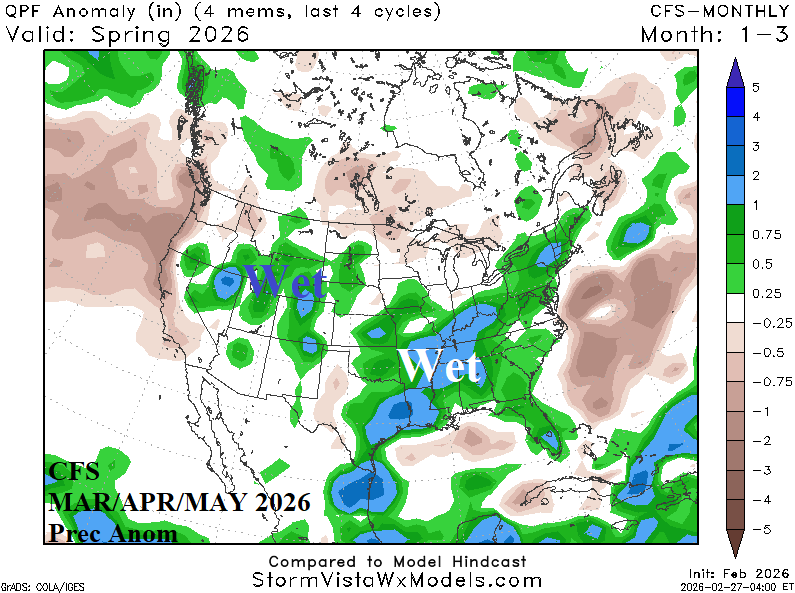
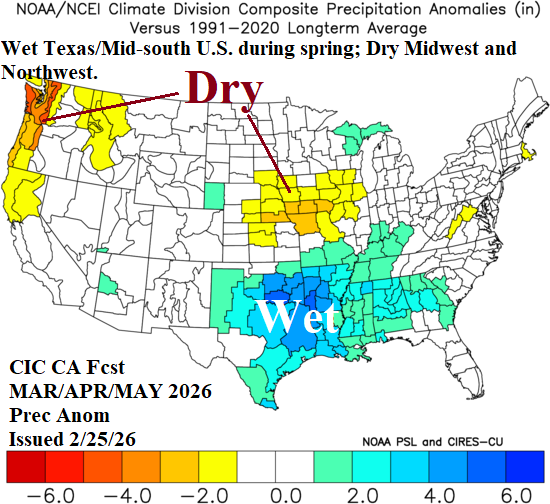
Fig. 1-2: Comparison between the NCEP CFS V2 and CIC-CA precipitation anomaly forecasts for meteorological spring 2026 across the U.S.
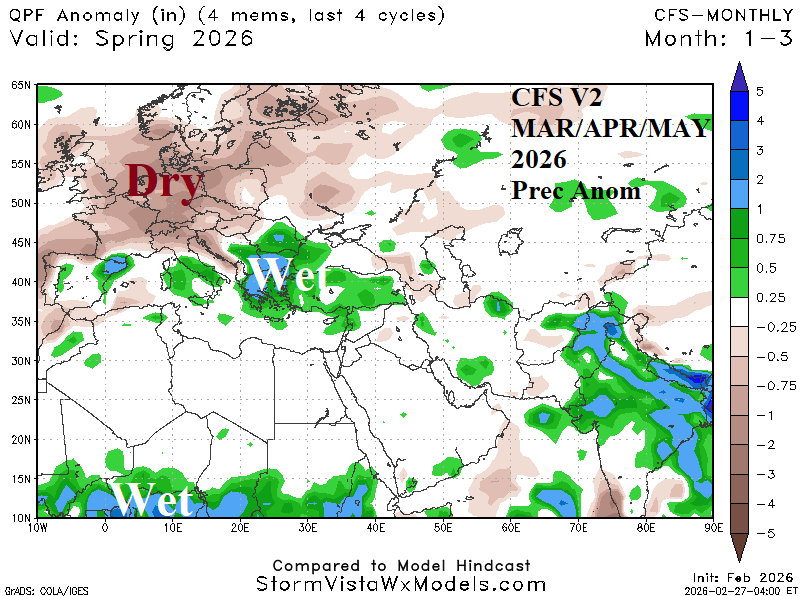

Fig. 3-4: Comparison between the NCEP CFS V2 and CIC-CA precipitation anomaly forecasts for meteorological spring 2026 across Europe/Western Russia.

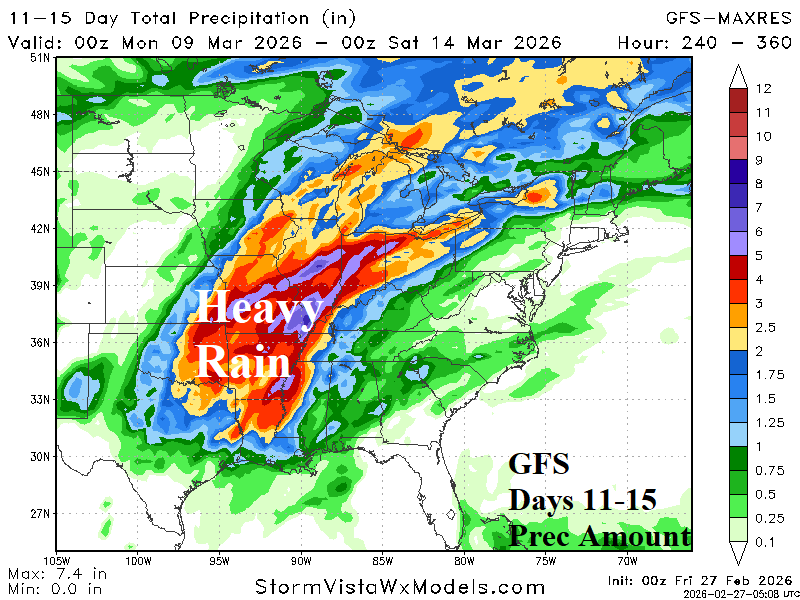
Fig. 5-6: GFS U.S. medium range precipitation amount forecast for East U.S.
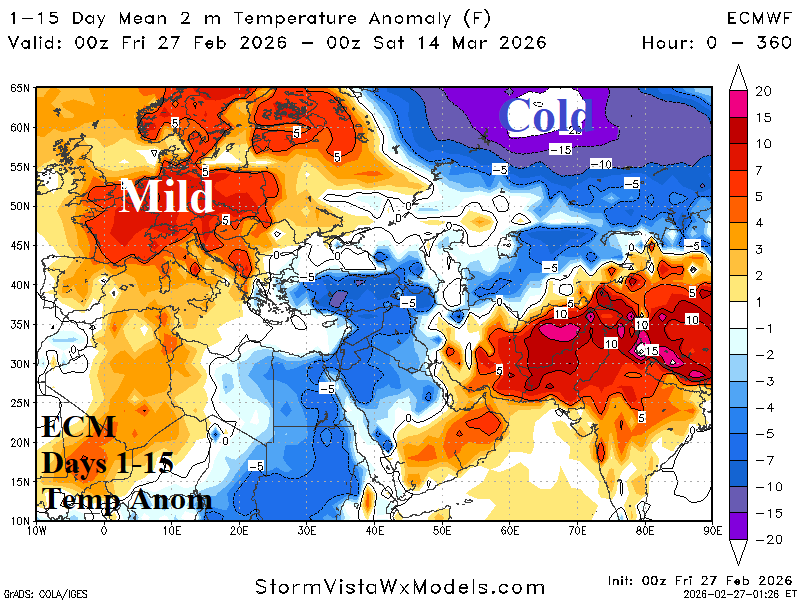
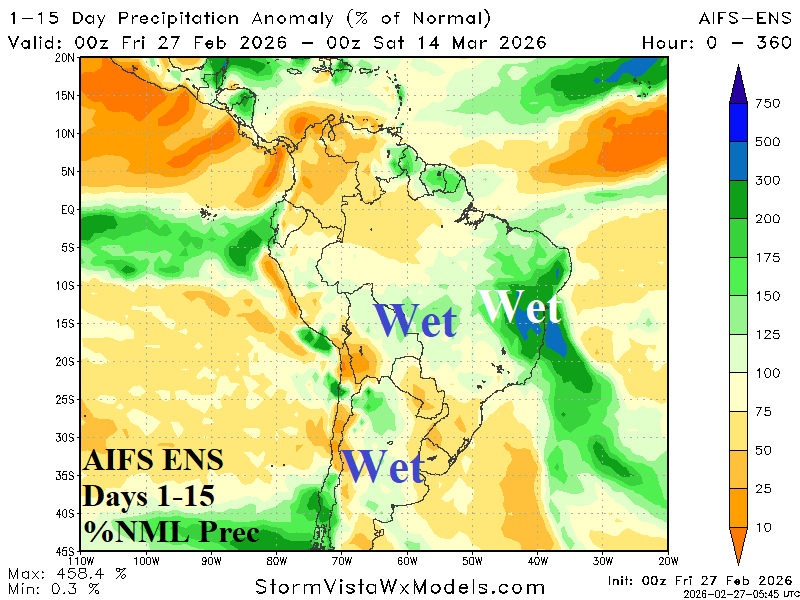
Fig. 7-8: ECM 15-day temperature anomaly forecast across Europe/Western Russia and the AIFS ENS 15-day percent of normal rainfall outlook across South America.