02/09/2026, 11:29 am EST

Subsurface Equatorial Pacific Looking El Nino-like; Surface and Atmosphere Linger La Nina

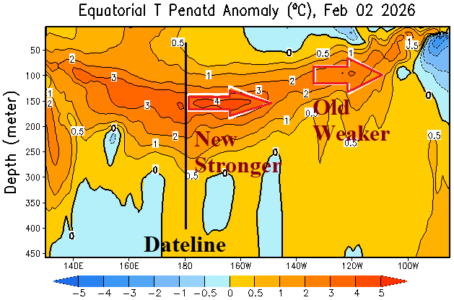
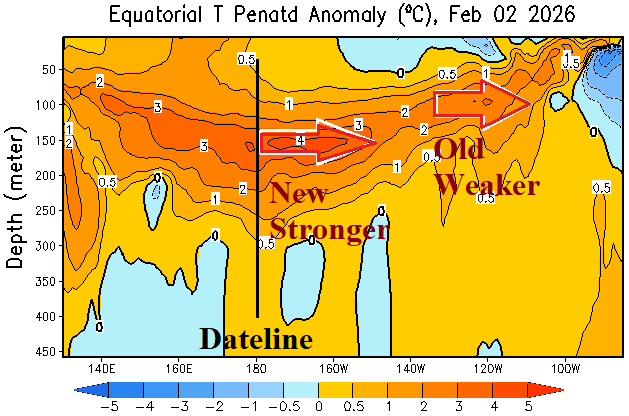
Right now, the leaning-edge of a Kelvin Wave shifting through the eastern equatorial Pacific during the past few weeks has weakened just before reaching the northwest coast of South America. A new Kelvin Wave has strengthened and shifted just east of the Dateline. A westerly wind burst associated with the new Kelvin Wave is present just west of the Dateline.
02/09/2026, 8:15 am EST

A Much Colder 06Z GFS Days 11-15 in U.S.

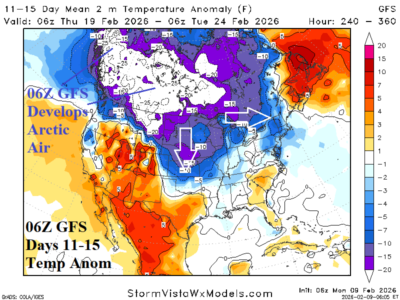
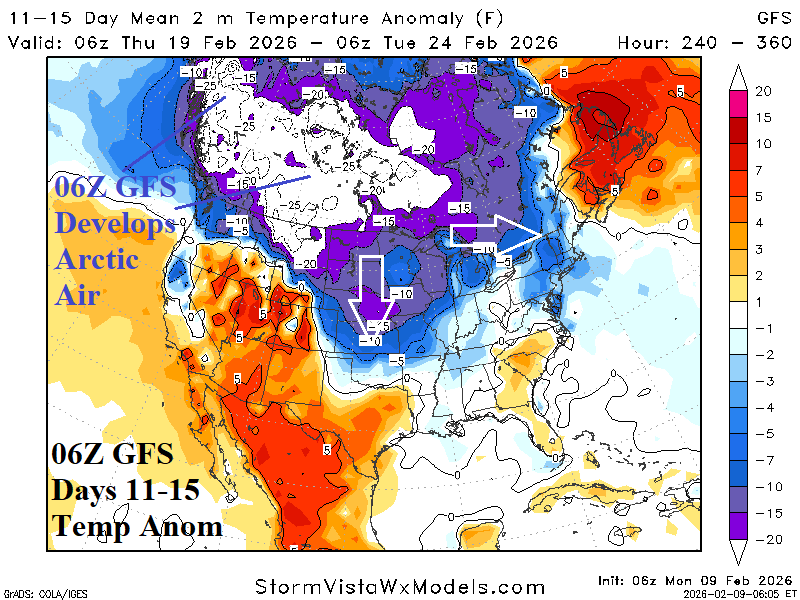
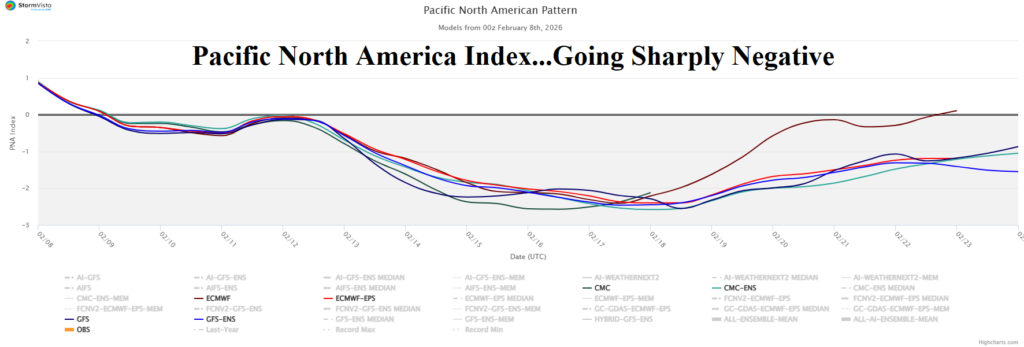
The 06Z GFS 11-15-day forecast returned a wintery look featuring deep arctic air across West and South Canada seeping into the Great Plains and Northeast U.S. The outlook raised the HDD forecast for the week ending February 26th to 194 HDD, up 21 HDD from the previous outlook.
02/08/2026, 1:25 pm EST

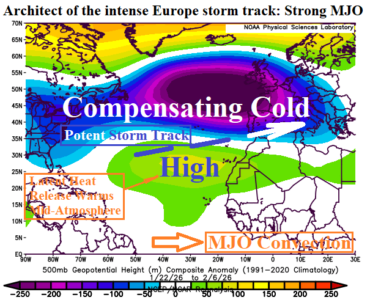
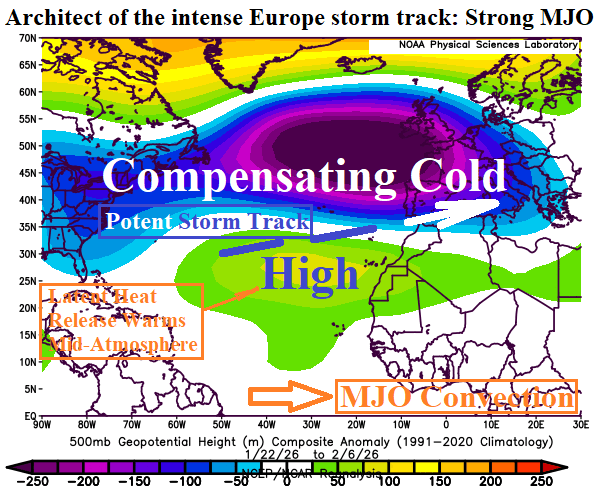
Origin (and Continuation) of Dangerous Southwest/South Europe Storm Track

Dramatic storm tracks are almost always associated with influence of the Madden Julian oscillation (MJO). The intense Southwest/South Europe storm track of the past 2-3 weeks is directly related to an eastward shift of the MJO across the equatorial East Pacific to tropical Africa.
02/06/2026, 11:29 am EST

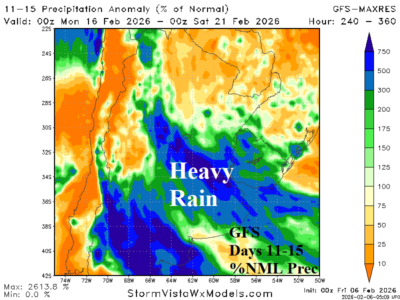
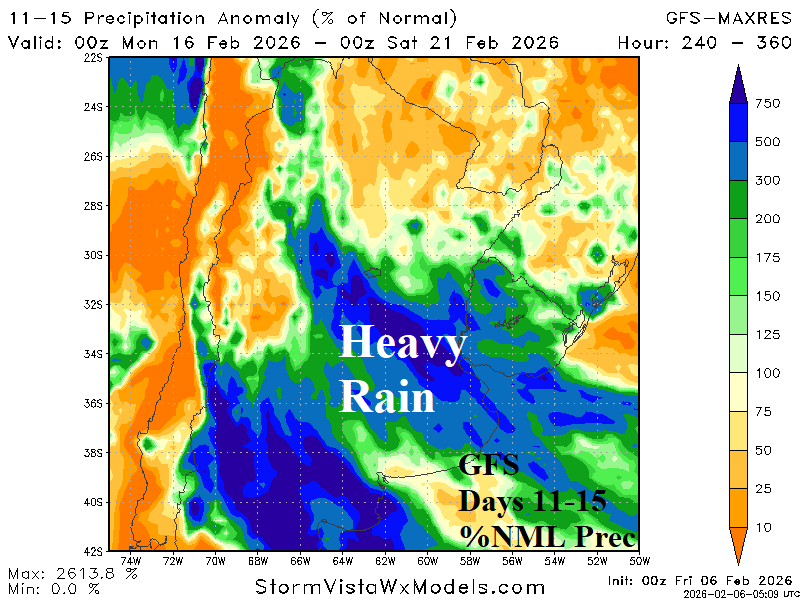
Arid Northeast Argentina Pattern Shifts Much Wetter Mid-February

Torrid dryness across Northeast Argentina continues during early February. The outlook into early next week maintains the dry pattern. However, an upper trough approaches from the west causing significant rain in Argentina during the medium range. The forecast trend is wetter.
02/06/2026, 8:41 am EST

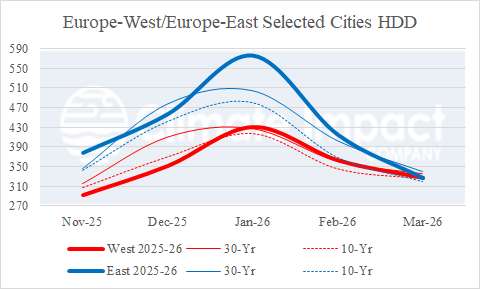
Very Cold Eastern Europe in January 2026

Europe East selected cities (Berlin, Munich, Vienna, and Milan) observed an exceptionally cold January with HDD count averaging 13% colder than normal while Europe West selected cities (Glasgow, Heathrow, Paris, Dusseldorf, and Berlin) were much closer to normal.
02/06/2026, 8:32 am EST

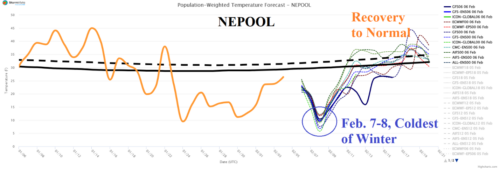
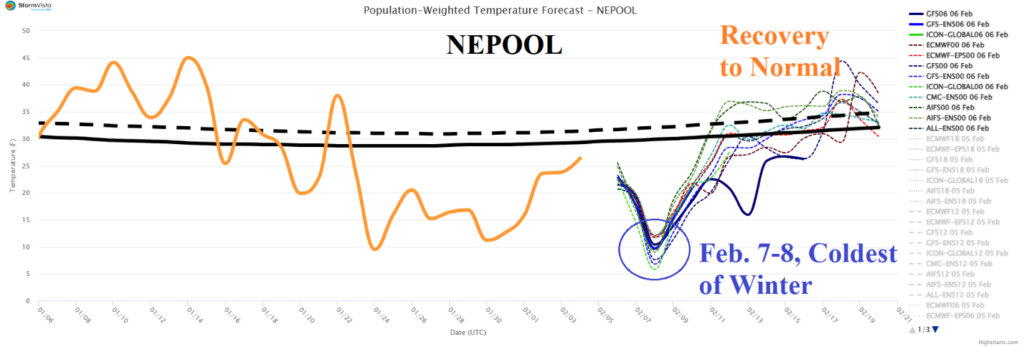
Coldest Days (Feb. 7-8) of Winter in Northeast

Weather warning, watch, and advisories cover the Northeast and East U.S. this morning for the last blast of arctic air of the winter season. Added are High Wind Warnings for the Mid-Atlantic region which drive wind chill to -10F to -20F shortly after dawn tomorrow once the arctic air arrives. Fresh snow helps to enhance the incoming cold. The cold burst marks the coldest air mass of the season for NEPOOL with the second coldest for PJM-East.
02/05/2026, 4:06 pm EST

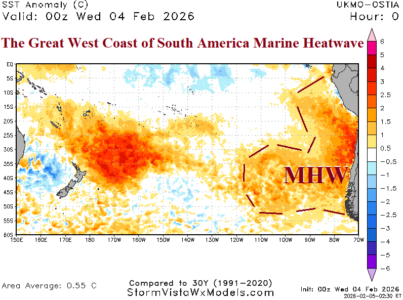
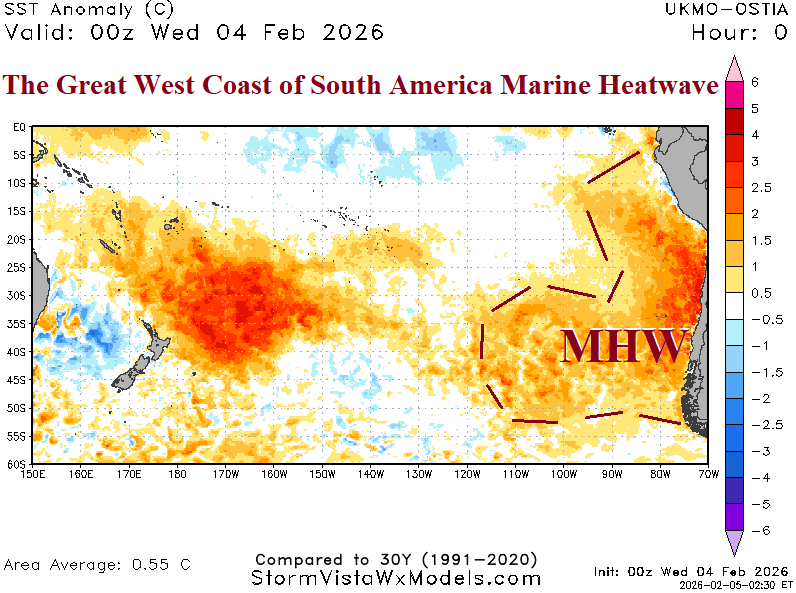
The Great West Coast of South America Marine Heatwave

The warmest sea surface temperature anomalies (SSTA) on record for early February stretching north-to-south off the coast of Chile and Peru exceeding 3C throughout much of this region has generated. Onset of this large and intense marine heatwave (MHW) occurred in DEC-25. Strengthening continues especially along the immediate coast of Chile during the past 2 weeks. The warming is spreading equatorward. The daily Nino12 SSTA region off the northwest coast of South America is +0.63C today and 1.27C warmer than 30 days ago.
02/05/2026, 9:52 am EST

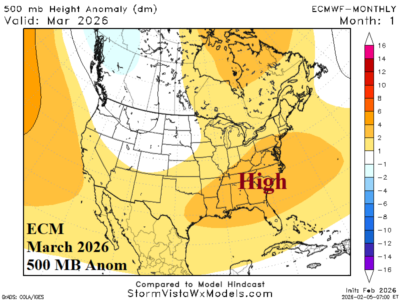
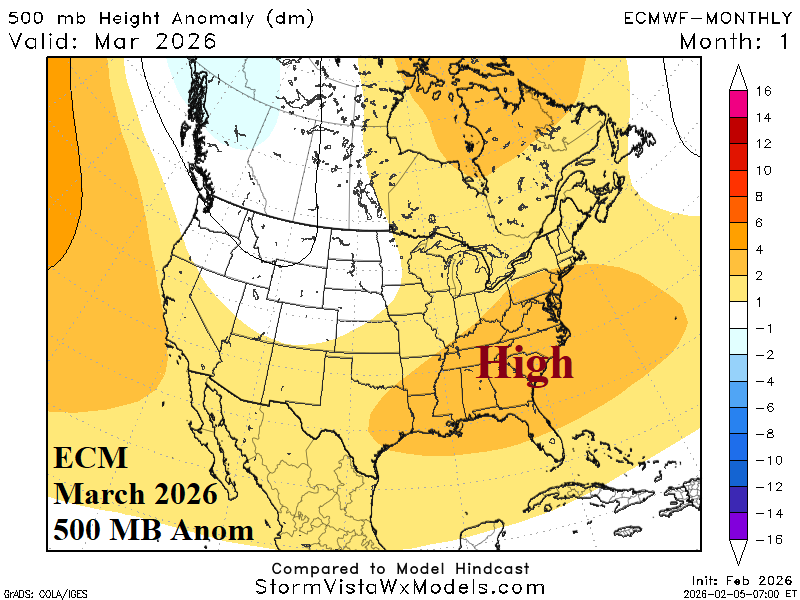
High Impact Climate for MAR/APR/MAY 2026 According to ECMWF

In March, ECMWF crests an upper ridge across the Southeast U.S. which leads to high risk of unusually warm early spring climate for the Southeast and Mid-Atlantic States. In April, the warm ridge shifts westward and settles on the southern Great Plains where dry and warm mid-spring weather is likely. Late meteorological spring brings an upper ridge to the Great Basin promoting dry and very warm climate across the West and Southwest U.S.
02/05/2026, 8:40 am EST

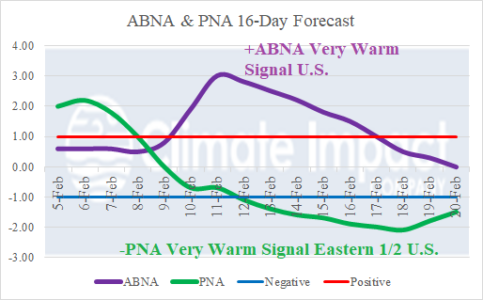
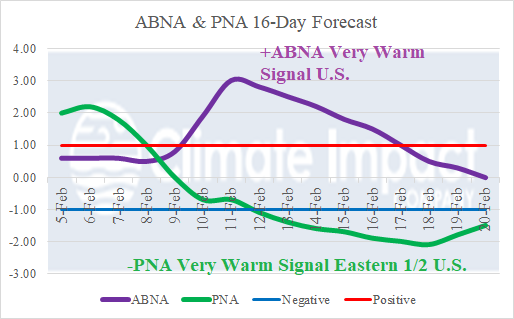
The Asia/Bering Sea/North America Pattern Shifts and Warms The U.S.

One of the strongest climate signals during DEC/JAN/FEB representing extreme temperature across North America is the Asia/Bering Sea/North America (ABNA) index. The ABNA index 16-day forecast indicates a strong positive phase spike next week and representative of a widening anomalous warm pattern in North America.