
Coldest Days (Feb. 7-8) of Winter in Northeast
02/06/2026, 8:32 am EST
MJO Strengthens, Influences Australia/South America Climate
02/11/2026, 12:54 pm EST
Climate Impact Company Daily Feature
Issued: Monday, February 9, 2026
Highlight: A much colder 06Z GFS.
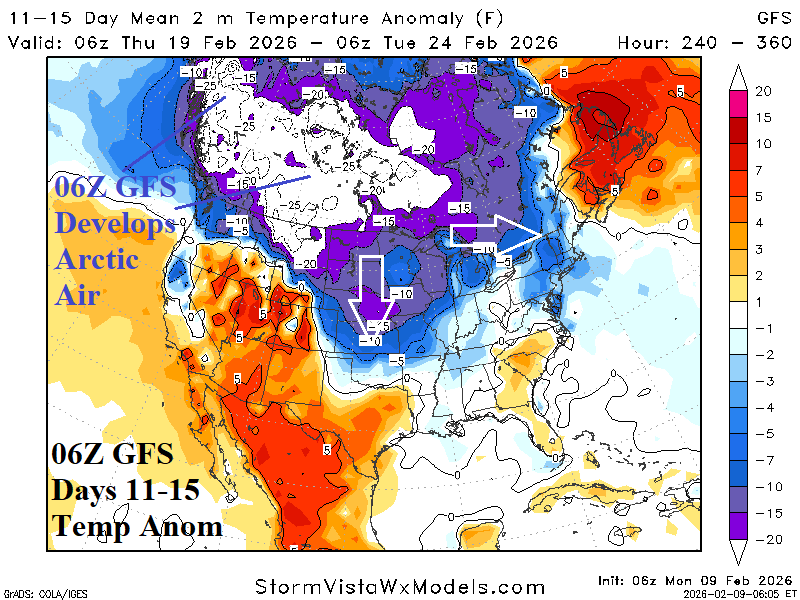
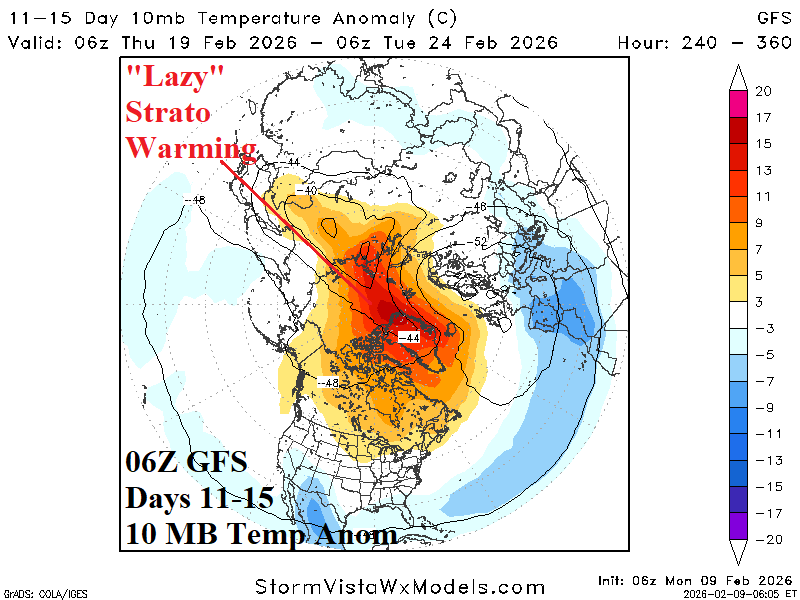
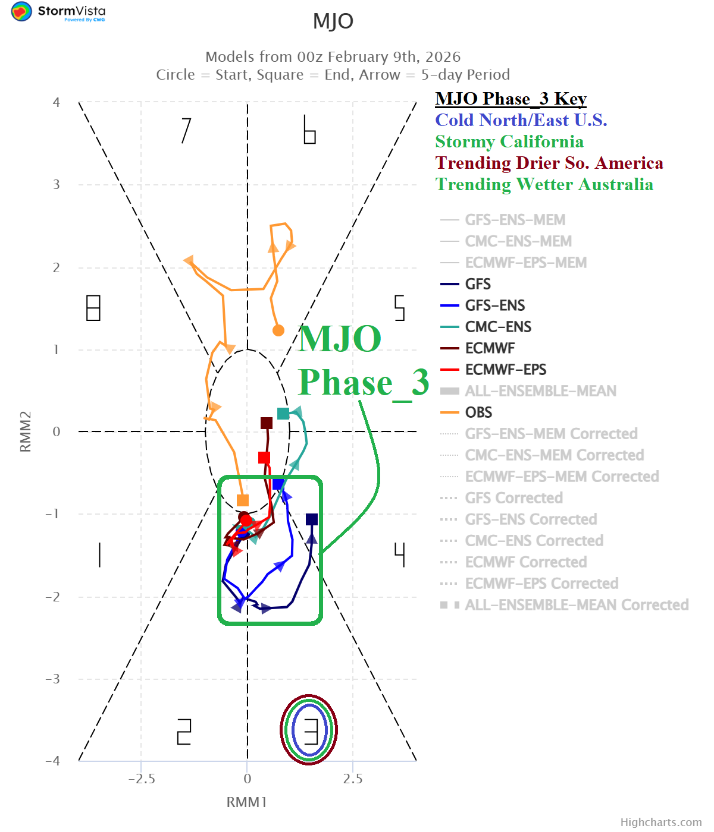
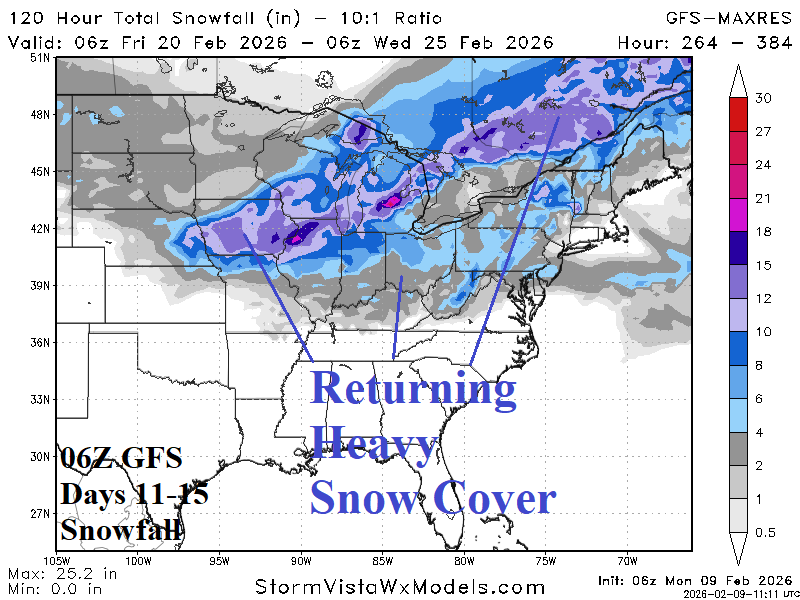
Fig. 1-4: The 06Z GFS 11-15-day temperature anomaly forecast and 10 MB temperature anomaly outlook plus the 15-day MJO outlook and 11-15-day snowfall potential.
Discussion: The 06Z GFS 11-15-day forecast returned a wintery look featuring deep arctic air across West and South Canada seeping into the Great Plains and Northeast U.S. (Fig. 1). The outlook raised the HDD forecast for the week ending February 26th to 194 HDD, up 21 HDD from the previous outlook. The colder GFS has some support. The stratosphere is warm although not well established (Fig. 2). Better support for a colder U.S. regime is offered by the Madden Julian oscillation (MJO) forecast which yields a moderately intense phase_3 forecast (Fig. 3) supportive of North/East U.S. cold, storminess in California, and changes to the precipitation climate in Australia and South America. The colder shift also propels a hefty snowfall in the 11-15-day period for the northeast quadrant of the U.S. (Fig. 4). The 12Z GFS becomes important either validating the colder trend or ignoring the cold trend with a warm change, in either case likely to attract natural gas market attention.