
The New Drought Area: Mid-south U.S./Texas/North Gulf Coast
08/18/2026, 8:11 am EDT
ECM Indicates Beneficial Wet Weather First Half of September
08/23/2026, 7:17 pm EDT
Climate Impact Company Month 1-4 Outlook
South America
Issued: Tuesday, August 18, 2026
Highlight: Dramatic effects on Brazil climate inspired by Super El Nino for the last quarter of 2026.
Executive Summary: The Climate Impact Company month 1-4 ahead forecast for South America is updated. The outlook is based primarily on the evolution of Super El Nino and variable anomalous warm SSTA off each coast. The outlook warrants an ALERT for developing/widening/intensifying drought in Brazil as meteorological summer 2026-27 arrives. Additionally, excessive rainfall causing dangerous flooding emerges in Southeast Brazil and may expand westward as summertime arrives.
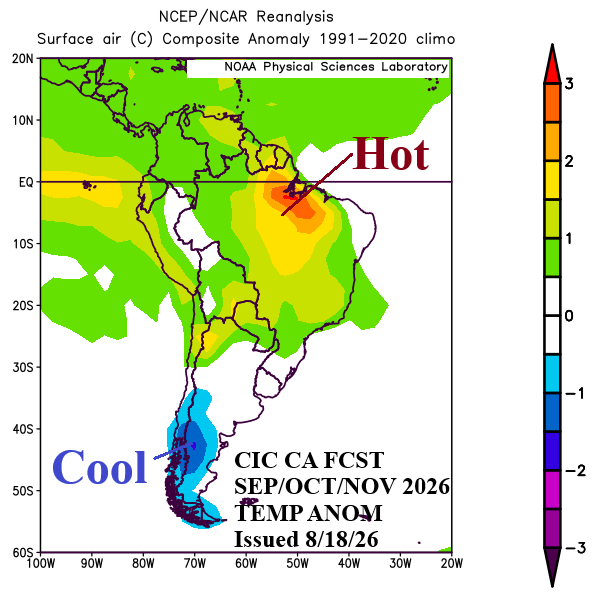
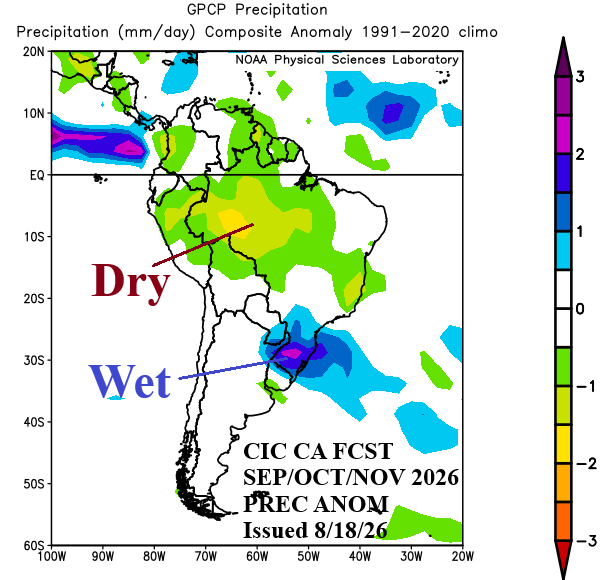
Fig. 1-2: The Climate Impact Co. constructed analog forecast for temperature and precipitation anomalies across South America for SEP/OCT/NOV 2026.
Climate discussion: Dynamic models continue to project the strongest El Nino on record for late 2026. Conventional Nino34 SSTA has climbed to +2.7C crossing the Super El Nino threshold while the new relative Nino34 SSTA index is getting close at +1.8C. ECMWF and CFS V2 project +3.5C to +4.0C Nino34 SSTA for late in the year eclipsing the record (+2.9C) of December 1982.
Soil moisture conditions across South America reflect an evolving El Nino climate identifying strengthening dry-to-drought conditions across central and northern Brazil to a wet bias hovering over Argentina and extending to far southeastern Brazil (Fig. 3).
Current SSTA analysis (Fig. 4) reveals the fast evolving El Nino in the eastern equatorial Pacific Ocean coupled with attendant warming off the West Coast of South Americas and marine heatwaves (MHW) east of Argentina and part of the warm phase tropical South Atlantic (+TSA) index.
Utilizing the National Multi-model Ensemble (NMME), the global SSTA for Q4 (OCT/NOV/DEC) 2026 which governs the month 1-5 outlook reveals presence of the strongest El Nino on record, expanding warm sea surface temperature anomalies (SSTA) off the West Coast of South America including a new MHW southwest of the continent, and warming SSTA off the Brazil Coast while waters cool off the Argentina Coast (Fig. 5).
The SSTA observations and trend established by the NMME outlook are utilized to project the month 1-4 ahead climate in South America. Soil moisture analysis and trend is included in the constructed analog.
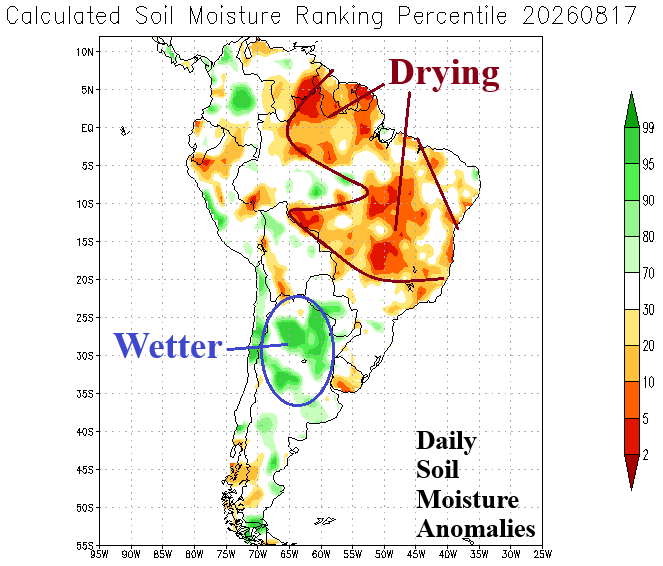
Fig. 3: Daily soil moisture anomalies identifying large wet and dry regions across South America.
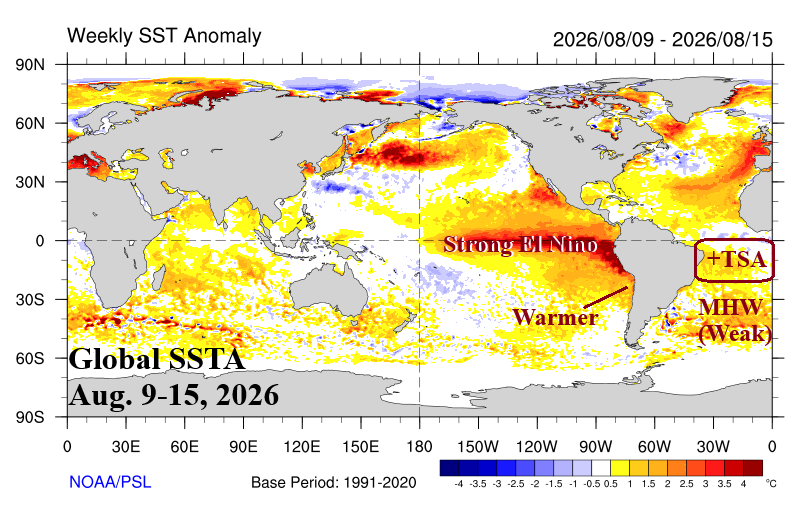
Fig. 4: Global weekly SSTA analysis identifying regions of importance to current South America climate.
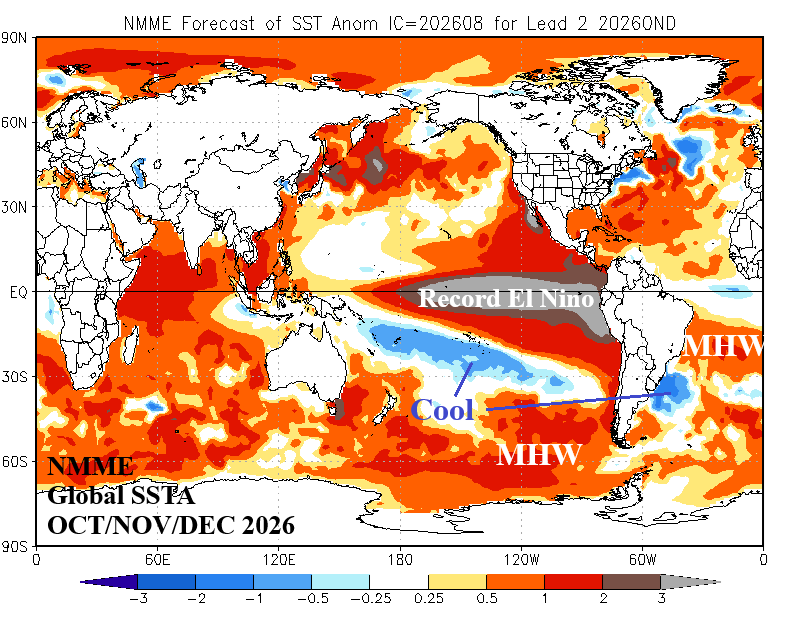
Fig. 5: The NMME global SSTA forecast valid for OCT/NOV/DEC 2026 identifying regions of importance to South America climate.
September 2026: Dryness anchors across Western Brazil during September while heavy rain is confined to Southeast Brazil. Dryness is also forecast in Northeast Argentina. Most of Brazil is warmer than normal with hot weather Northern Brazil. Southern Argentina is cool.
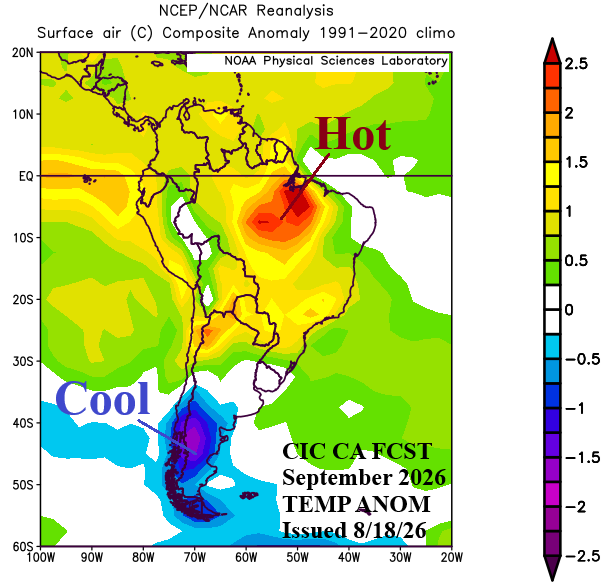
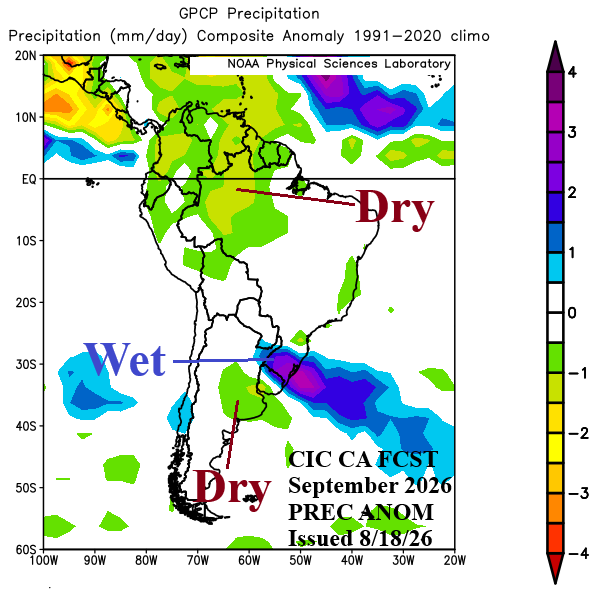
Fig. 6-7: The Climate Impact Company constructed analog temperature and precipitation anomaly forecast for September 2026.
October 2026: Drought is worsening in North-central Brazil as anomalous heat and dryness continues through mid-spring. Wet weather in Southeast Brazil expands and flood risk is increasing. Cool weather across Southern Argentina persists.
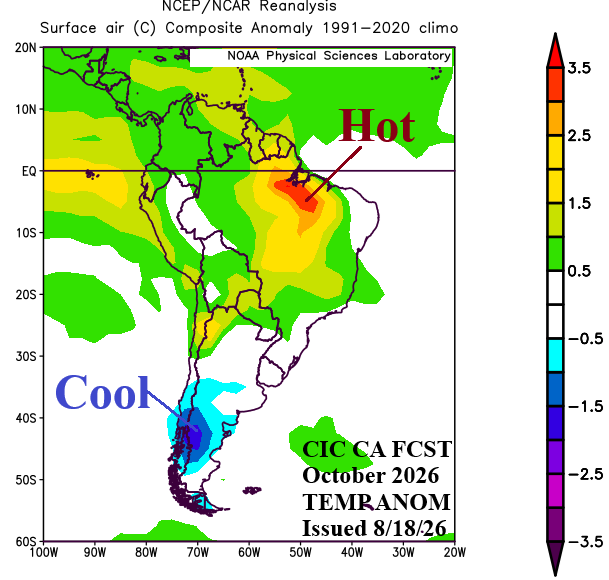
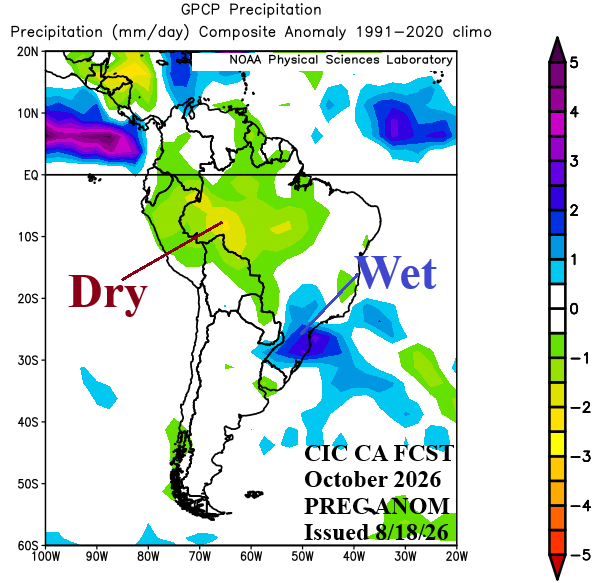
Fig. 8-9: The Climate Impact Company constructed analog temperature and precipitation anomaly forecast for October 2026.
November 2026: Dryness and anomalous heat are expansive across Brazil as drought widens during late spring. Flooding rains remain anchored across Southeast Brazil. Wet weather reaches Eastern Paraguay and Northern Uruguay. Northern Argentina may be drier than indicated.
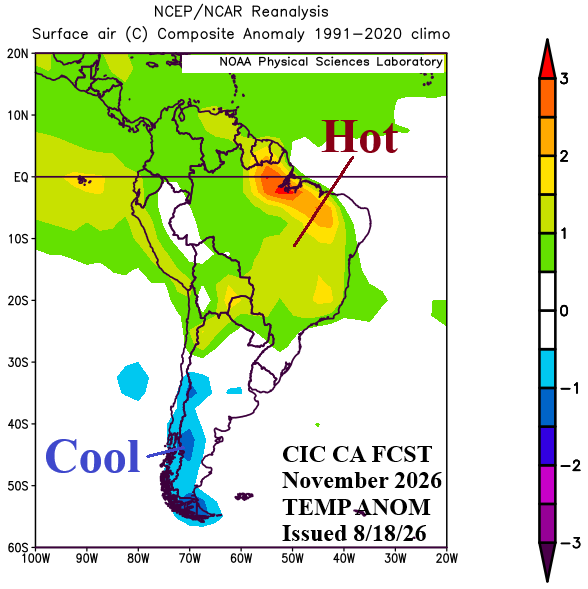
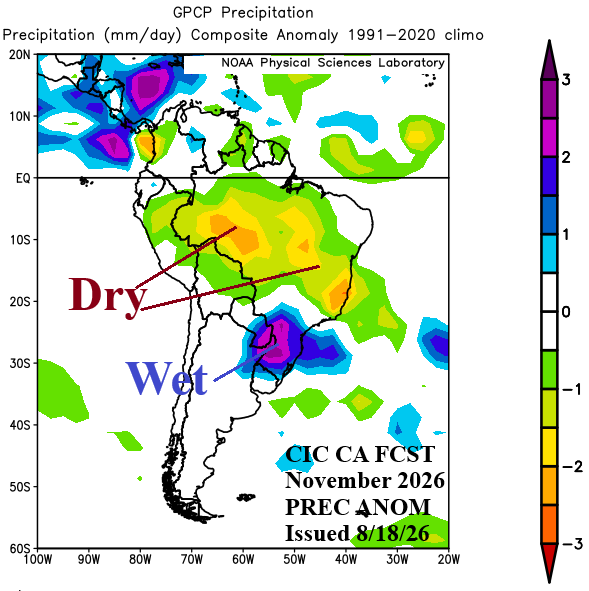
Fig. 10-11: The Climate Impact Company constructed analog temperature and precipitation anomaly forecast for November 2026.
December 2026: As meteorological summer arrives, anomalous heat and dryness is established across most of Brazil and widespread intense drought has developed. Heavy rains causing flooding (also) widen across Southeast Brazil to Paraguay. Unusually cool weather continues to affect southern continent.
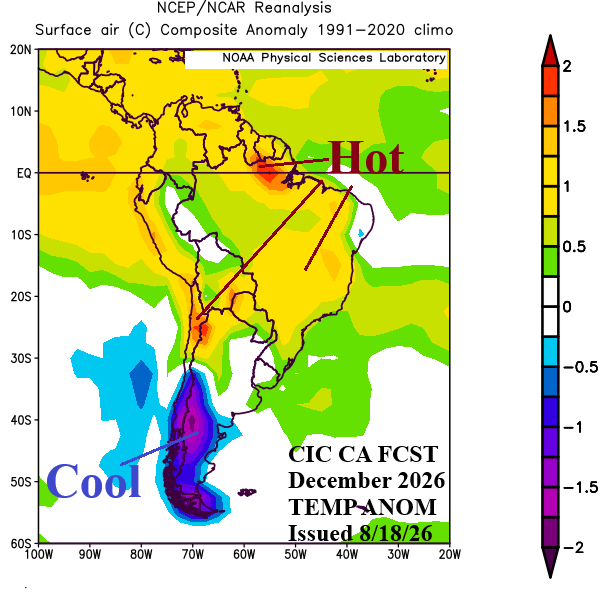
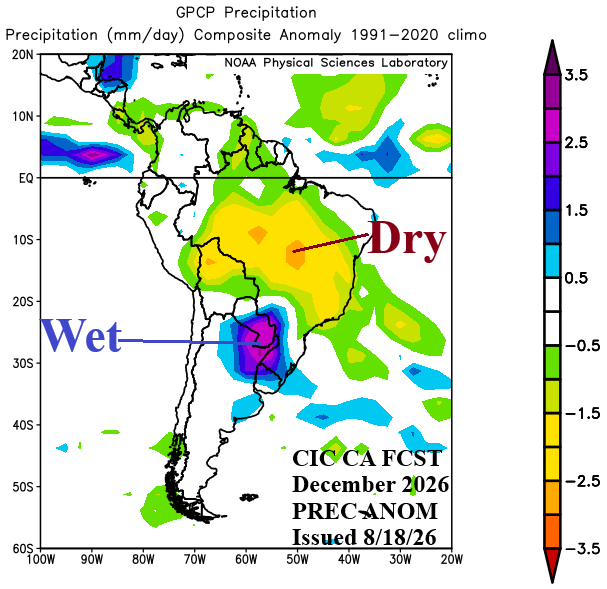
Fig. 12-13: The Climate Impact Company constructed analog temperature and precipitation anomaly forecast for December 2026.