10/30/2026, 8:36 am EDT

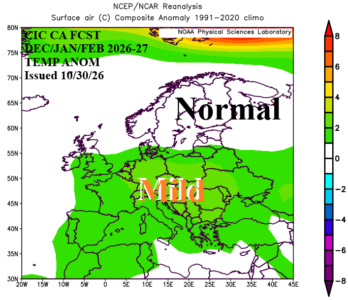
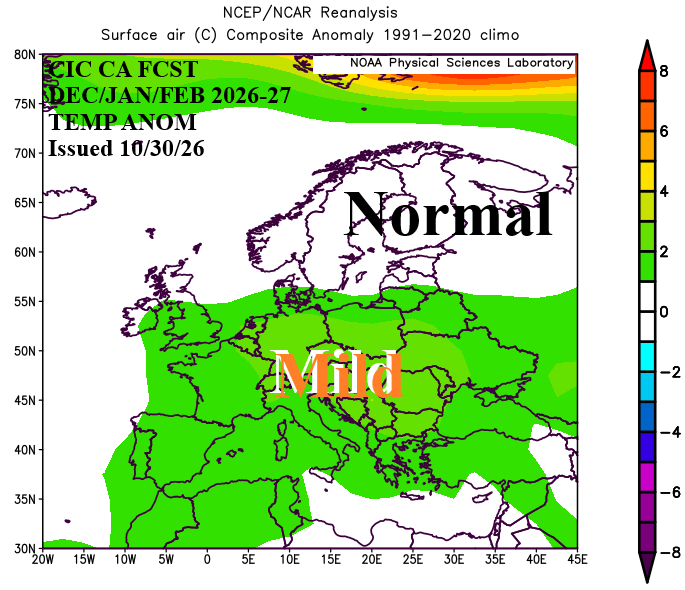
Europe Month 1-4 Outlook: Mild Start/Cold Finish and Cold January for Europe

The Climate Impact Company month 1-4 outlook for Europe is updated. Forecast highlights include diminishing anomalous warmth during late autumn, a mild start and finish to meteorological winter 2026-27 with a cold look to January, especially across snowy Russia. The winter storm track is buoyant and should ease the 2026 drought.
10/28/2026, 6:03 am EDT

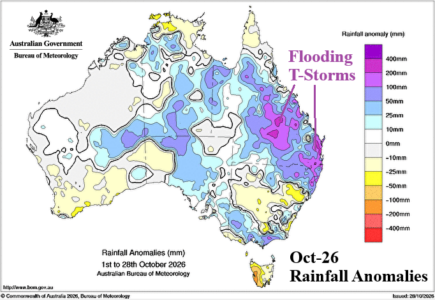
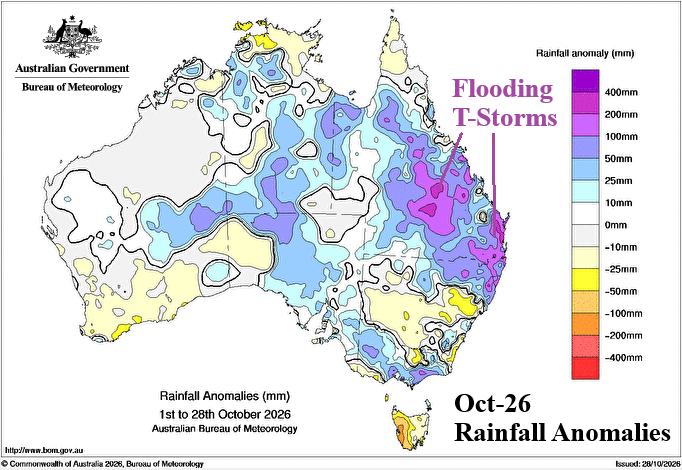
Why is Eastern Australia Soaking Wet During Second Half of October?

The Climate Impact Company opinion causing the surge in heavy rain across Eastern Australia is a mid-October shift to negative phase of the Southern Annular Mode (-SAM) associated with strengthening and eastward shift to the tropical Indian Ocean of the Madden Julian oscillation (MJO) and enhanced by presence of a strong marine heatwave (MHW) off the Southeast Coast of Australia.
10/28/2026, 6:02 am EDT

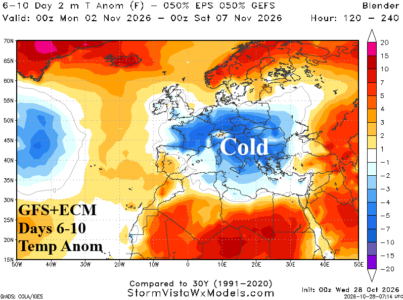
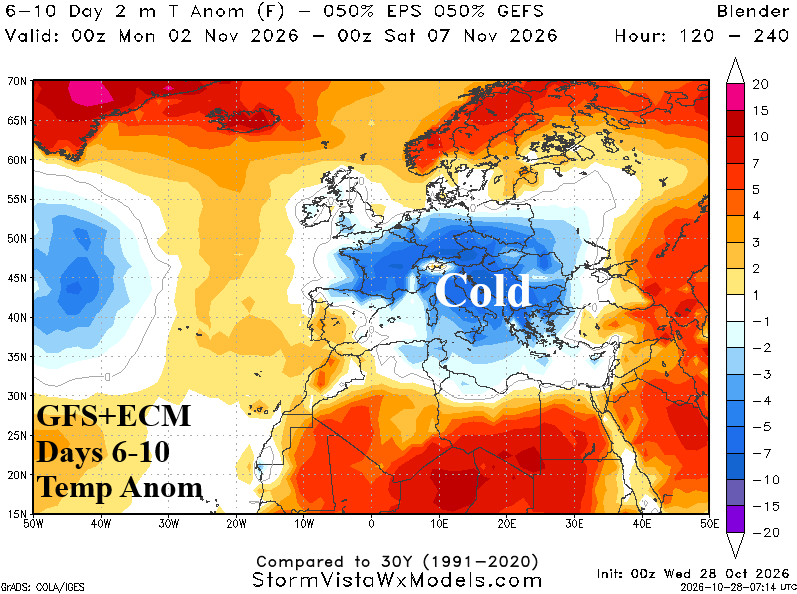
Unwanted Cold Ahead for France to Ukraine

Stratospheric warming develops during early November in parts of the polar region with varying response within the troposphere in the middle latitudes. The stratospheric warming event causes North Atlantic oscillation (NAO) to shift to moderate negative phase. The -NAO pattern will produce cold weather in Europe peaking next week.
10/27/2026, 9:09 am EDT

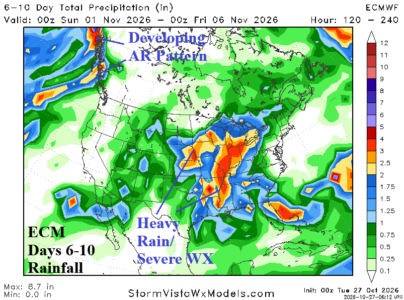
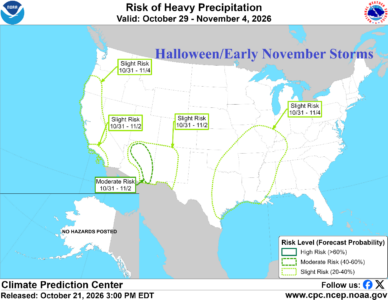
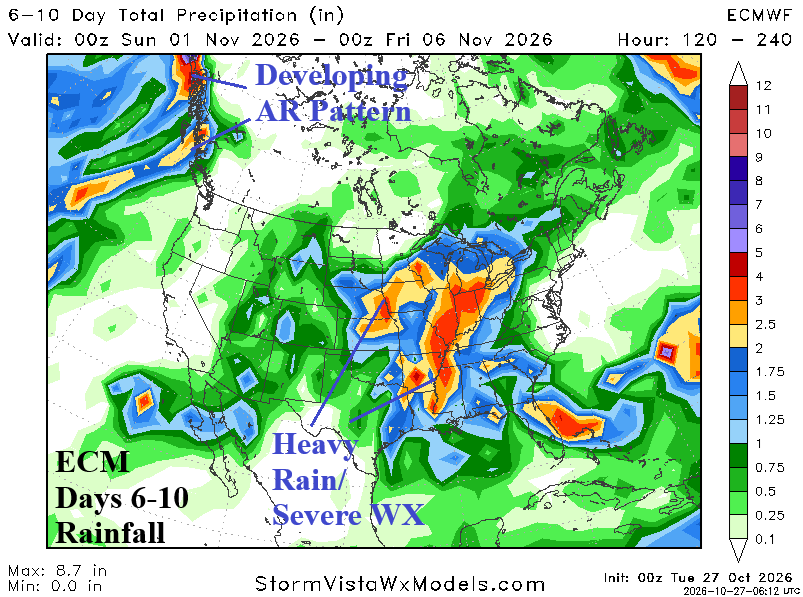
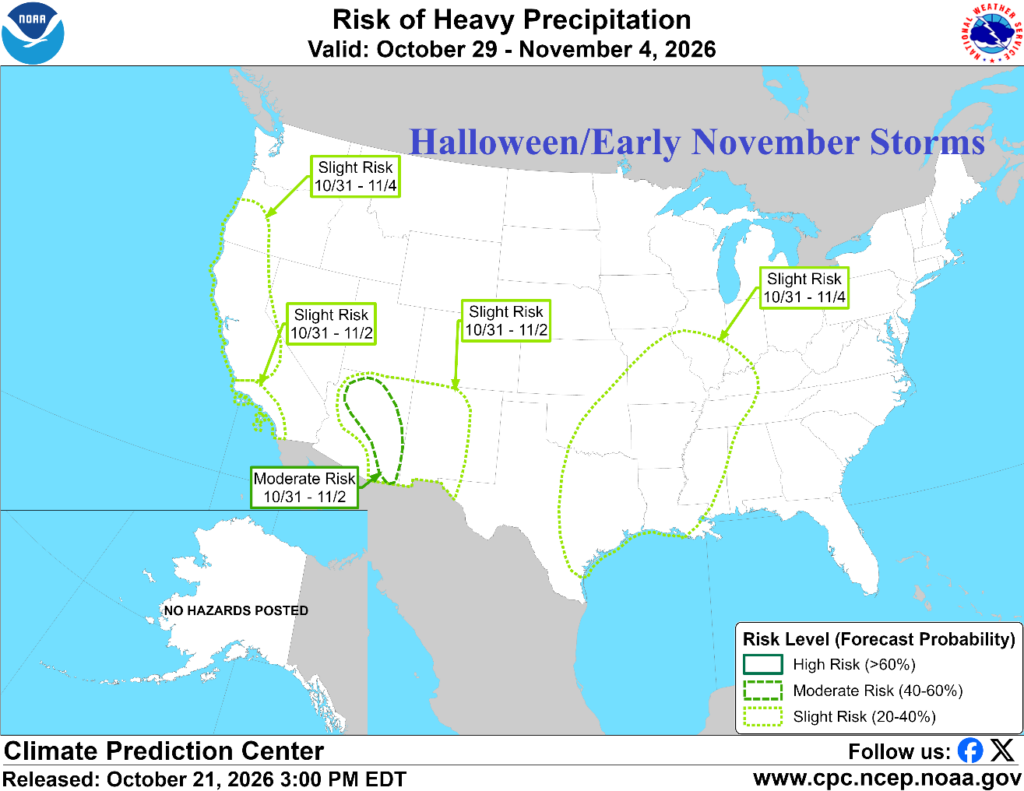
Wetter Pattern Change Midwest U.S. Ahead

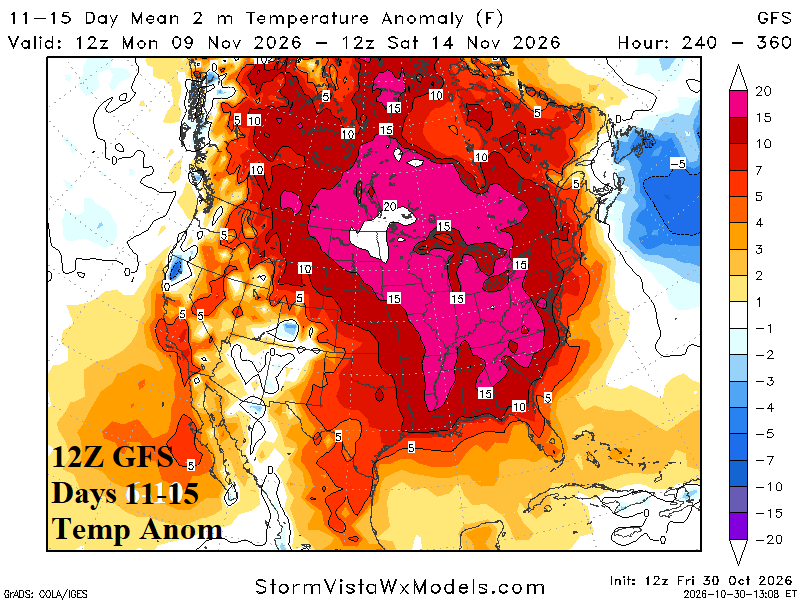
Madden Julian oscillation (MJO) strengthens and shifts east to the Indian Ocean into early November and causes a shake-up in the prevailing precipitation pattern of the past 30 days to emerging heavy rain in Texas this week, widespread heavy rain and severe weather centered on the Midwest next week while an atmospheric river pattern shifts into the Northwest Coast by days 11-15.
10/27/2026, 4:52 am EDT

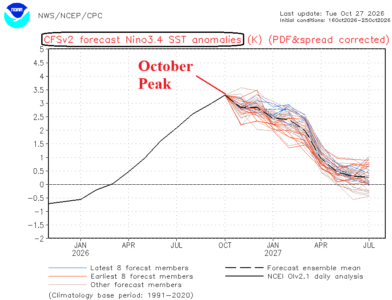
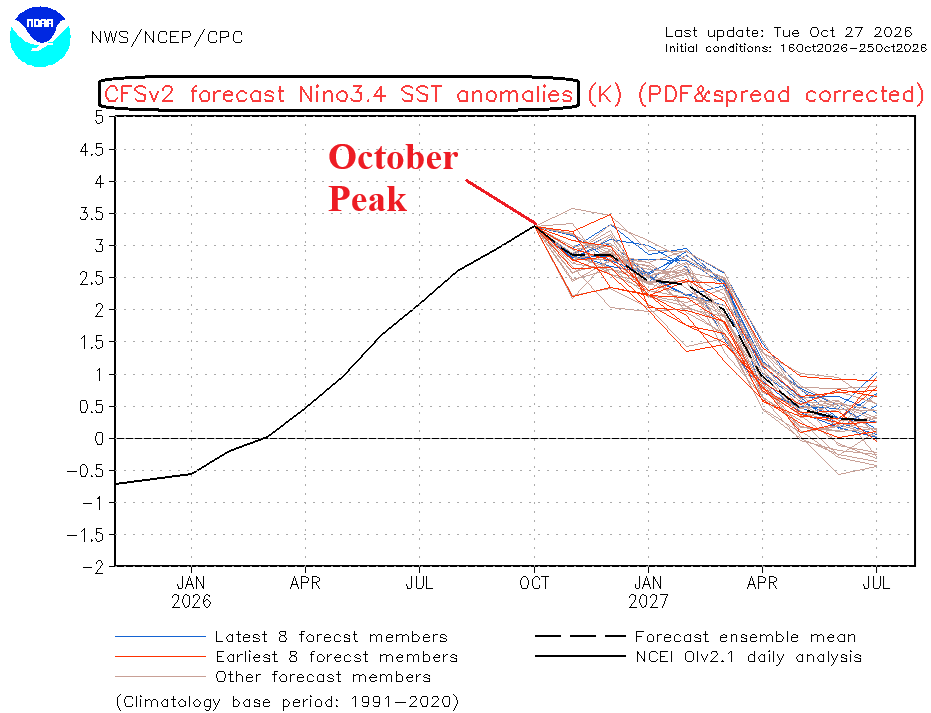
Has Super El Nino 2026 Peaked?

A classic intense negative outgoing longwave radiation anomaly signature representing persistent convection near and east of the Dateline beginning late last May and representative of rapidly developing El Nino has weakened during the past week. For the first time since earlier this year, the southern oscillation index has shifted positive. Has Super El Nino 2026 reached peak intensity?
10/26/2026, 8:49 am EDT

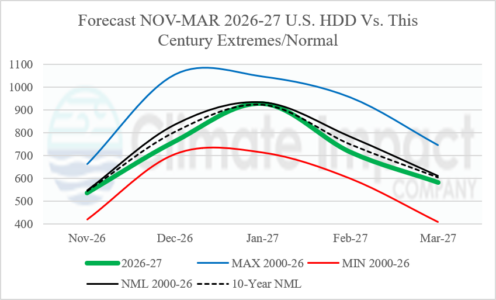
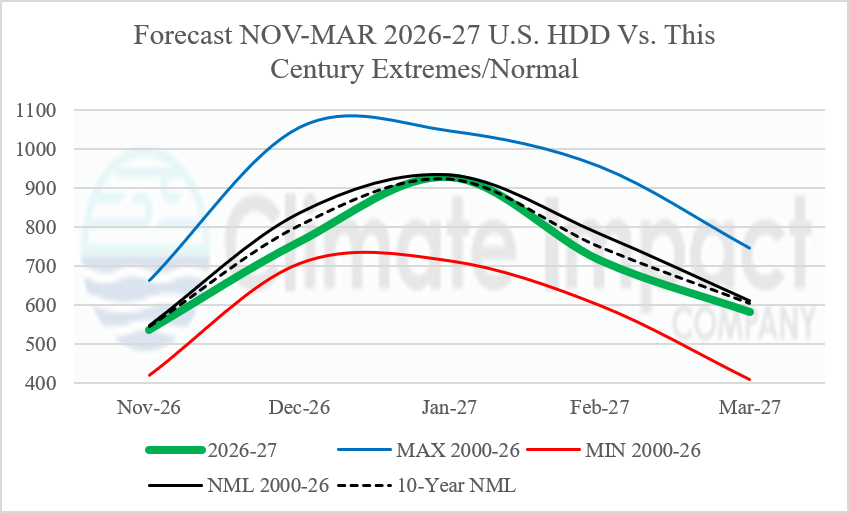
Warm HDD Forecasts for U.S. Sinter 2026-27

The U.S. gas population weight HDD forecast for the 2026-27 cold season compared to the last 2 winter seasons and 10-year normal is warm! Only NOV-25 and JAN-24 stand out warmer than the 2026-27 forecast. There are no months during NOV-26 to MAR-27 when U.S. gas population weight HDD are not warmer than the 10-year normal. Historically, for this century, the 2026-27 forecast is consistently warmer than normal but somewhat equidistant between the cold and warm extremes although the DEC-26 projection is close to the warm extreme.
10/25/2026, 12:55 pm EDT

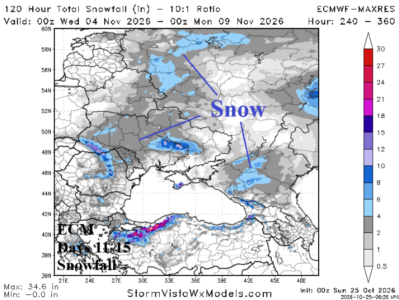
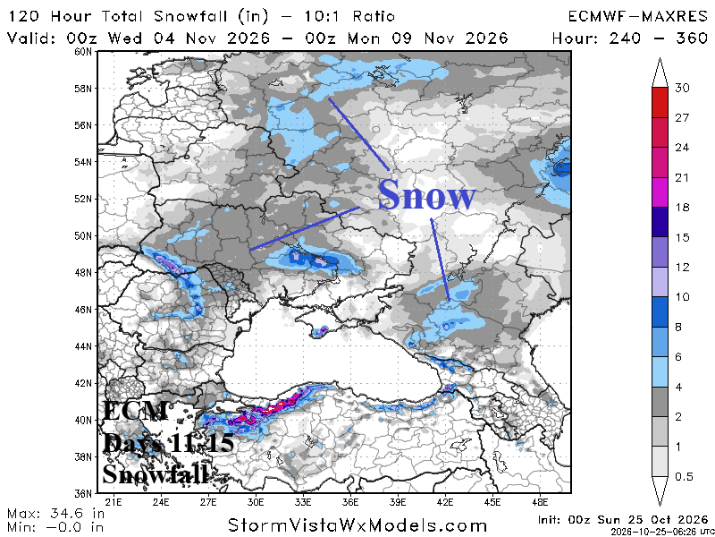
Early Season Snow Black Sea Regions Days 11-15

The Black Sea region will turn wetter, especially next weekend and beyond. In the 11-15-day period, temperatures will shift somewhat colder. The chill is sufficient to cause early season snow across the region.
10/25/2026, 10:35 am EDT

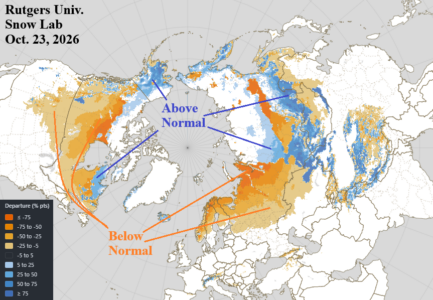
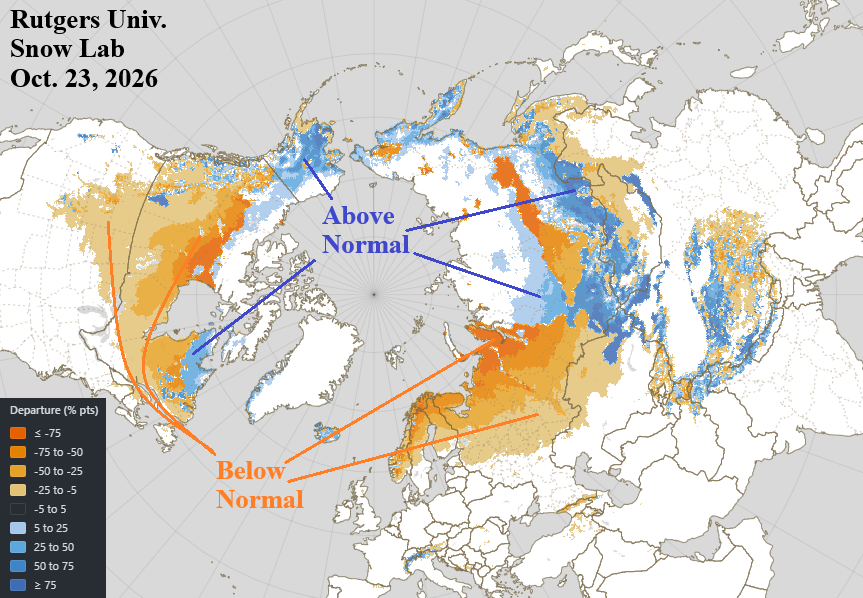
What Should I Look at to Identify Increased Pattern Change/Cold Air Risk?

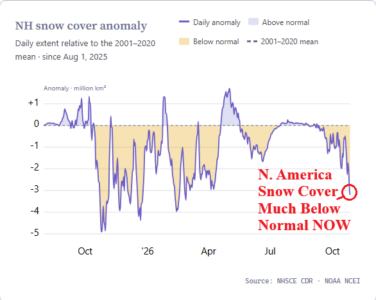
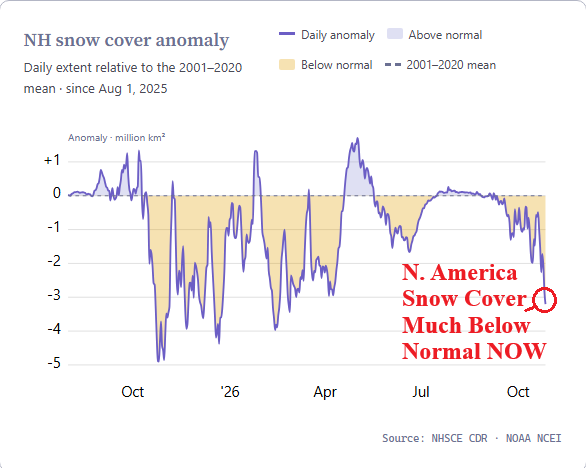
What to look for as cold season is about to begin to identify pattern change and potential cold air outbreaks, which according to NOAA SFS V2, may be higher than current expectations. One of the lead diagnostics is snow cover and snow cover anomalies observations and trends. If snow cover is advancing (or developing), a built-in cold bias to the pattern across and downwind of the snow cover advancement trend evolves. Conversely, just south of snow cover during meteorological winter, mild temperatures over-achieve.
10/22/2026, 7:07 am EDT

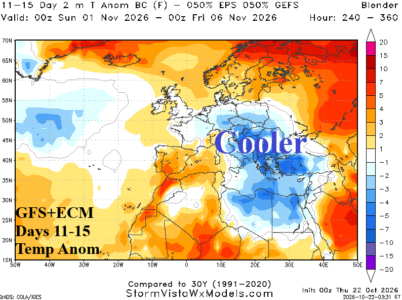
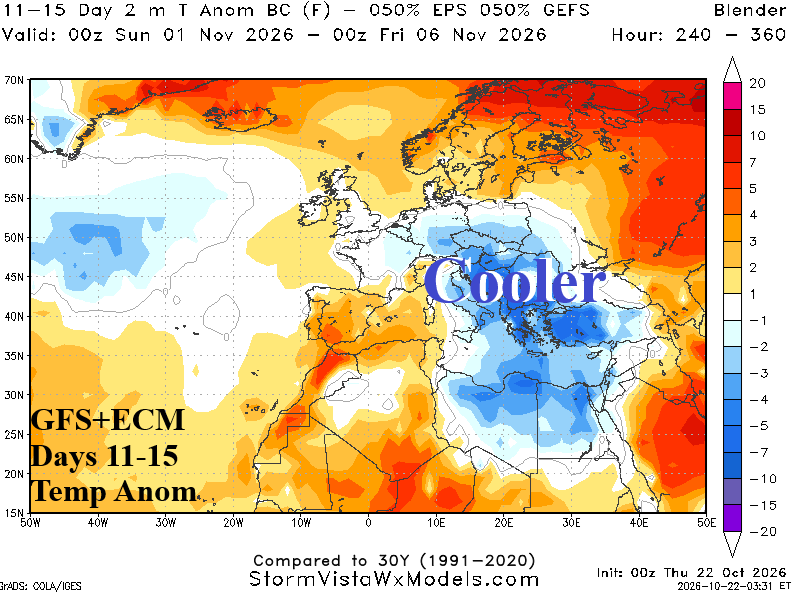
Turning Colder Days 11-15 Europe

There is a cooler forecast change for Europe in the 11-15-day period as indicated by the 15-day population weight average daily temperature forecast (Fig. 1). Combing GFS and ECM yield chilly temperature anomalies in the 11-15-day period across Southeast Europe (Fig. 2). The ECM ENS indicates widespread risk of <32F/0C in Central Europe eastward in the 11-15-day period.