
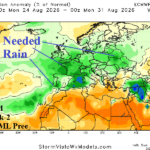
Beneficial Rainfall Cools off Europe
08/16/2026, 3:45 pm EDT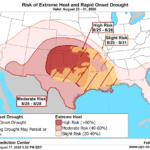
The New Drought Area: Mid-south U.S./Texas/North Gulf Coast
08/18/2026, 8:11 am EDT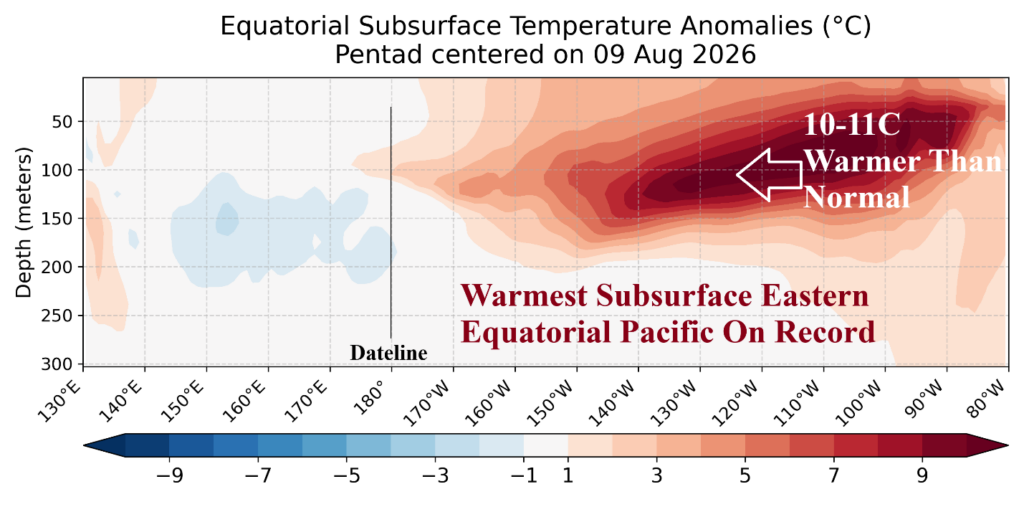

Climate Impact Company ENSO Climate Diagnostics
Issued: Monday August 17, 2026
Highlight: Super El Nino propelled by extremely warm subsurface ocean temperatures.
Discussion: The warmest eastern equatorial Pacific Ocean subsurface temperature anomalies on record are identified by NOAA valid for Aug. 9, 2026 (Fig. 1). The warmest anomalies are 10-11C warmer than normal near 100-meter depth. The historic warm water identifies the potential energy to warm the ocean surface inspiring an intense El Nino climate. The Nino SSTA regions are certainly impressively warm as the conventional Nino34 SSTA warmed to +2.7C last week, easily withing “super” El Nino intensity while the new relative Nino34 was steady at +1.8C (Fig. 2). Dynamic models use RN34 SSTA to project El Nino intensity. The NCEP/CFS V2 forecast indicates a record value +3.5C to +4.0C by November easily eclipsing the old record of +2.9C in late December 1982. The El Nino climate anomalies are likely unusually intense featuring harsh drought in Northern Brazil to Panama, extremely dry in the Philippines and India, while wet bias (possibly extreme) are projected Southeast Brazil, eastern tropical Africa, and the South and East U.S. (Fig. 4).
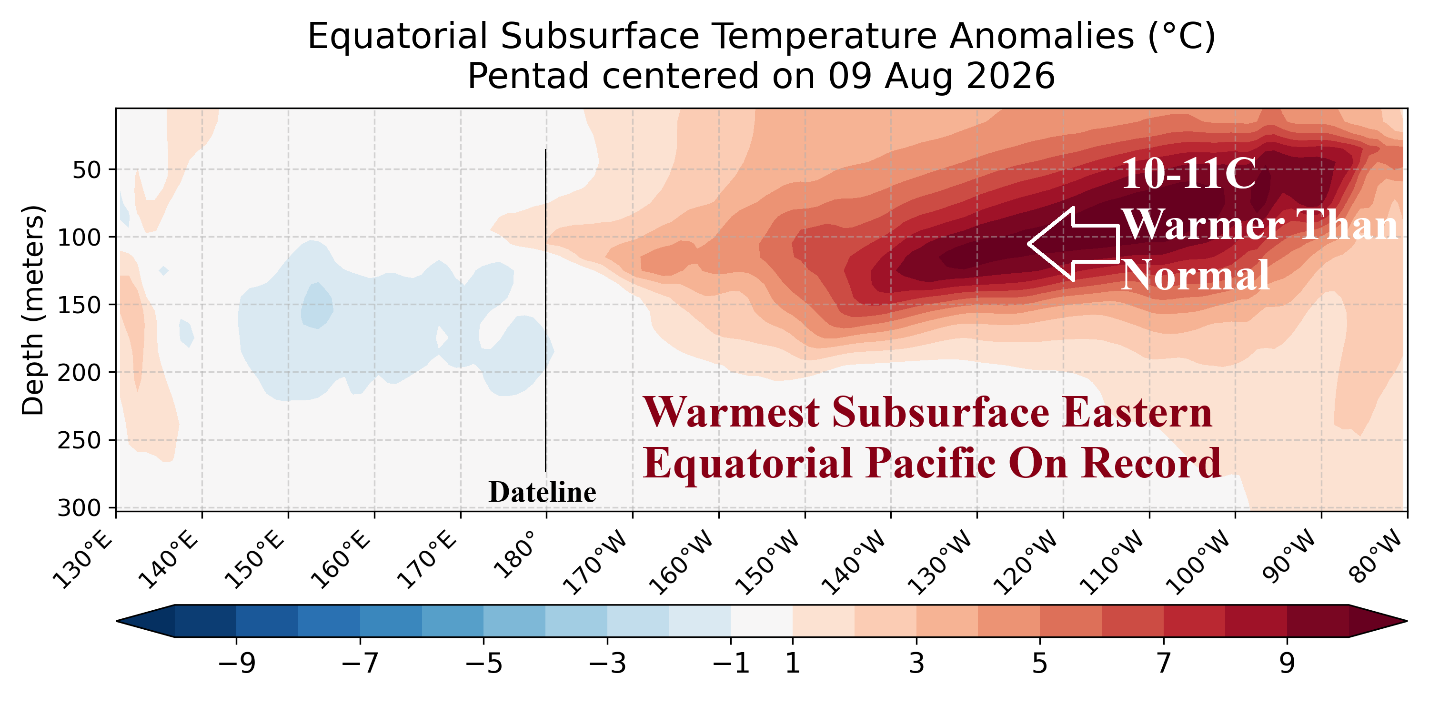
Fig. 1: The equatorial Pacific Ocean subsurface temperature anomalies.
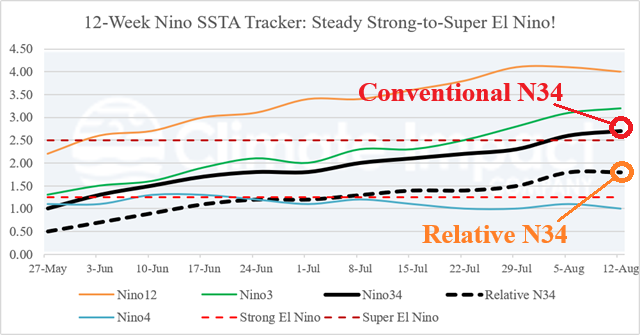
Fig. 2: The 12-week Climate Impact Company Nino SSTA regions monitor.
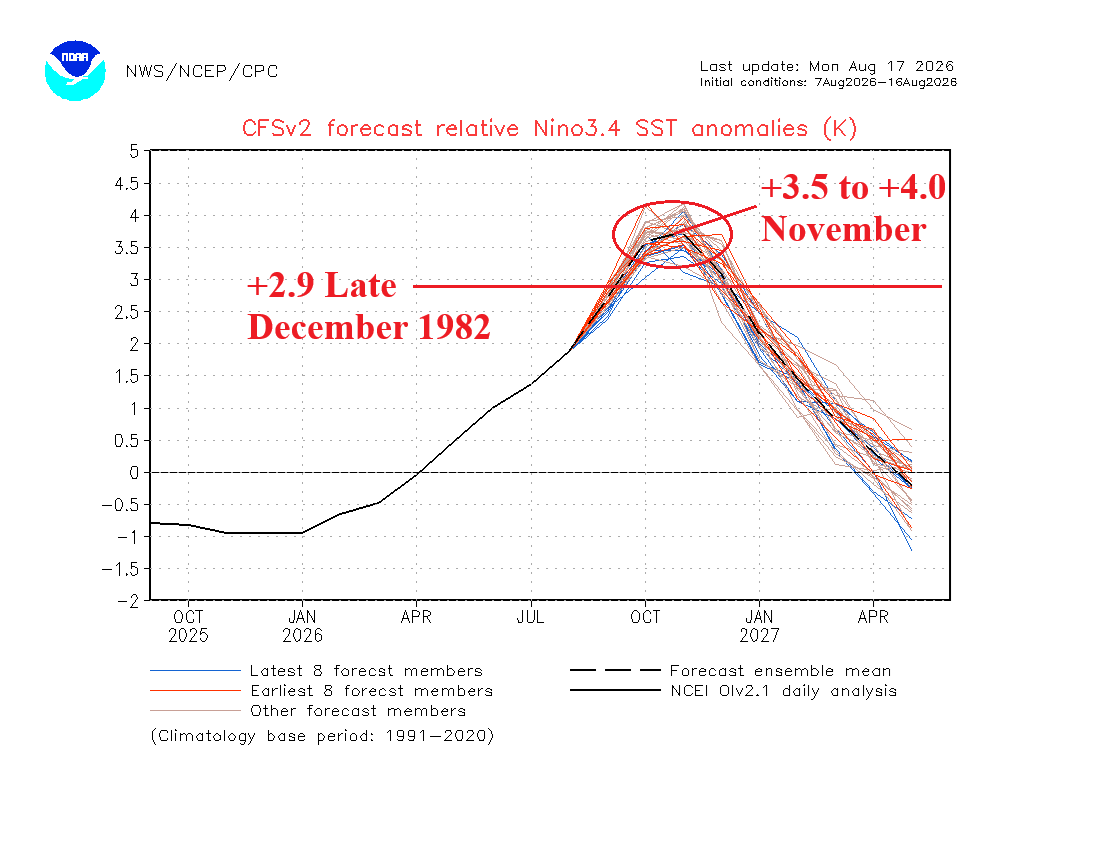
Fig. 3: The NCEP CFS V2 Relative Nino34 SSTA forecast int early 2027.
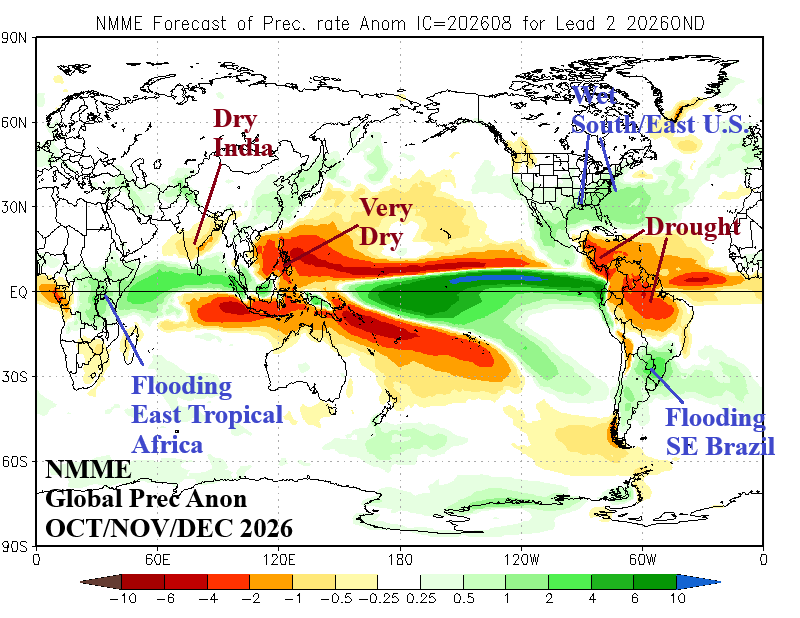
Fig. 4: NMME projects global precipitation anomalies for Q4/2026.