
Super El Nino Continues to Intensify!
10/05/2026, 2:06 pm EDT
Hurricane Isaias Should Reach Category-3 Major Hurricane Status Tomorrow
10/08/2026, 6:00 am EDT
Climate Impact Company Daily Feature
Issued: Tuesday October 6, 2026
Highlight: New ECMWF climate forecasts for DEC/JAN/FEB 2026-27 and trend for North America, Europe, South America, and Australia.
- Dry Northern Brazil/Wet Southeast Brazil and Northern Argentina most dramatic summer 2026-27 climate.
- Prohibitive “atmospheric rivers” into California and Southeast/East U.S. Coast.
- Needed (and likely to occur): Mild and wet winter climate for Europe.
- Not enough rain to prevent a mostly hotter than normal summer season in Australia to observe widening drought.
North America: Most striking regarding the latest ECMWF “monthlies” DEC/JAN/FEB 2026-27 climate outlook across North America are the “atmospheric rivers” projected into California and the Southeast/East U.S. Coast and the exceptionally mild Canadian climate which will keep the Northern U.S. without snow cover much of the winter season (Fig. 1-2). The Southern U.S. storm track can generate locally regional chilly air masses.
Europe: Due to potential energy supply shortages, Europe needs a mild winter season. The latest ECMWF “monthlies” deliver the mild climate (Fig. 3) inspired by marine airflow generated in part by Super El Nino. Drought and water shortages in Europe are profound. Fortunately, above normal precipitation is forecast for West and Central Europe (Fig. 4) during the winter 2026-27 season.
South America: Super El Nino enhances dry/hot climate to produce a torrid drought across Northern Brazil during the summer 2026-27 season (Fig. 5-6). Conversely, prohibitive rainfall likely to cause flooding is projected for Southeast Brazil, Paraguay, and Northern Argentina. Two severe climates for summertime in South America. Much of Argentina is wetter than normal.
Australia: The summer 2026-27 outlook is hotter than normal for most of the continent except Victoria and northwestward (Fig. 7). The anomalous heat encourages drought development/strengthening. Rainfall is near normal Central to Southeast Australia while elsewhere is generally drier than normal (Fig. 8).
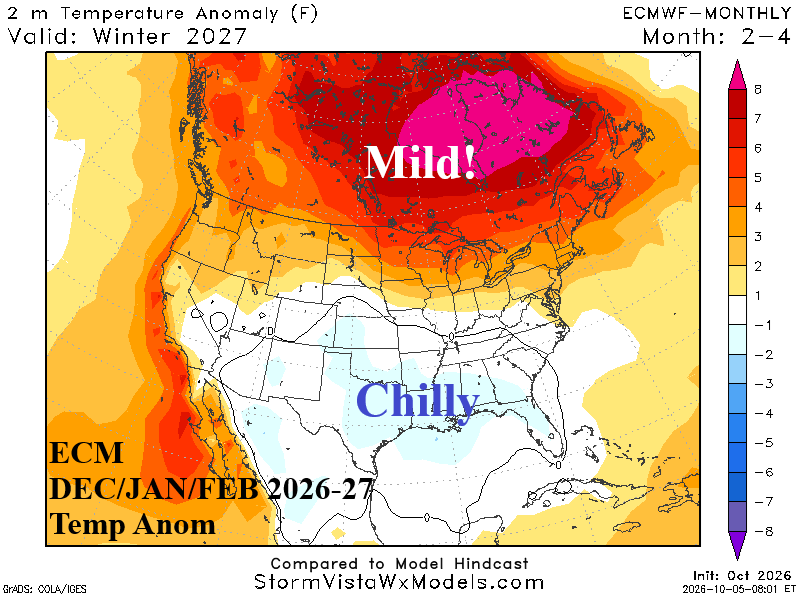
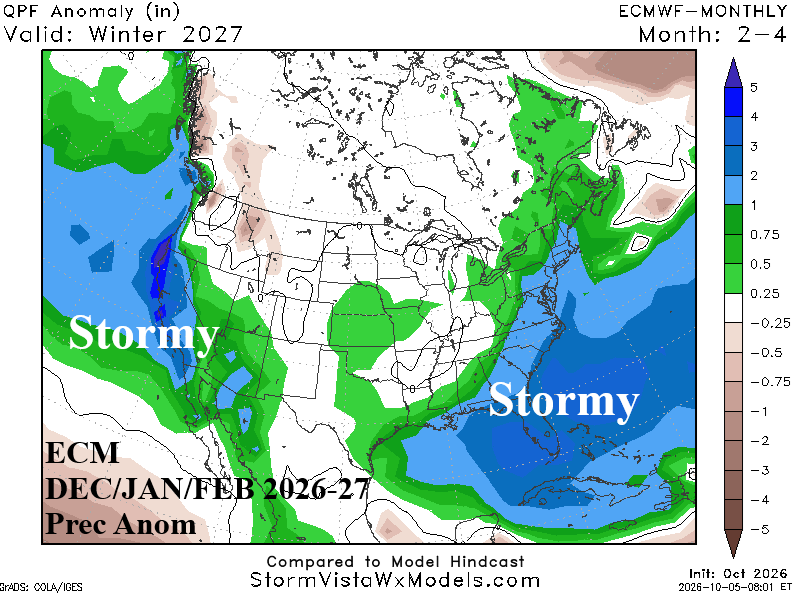
Fig. 1-2: ECMWF “monthlies” DEC/JAN/FEB 2026-27 temperature and precipitation anomalies forecast for North America updated yesterday.
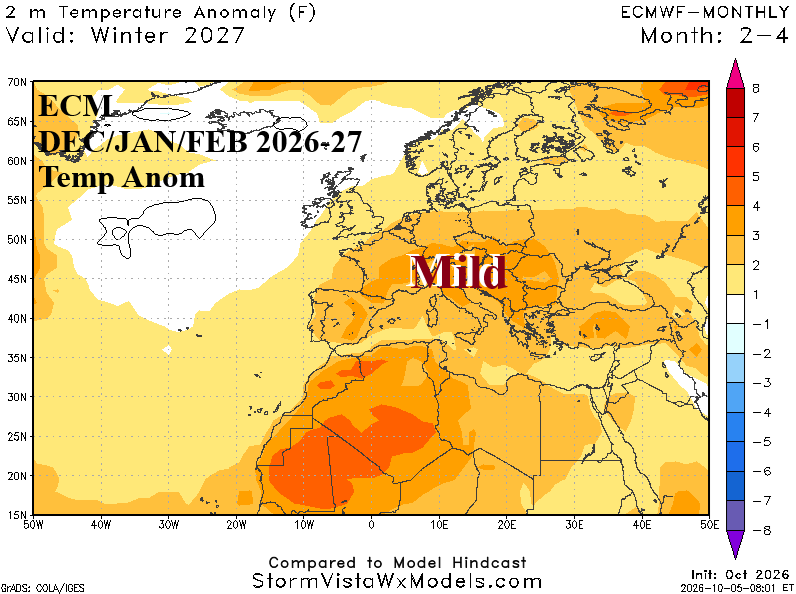
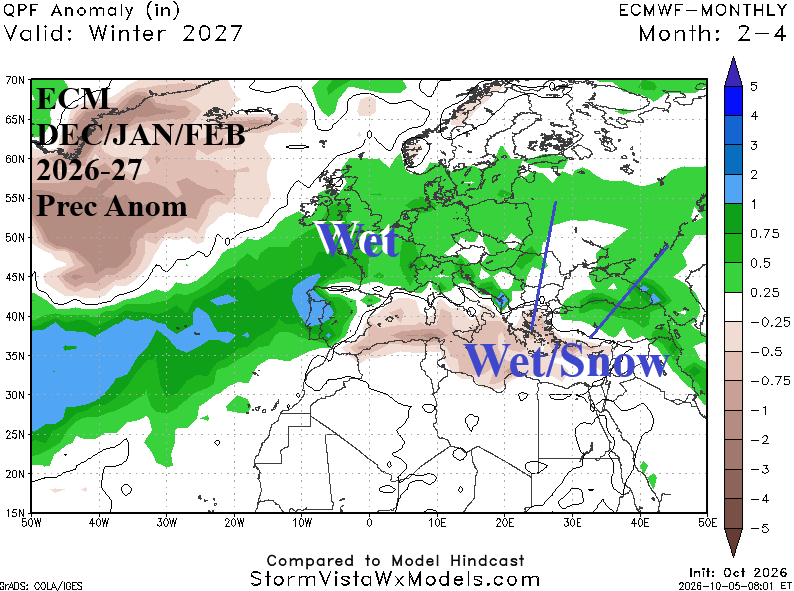
Fig. 3-4: ECMWF “monthlies” DEC/JAN/FEB 2026-27 temperature and precipitation anomalies forecast for Europe updated yesterday.
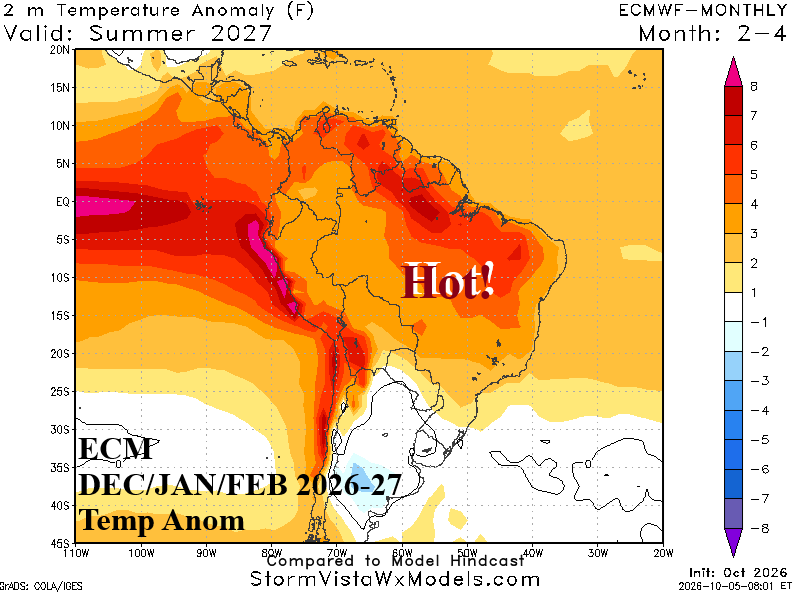
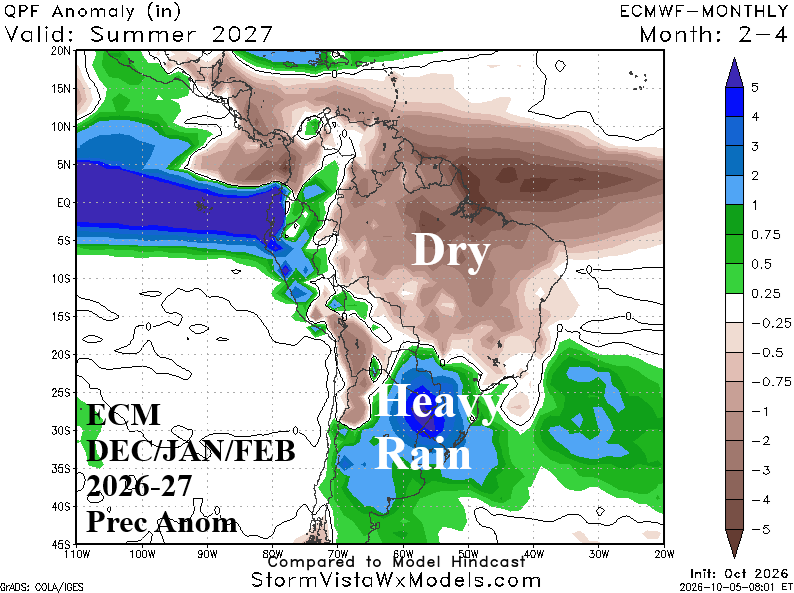
Fig. 5-6: ECMWF “monthlies” DEC/JAN/FEB 2026-27 temperature and precipitation anomalies forecast for South America updated yesterday.
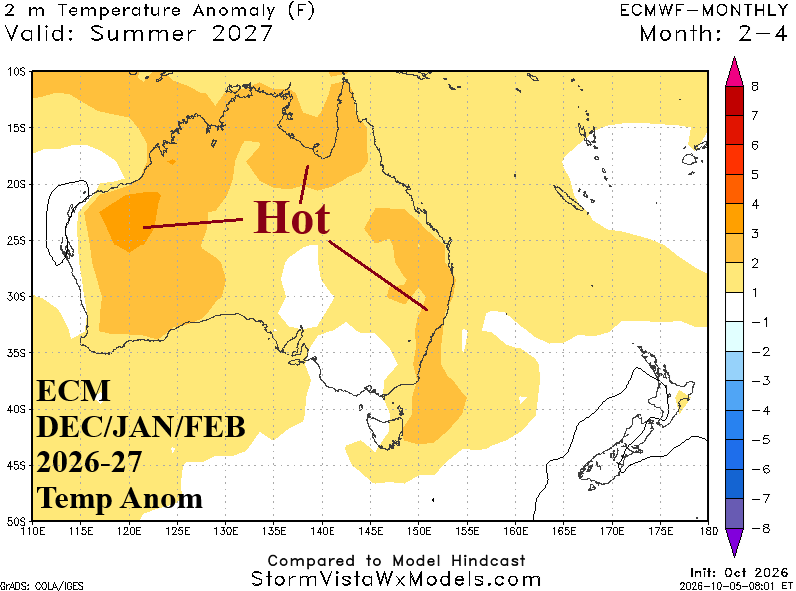
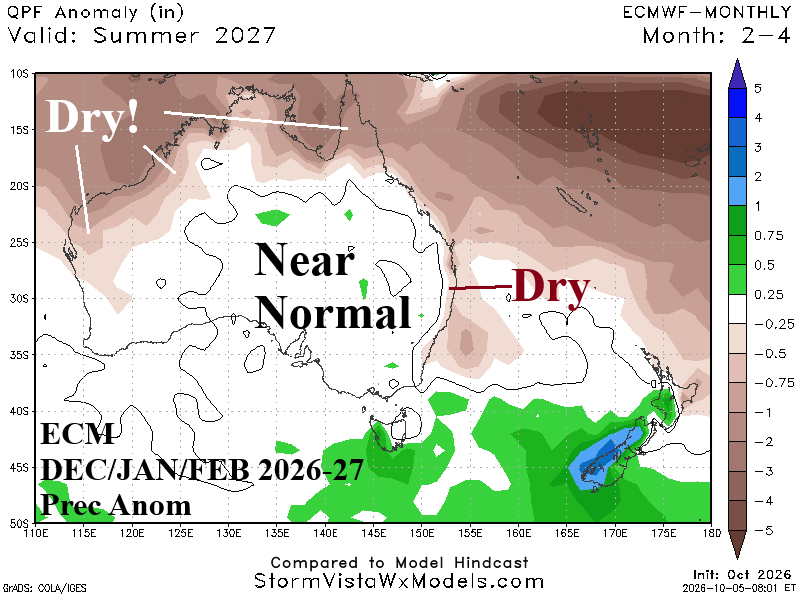
Fig. 7-8: ECMWF “monthlies” DEC/JAN/FEB 2026-27 temperature and precipitation anomalies forecast for Australia updated yesterday.