

PJM West Summertime Heat Risk is Suppressed
04/17/2026, 1:45 pm EDT
Wet +IOD Runs Some Interference on Dry El Nino Climate During India Monsoon Season
04/22/2026, 7:02 am EDT
Climate Impact Company Daily Feature
Issued: Monday, April 20, 2026
Do wet soil regions influence following summer climate in the U.S.?
Climate discussion: Historically, large drought areas during late spring are typically followed by anomalous heat and dryness for the summer season. During the past 10-15 years, as mid-latitude oceans have warmed, the spring drought to hot and dry summer relationship is less reliable. The warmer oceans sometimes increase the influence of the wet monsoon which can suppress drought during the summertime. The summer 2026 climate forecast is likely to feature a drought suppressing wet monsoon across the Southwest U.S. inspired by extreme anomalous warmth of the ocean surface in the Northeast Pacific near the North America Coast and a developing El Nino in the tropics.
Is there a relationship between summer climate and large areas of wet soil regions during spring? Yes! And the relationship can be profound and demonstrates a residual effect on mid-level troposphere pressure systems elsewhere.
Currently, the Great Lakes region is in a historically wet soil moisture regime which continues to intensify (Fig. 1). This region will enter the 2026 summer season with soaking wet soil conditions.
During the past 5 years, several APR/MAY mid-to-late spring precipitation regimes have produced regional wet soils followed by summertime when 500 MB low pressure areas roamed nearby. The catalyst to this relationship is wet soils increasing evaporation rates to produce clouds and showers (and lower pressure). As interesting, is the residual upstream/downstream effect which can amplify high pressure.
Last year, mid-to-late spring produced a large area of wet soils in the Mid-south U.S. (Fig. 2). Consequently, nearby low pressure formed during the summer season in the southeastern Great Plains (Fig. 3). The low-pressure area suppressed summer heat and maintained a showery regime. Note that the increasingly convective rains caused by the low-pressure area vented latent heat into the mid-troposphere to the northwest and northeast (most effectively across the Northeast U.S.) causing a hot summer season.
During APR/MAY 2023 a large wet soil region was observed across the Interior West (Fig. 4). The following summer found lingering weak low pressure in the West with a compensating amplified upper ridge to the southeast over Mexico and farther downstream, a compensating low pressure that cooled the East during summer 2023 (Fig. 5).
A large region of wet soil covered the Gulf States during mid-to-late spring 2021 (Fig. 6). The following summer season observed a cutoff low-pressure area nearby in eastern Texas (Fig. 7) and a compensating and amplified high pressure across drought areas of the Northwest and Northeast U.S.
The wet Great Lakes soil moisture region is a late developer. Input to climate forecasts for summertime have been underplayed. However, an increasing influence of this phenomenon is added to the updated Climate Impact Company month 1-4 ahead climate outlooks for the U.S.
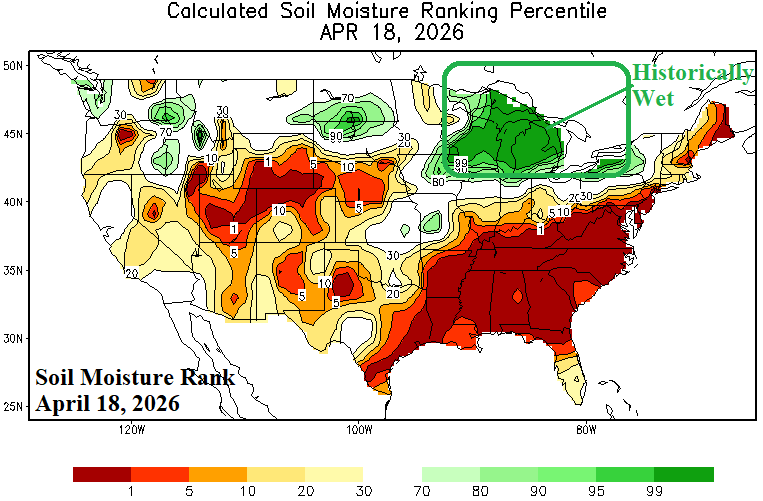
Fig. 1: Daily U.S. soil moisture rankings identifying the historically wet Great Lakes region.
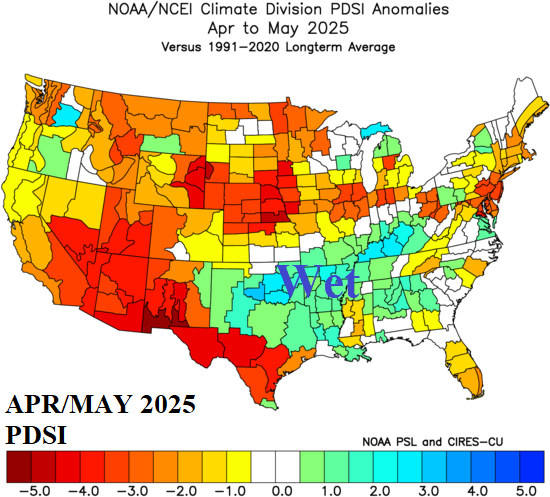
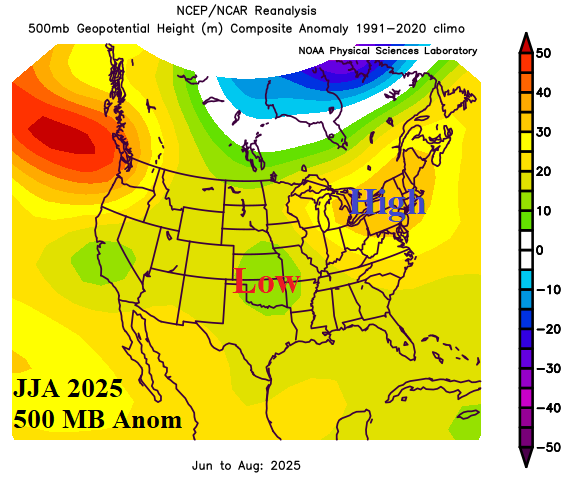
Fig. 2-3: APR/MAY 2025 U.S. Palmer Drought Severity Index analysis and the following meteorological summer 500 MB anomaly pattern.
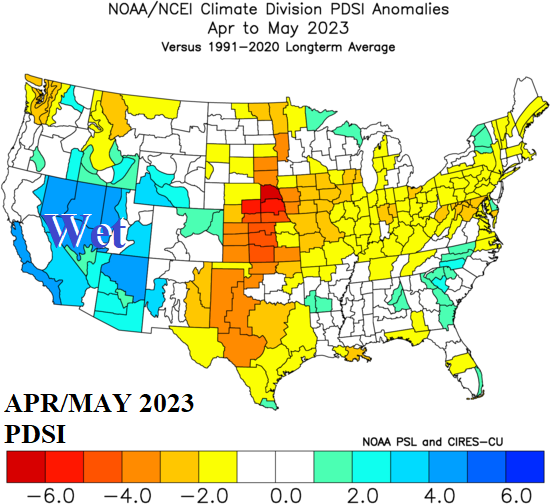
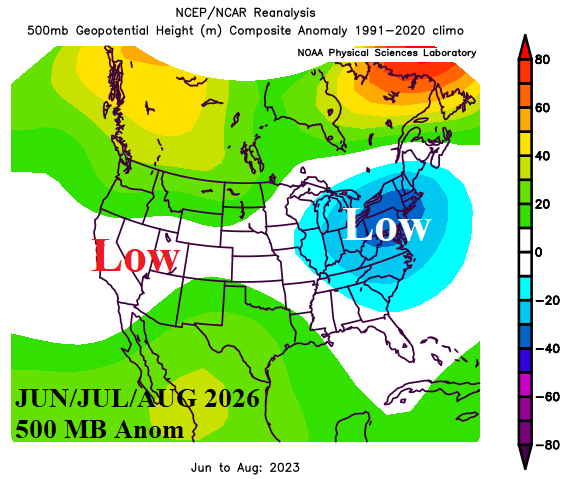
Fig. 4-5: APR/MAY 2023 U.S. Palmer Drought Severity Index analysis and the following meteorological summer 500 MB anomaly pattern.
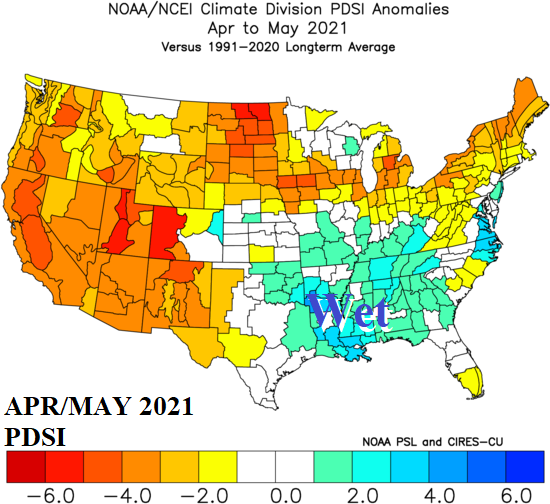
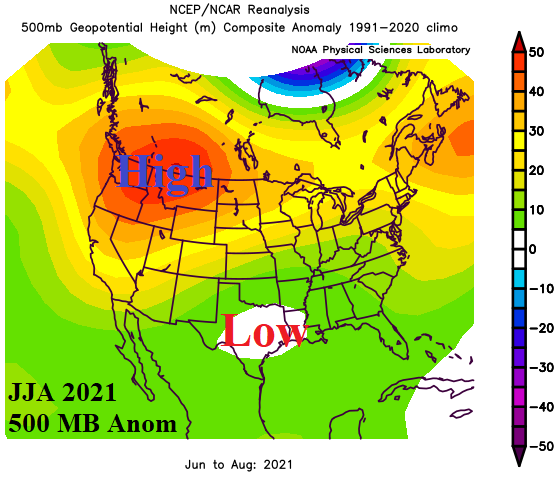
Fig. 6-7: APR/MAY 2021 U.S. Palmer Drought Severity Index analysis and the following meteorological summer 500 MB anomaly pattern.