
Regenerating Hot/Dry High-pressure Ridge Biased Eastward
07/22/2026, 5:19 am EDT
Slowly, Europe Heatwave Shifts Eastward in August
07/25/2026, 6:54 am EDT
Climate Impact Company Early AG Market ALERT
Issued: Thursday July 23, 2026
Highlight: Heatwave to expand Great Plains drought; Medium range widespread heat and dryness widens the Europe drought.
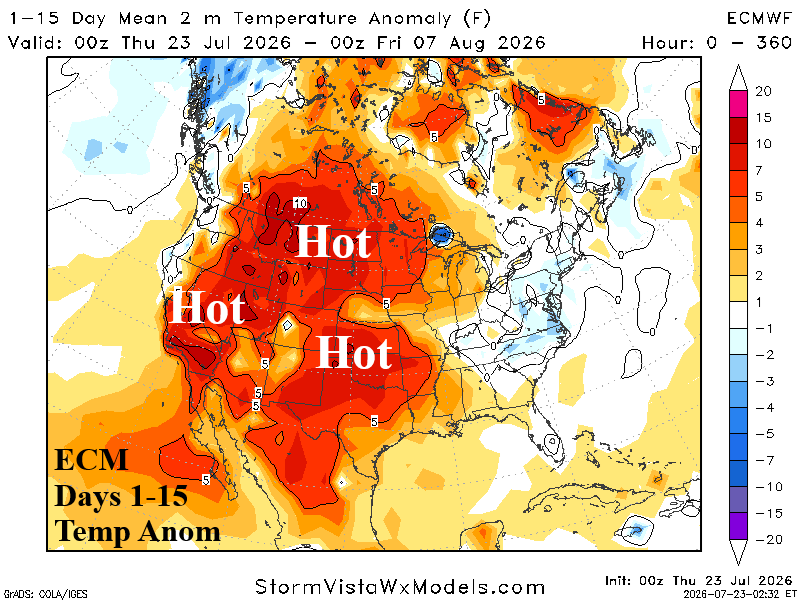
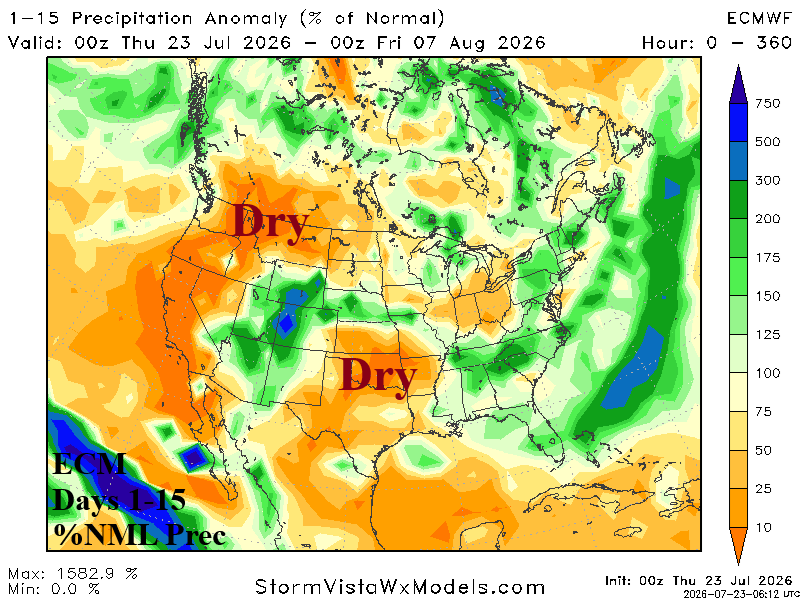
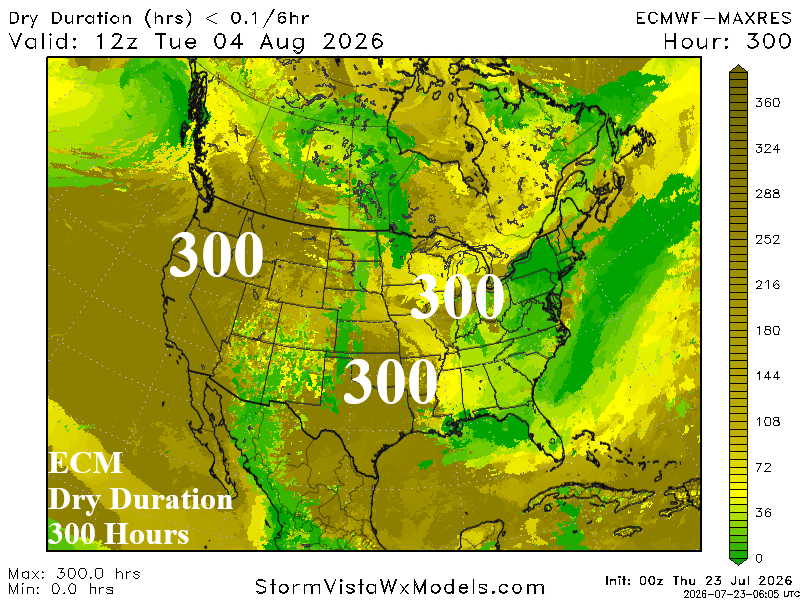
Fig. 1-3: ECM 15-day U.S. temperature and precipitation anomalies forecast plus the zones of 300-hour dry duration.
Discussion: A dangerous late July/early August lengthy heatwave coupled with dry weather event is forecast for much of the Great Plains based on the latest ECMWF outlooks (Fig. 1-2). The model indicates a narrow path of thunderstorm activity during the period across Nebraska, other models are drier across the entire Central U.S. The dry duration is 300 consecutive hours for the Great Plains from Kansas to Texas and parts of the Midwest States (Fig. 3). Currently, drought is identified by daily U.S. soil moisture analysis in the southwestern Great Plains and Nebraska northeastward through the Upper Midwest (Fig. 4). Much of the U.S. AG Belt has shifted drier during July so far (Fig. 5). Given the forecast, drought expansion for the southern and northern Great Plains and potentially parts of the Ohio Valley and Mid-south U.S. is likely during early August.
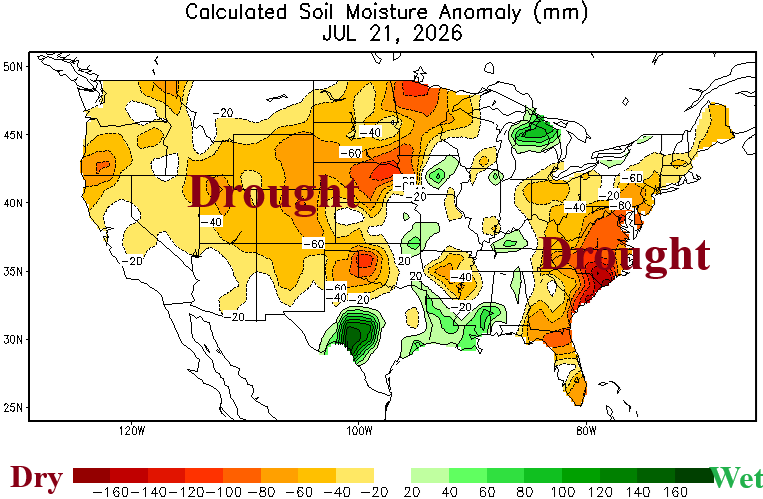
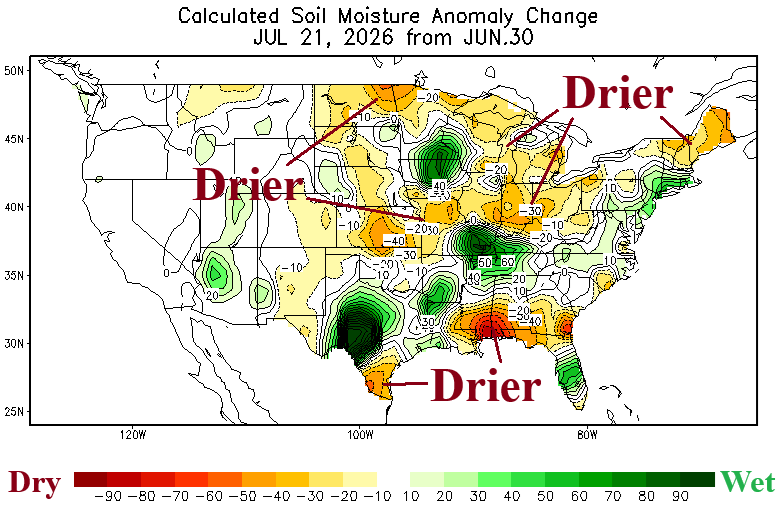
Fig. 4-5: U.S. daily soil moisture anomalies analysis and July change (so far).
In Europe, daily soil moisture anomalies analysis reveals a large drought most intense in France and Romania (Fig. 6). Unfortunately, during the medium range, another major Europe heatwave is likely to develop and expand initially biased toward the western half of Europe and gradually covering the entire region (Fig. 7-8). While streaks of rain are possible in the short term, most of the next 15 days is dry across Europe (Fig. 9) and coupled with the late July/early August heat, drought expansion and intensification is likely.
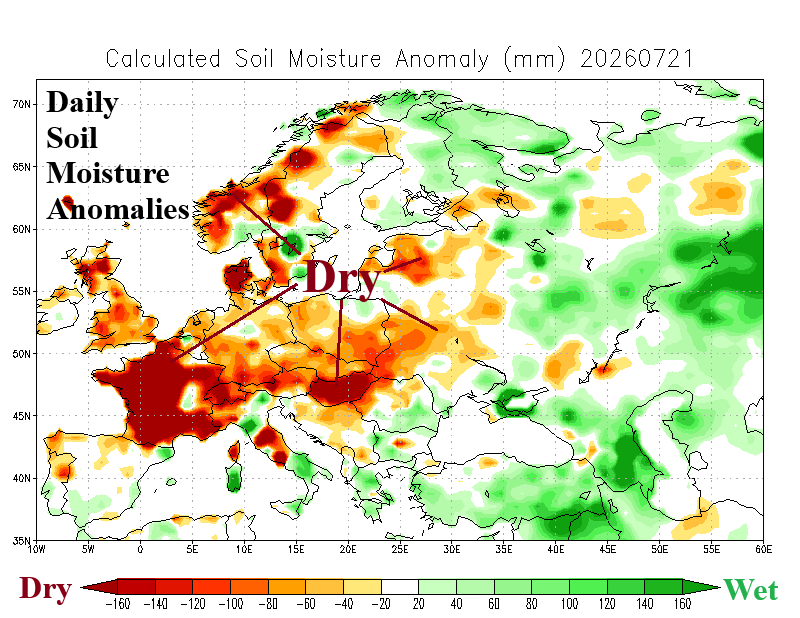
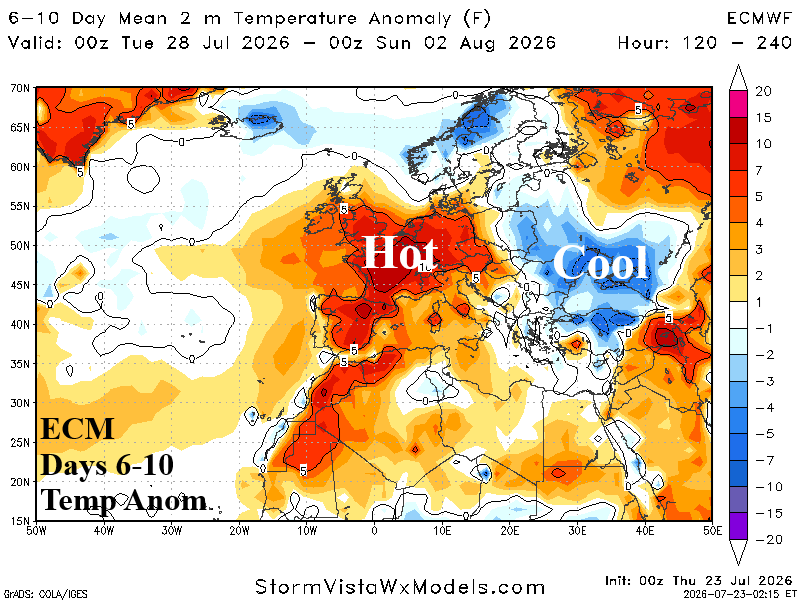
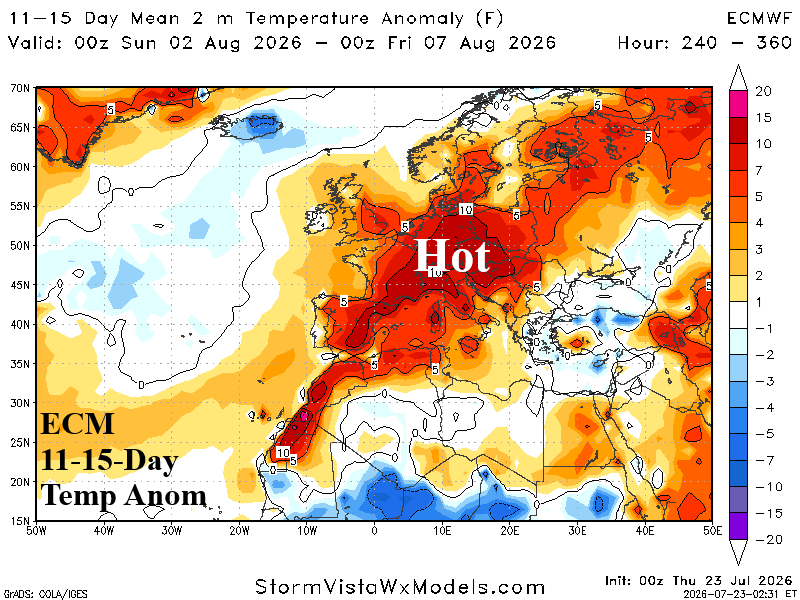
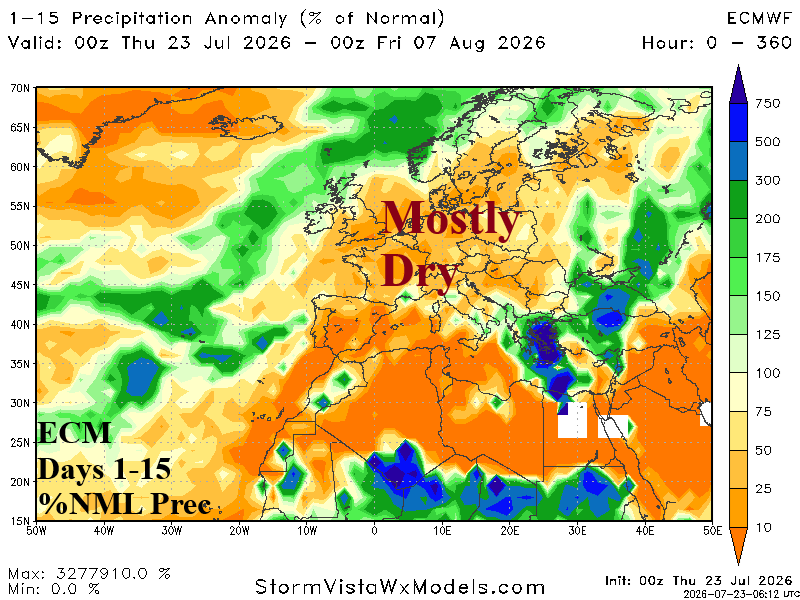
Fig. 6-9: Daily soil moisture anomalies analysis plus the ECM medium range temperature anomalies forecast and 15-day percent of normal rainfall.