
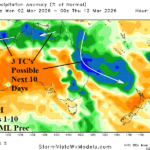
Heavy Rain Continues in Australia; Queensland Primary Target. Possible 3 Tropical Cyclones This Week!
03/02/2026, 1:35 pm EST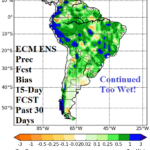
Wetter 15-Day Forecasts for South America; Be Aware of Ongoing Wet Bias for Forecasts
03/05/2026, 4:52 am EST
Climate Impact Company U.S. Medium Range Report
Issued: Wednesday March 4, 2026
Highlight: In the U.S., the medium/extended range forecasts trend warmer.
Charts of the day: Canadian Meteorological Center climate outlook for spring 2026.
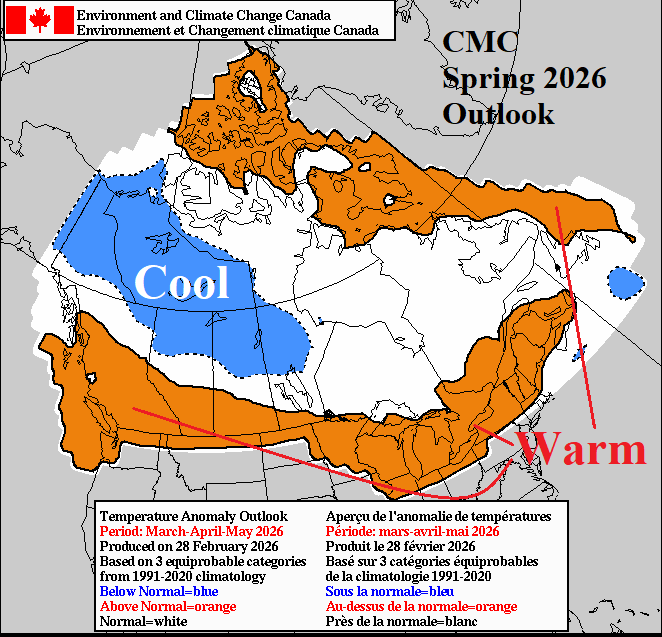
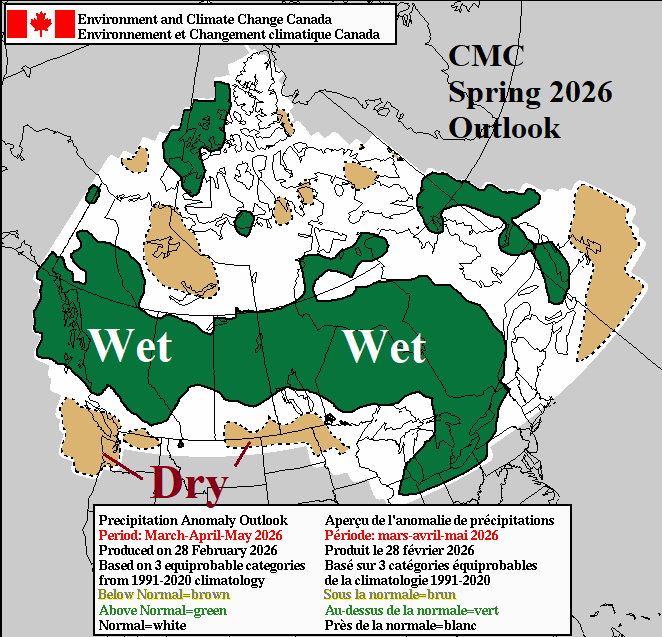
Discussion: The Canadian Meteorological Center expects a warmer and drier than normal spring season near the U.S./Canada border with wetter and cooler conditions extending from Northwest Territory eastward to Western Quebec.
Medium-range 6-10 Day Forecast Valid March 9-13, 2026 (AIFS ENS and 24-hour change)
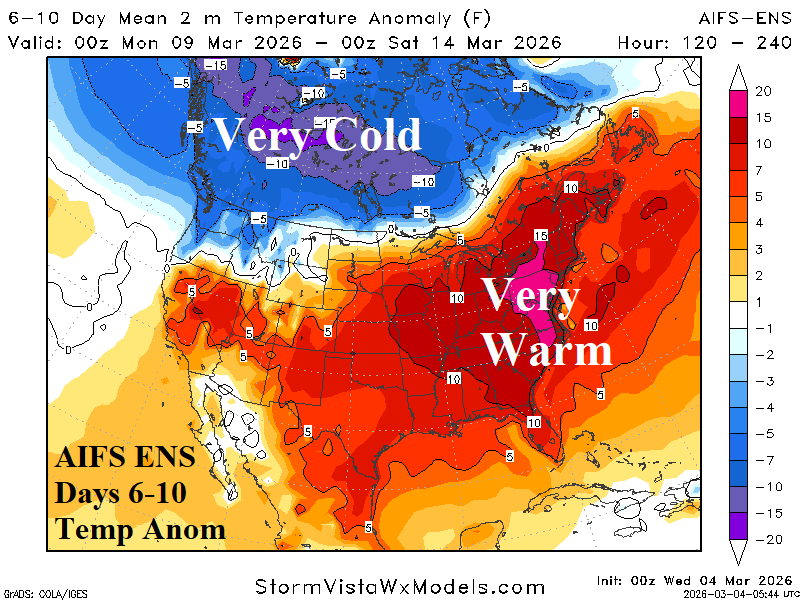
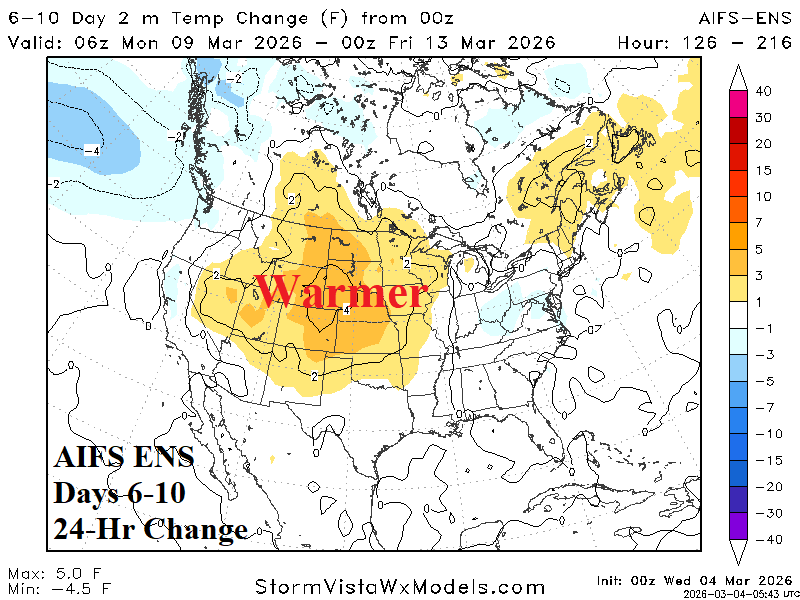
Discussion: AIFS ENS is very warm in the East during the 6-10-day period while the Canadian chill is less interested in extending south into the U.S. as the West-central States shift warmer.
Medium-range 11-15 Day Forecast Valid March 14-18, 2026 (AIFS ENS and 24-hour change)
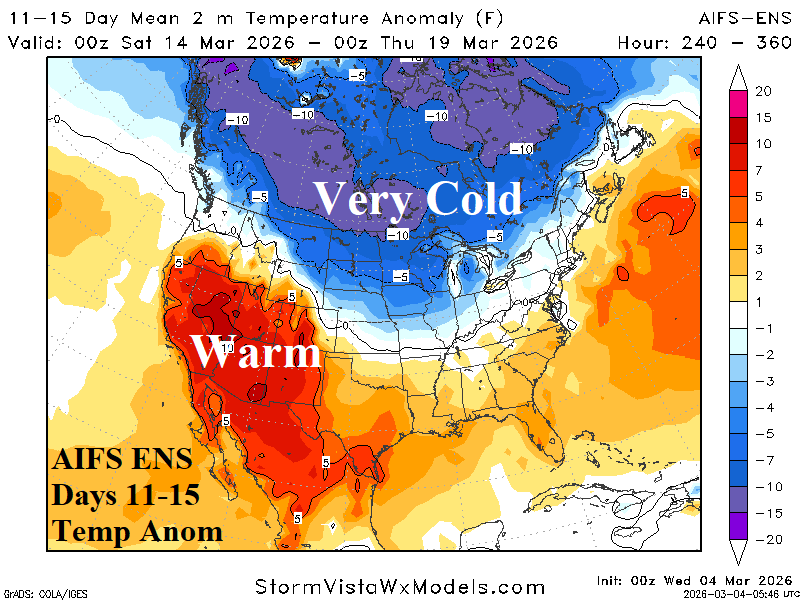
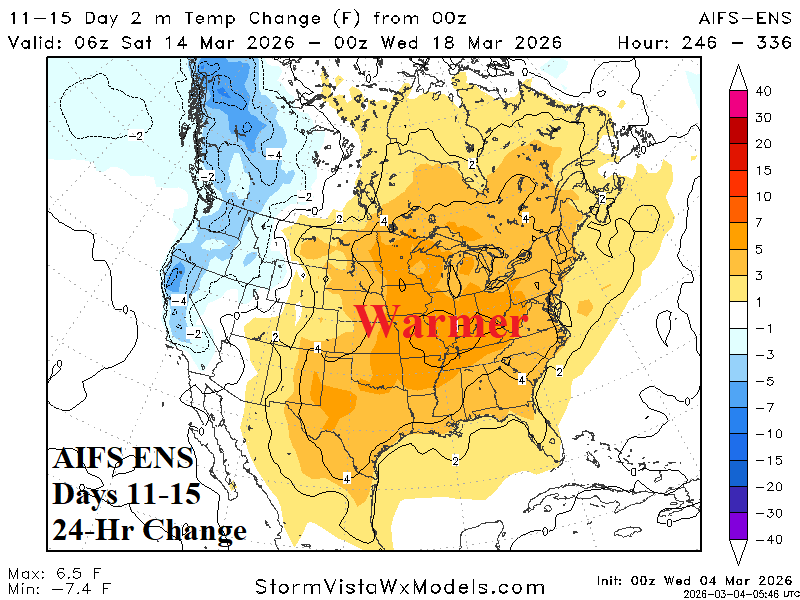
Discussion: The Canadian chill reaches the North-central/Upper Midwest U.S. in the 11-15-day period although with less intensity as most of the Central and East U.S. is not as chilly as indicated yesterday.
U.S. Medium-range Precipitation Forecast
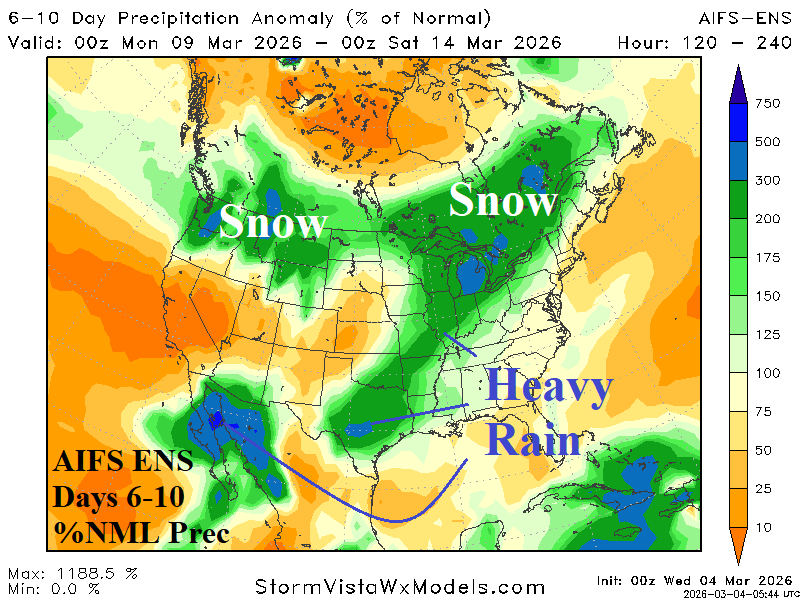
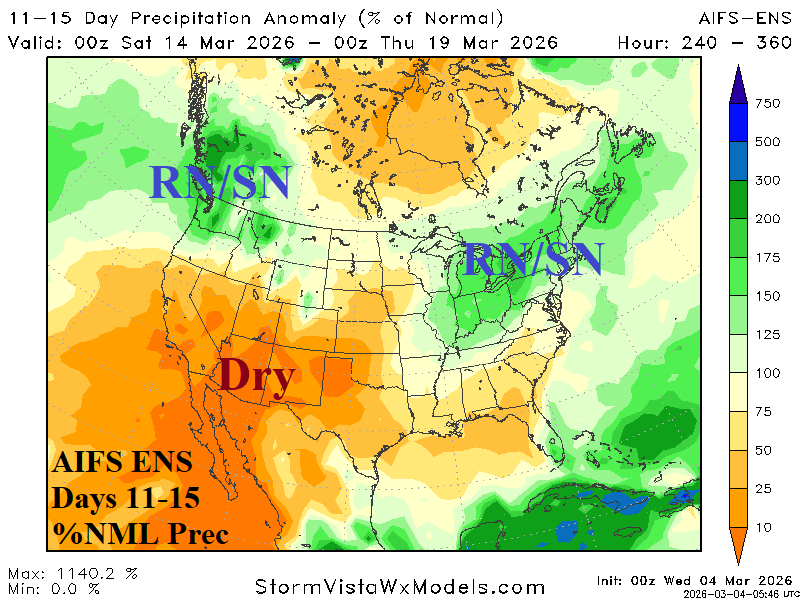
Discussion: Heavy rain is indicated across northwestern Mexico in the 6-10-day period while Southern Canada is stormy featuring plenty of snowfall. Severe storms stretch from Texas to the Midwest. In the 11-15-day period, storminess shifts to the Northeast and is maintained across Southwest Canada.
Days 16-20 Extended range Temperature Forecast valid March 19-23, 2026
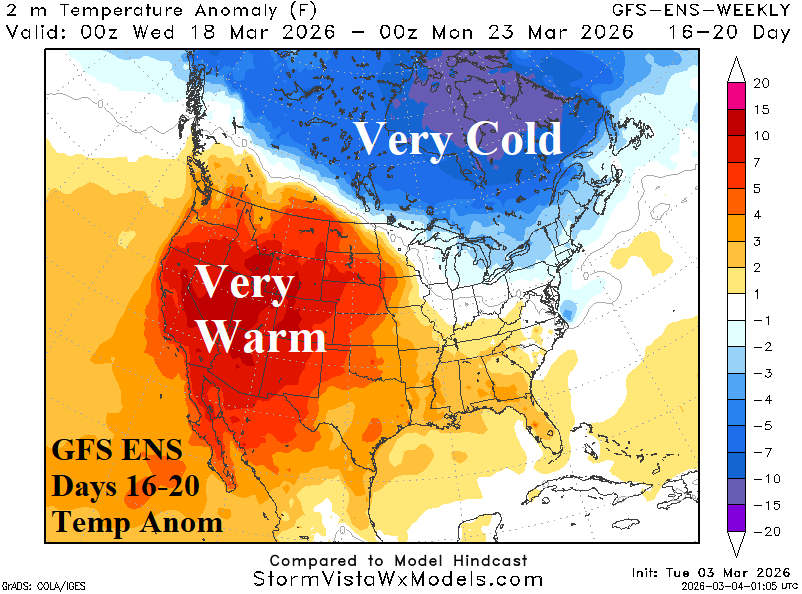

Discussion: The extended range outlook is warmer West while the core of the Canadian chill shifts eastward but with limited direct influence on the East U.S.