
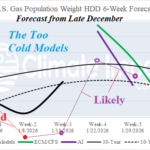
U.S. HDD Forecasts Have Been Too Cold
01/11/2026, 9:07 am EST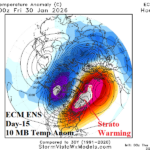
Regional Stratospheric Warming Expands Westward to North America East Coast Late January; Causes East U.S. Chill
01/15/2026, 9:04 am EST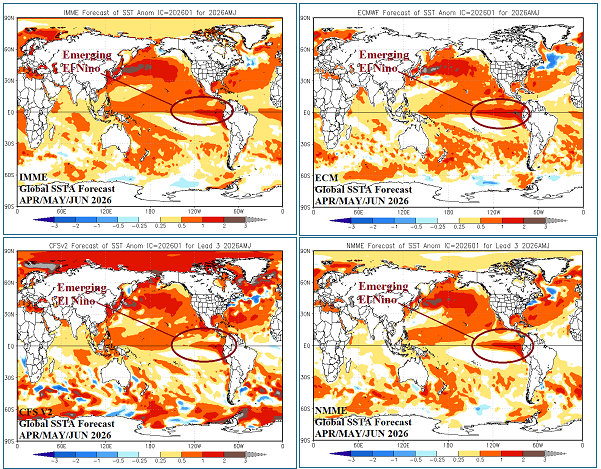

Climate Impact Company ENSO Climate Diagnostics
Issued: Tuesday January 13, 2026
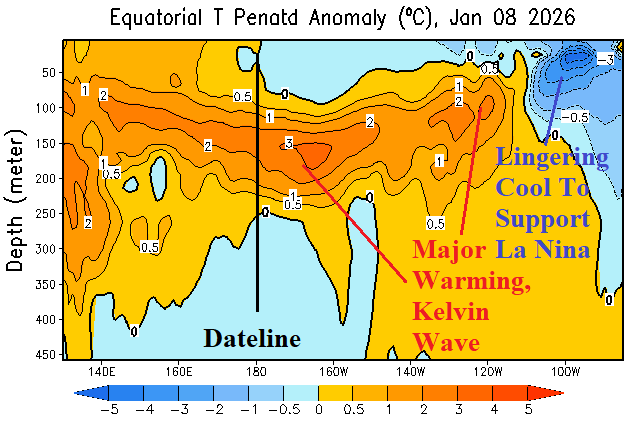
Fig. 1: The current upper ocean heat analysis across the equatorial Pacific Ocean.
Discussion: Upper ocean heat east of the Dateline in the equatorial East Pacific is steadily increasing. The warming is attributed to an eastward shifting Kelvin Wave which has increased intensity during January (Fig. 1). The upper ocean heat warming is similar with 2023 ahead of an El Nino event that developed later that year. Global SSTA forecasts have adjusted to the evolving El Nino scenario for quarter 2 of 2026. Included is the International Multi-model Ensemble (IMME), ECMWF, NCEP CFS V2, and National Multi-model Ensemble (NMME). IMME and ECMWF are similar with moderate El Nino (Fig. 2-3) while CFS V2 and NMME are slightly less aggressive (Fig. 4-5). Of course, the forecasts indicated are made as the ENSO springtime prediction barrier approaches. However, the Kelvin Wave in the East Pacific subsurface substantiates the warmer SSTA forecasts by 4 global SSTA models. Climate Impact Company will re-issue month 1-4/season 1-4 ahead climate forecasts this week identifying the changing ENSO influence.
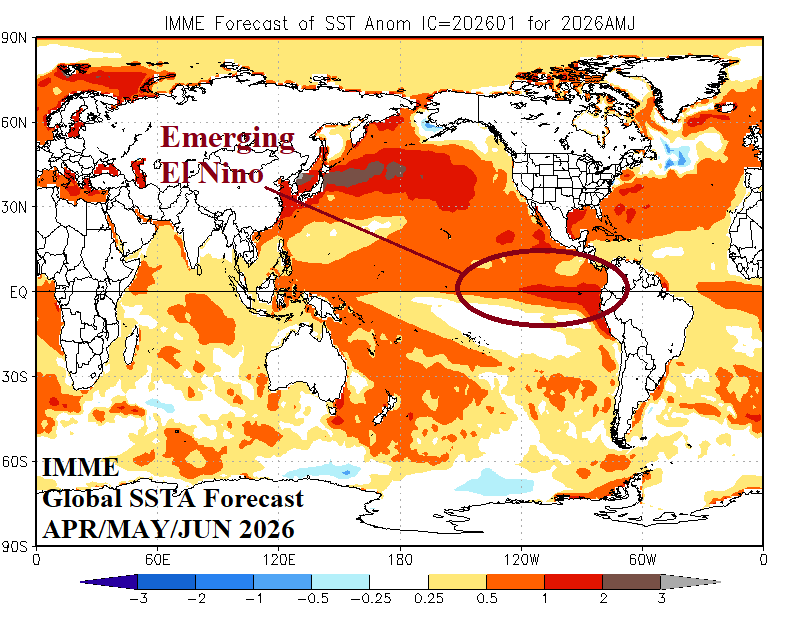
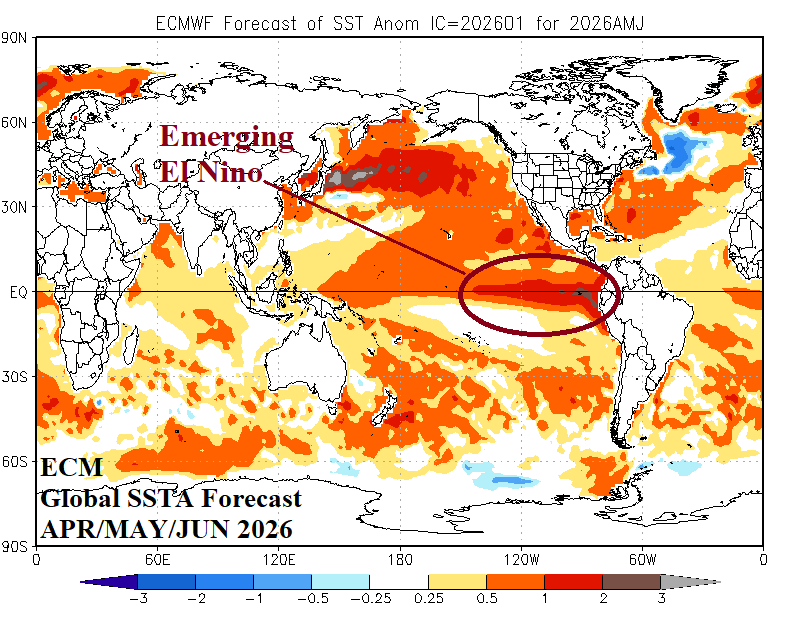
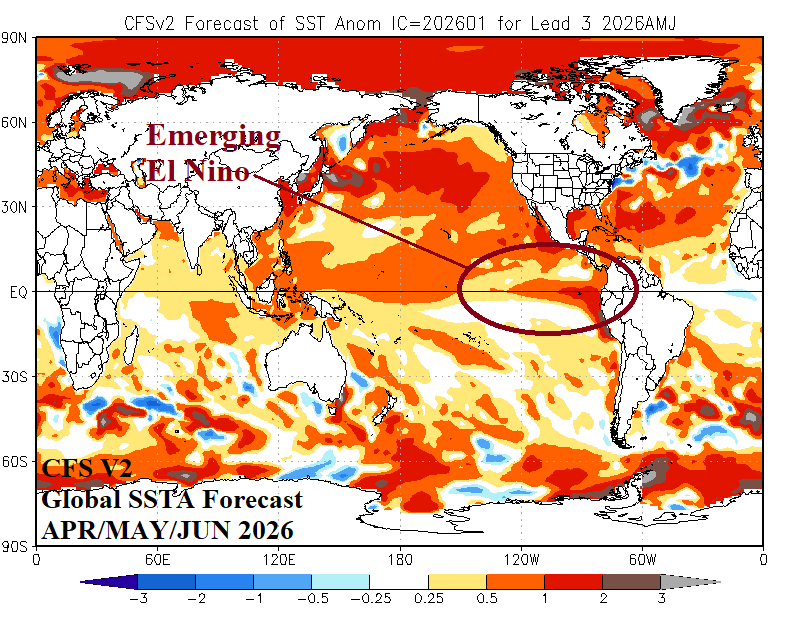
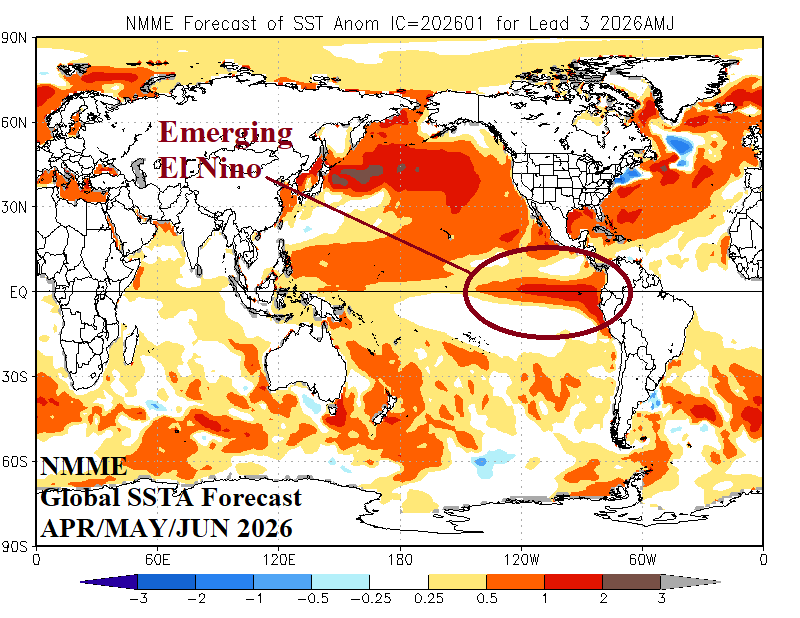
Fig. 2-5: Four global SSTA models each agree on developing El Nino for APR/MAY/JUN 2026.