

MJO Shift Favors Wetter Brazil Pattern Ahead
01/21/2026, 4:43 pm EST
ECM and AI Graph Cast Agreeable to Wet 16-30-day Forecast for Brazil
01/25/2026, 3:38 pm EST
Climate Impact Company Early AG Market ALERT
Issued: Thursday January 22, 2026
Highlight: Wetter Brazil/drier East Argentina, and hot/dry East Australia.
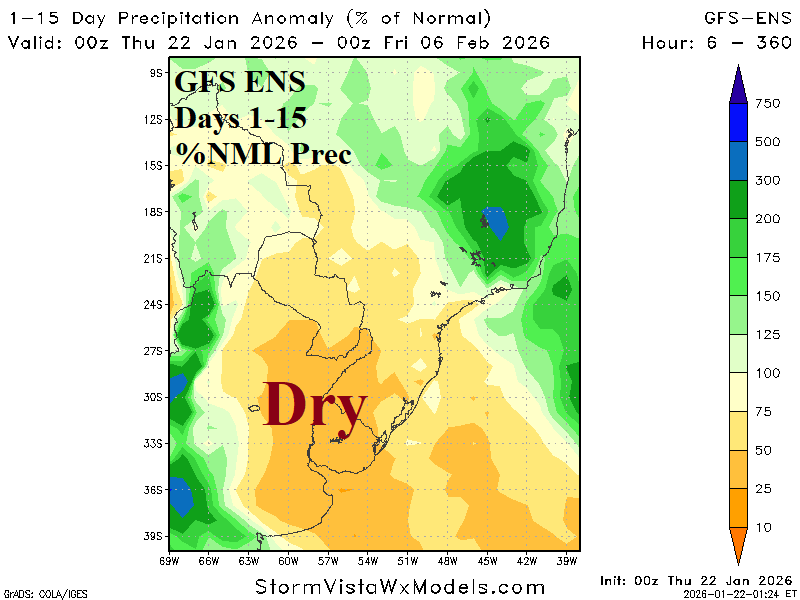
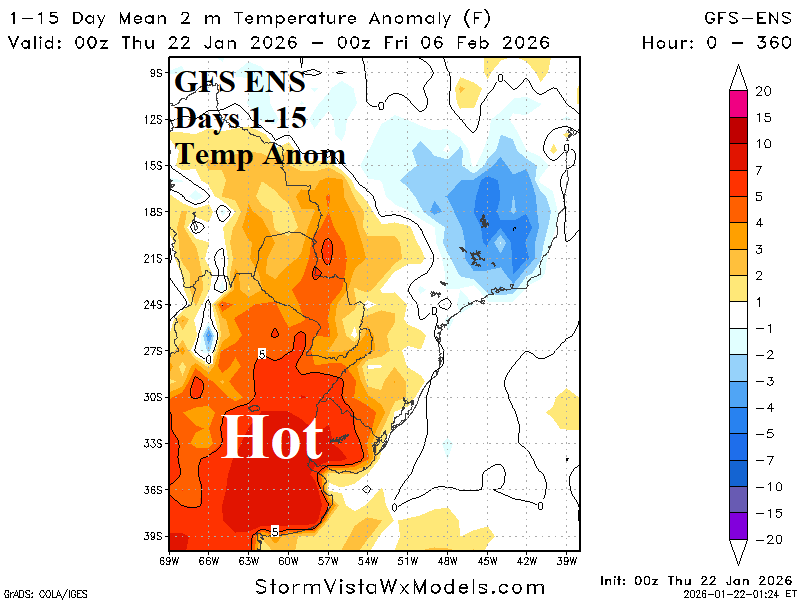
Fig. 1-2: The GFS ENS 15-day percent of normal rainfall and temperature anomaly forecast across Brazil and Argentina.
Discussion: The Madden Julian oscillation (MJO) shifts from phase_7 to phase_1 (across the Americas longitude) over the next 2 weeks. The MJO influence on South America is a wetter weather pattern most evident in Brazil (Fig. 1). To compensate for the convective rains in East Brazil (and Chile), Northeast/East Argentina shifts drier and hotter (Fig. 2). The 2-week rainfall outlook is not expected to change into mid-February.
The MJO influence effects the Australia weather pattern. A drier and hotter weather pattern becomes intense across eastern continent through the next 2 weeks (Fig. 3-4). Possible record heat is forecast in Queensland and New South Wales. Eastern Australia rains appear during the middle third of February.
West and South Europe are exposed to a prohibitive storm track through the next 2 weeks (Fig. 5) with an attendant warming influence especially across Southeast Europe and Black Sea region (Fig. 6).
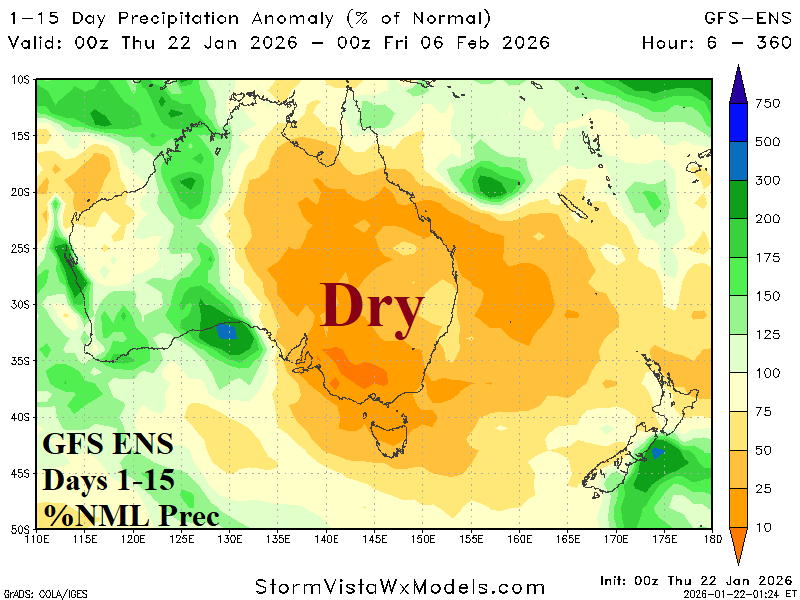

Fig. 3-4: The GFS ENS 15-day percent of normal rainfall and temperature anomaly forecast across Australia.
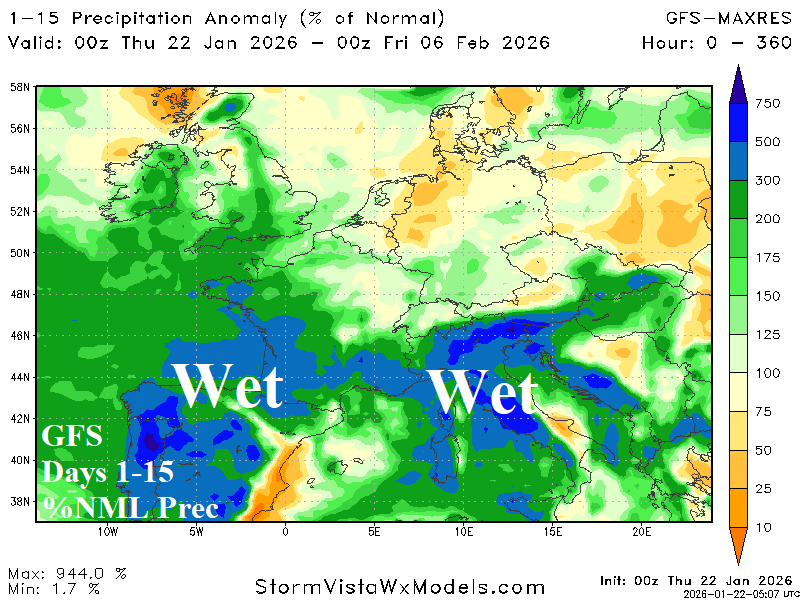
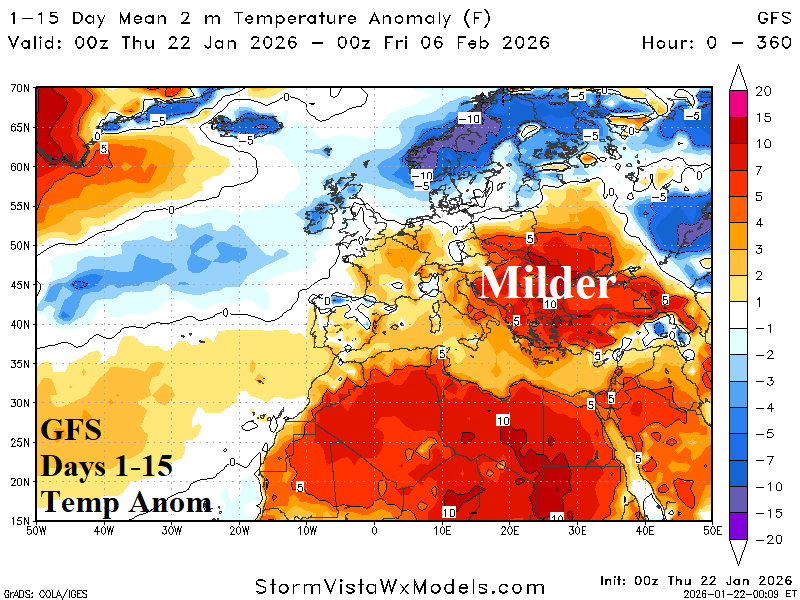
Fig. 5-6: The GFS 15-day percent of normal rainfall and temperature anomaly forecast across Europe.