
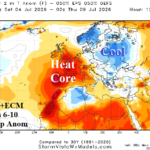
Worse-case Scenario for Europe as Southwest Europe Heat Regenerates, Pounces on France in Medium range
06/29/2026, 4:44 am EDT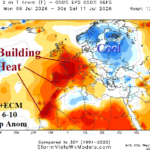
Another Regenerating Europe Heatwave Ahead
07/01/2026, 1:08 pm EDT
Climate Impact Company Week 2-4 Outlook
North America
Issued: Tuesday, June 30, 2026
Highlight: Not in favor of cooler (East) AI models, instead prefer hotter impactful scenarios for mid-summer in U.S.
Charts of the day: Days 13-15 on-demand upper air/temperature for U.S.
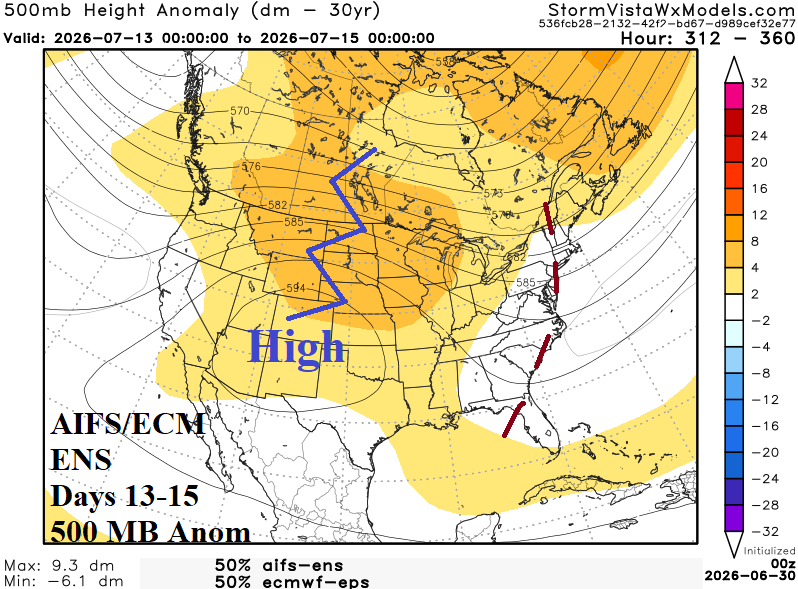
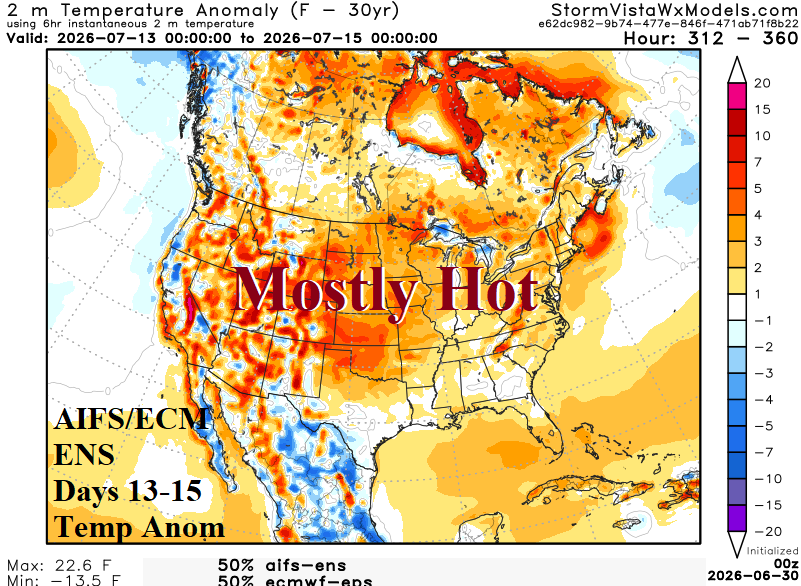
Discussion: The week-3 forecasts are cooler in the East according to most AI models and with weak MJO phase_7 and moderate -NAO there is some support for that projection. HOWEVER, during mid-summer with a vast hot air source region formed during June across the Southwest U.S., the AIFS and ECM Ensembles combine to emphasize the Southwest U.S. high pressure system entering week-3 muting an East Coast trough. Siding with warmer week-3/week-4 (models) is the correct approach.
Week-2 Ahead Forecast valid July 5-12, 2026: Southeast wetter/temperate, West Coast is cool, everywhere else is hot.
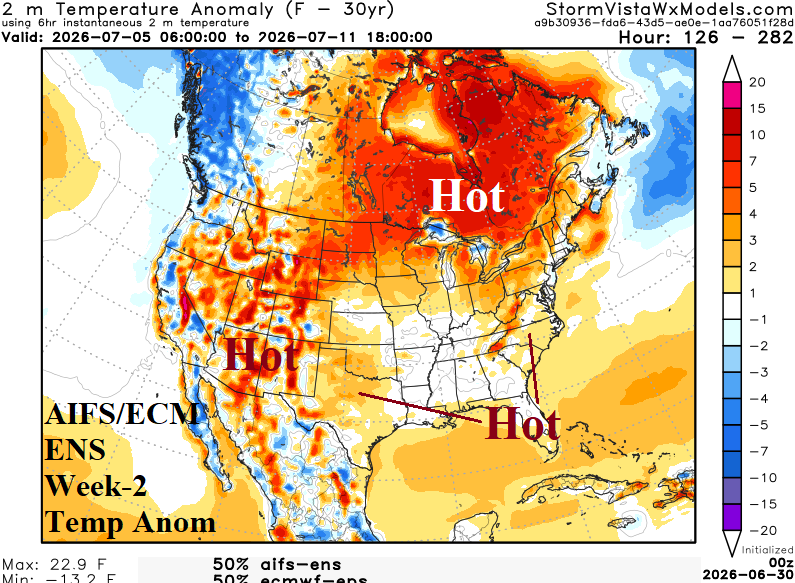
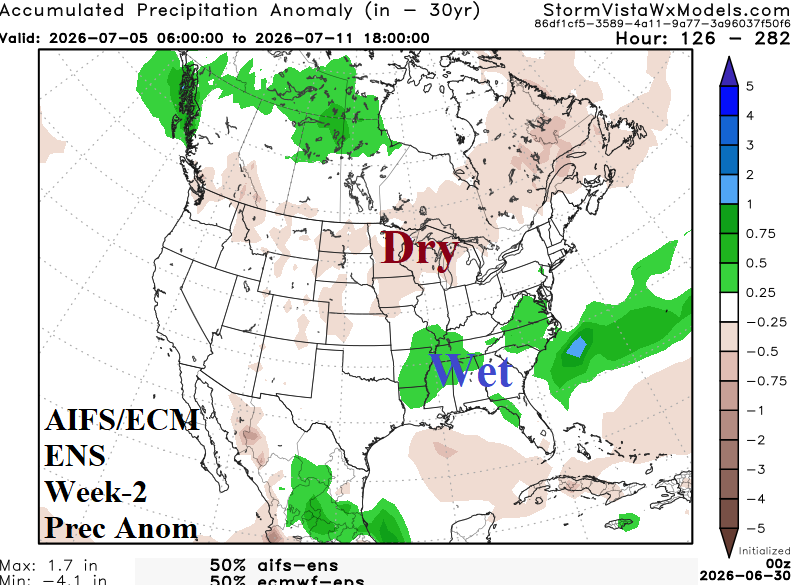
Discussion: On demand equally combined ECM ENS/AIFS ENS produce a hot forecast across Central/East Canada extending to the Southwest U.S. and to the Northeast Corridor. The Southeast U.S. will shift wetter and temperate.
Week-3 Ahead Forecast valid July 12-19, 2026: Northeast cools, wet monsoon cools Southwest, hot elsewhere including drought-parched Mid-Atlantic.
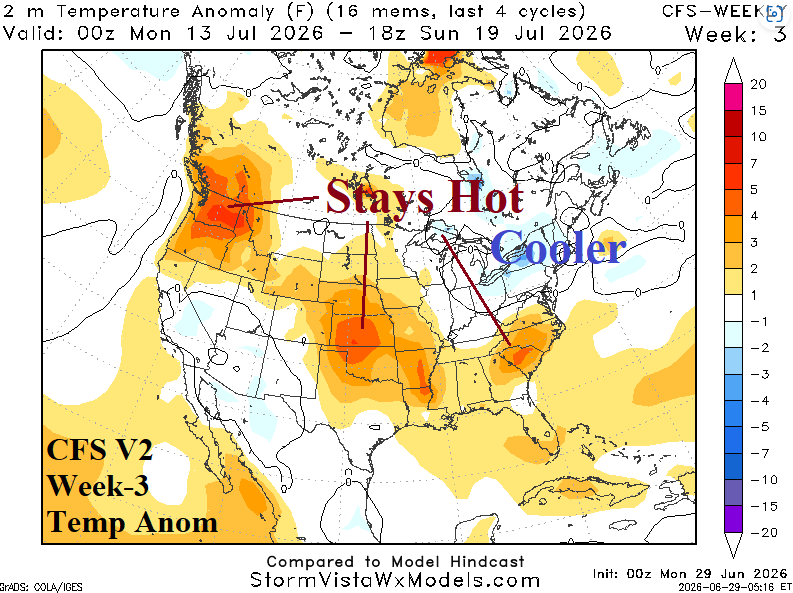
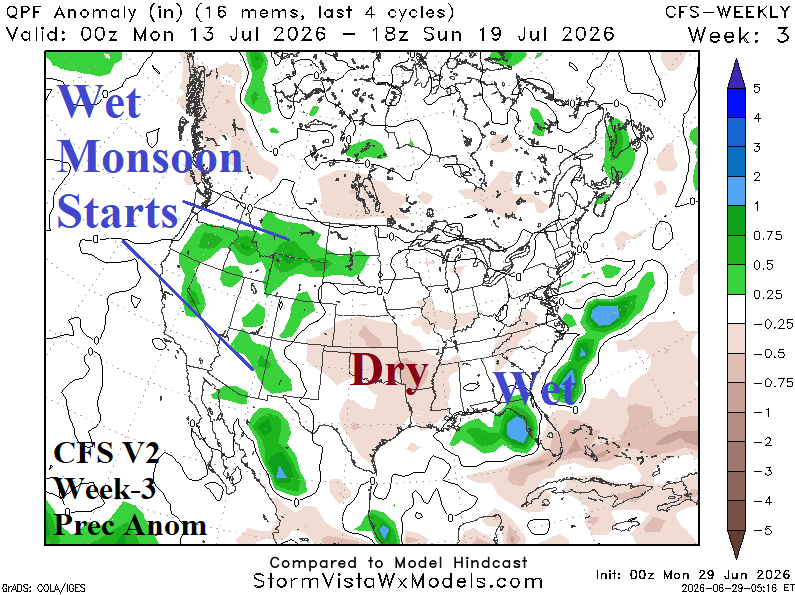
Discussion: “Weeklies” are either too hot (ECM) or too cool (AI). CFS V2 is most reasonable maintain hot weather risk for most of the U.S. respecting the -NAO to cool the Northeast (only). Drought should maintain impactful heat in the Mid-Atlantic States. The wet Southwest Monsoon is a below average confidence forecast suppressing heat in that zone.
Week-4 Ahead Forecast valid July 19-26, 2026: Peak climatological hot summer is very hot!
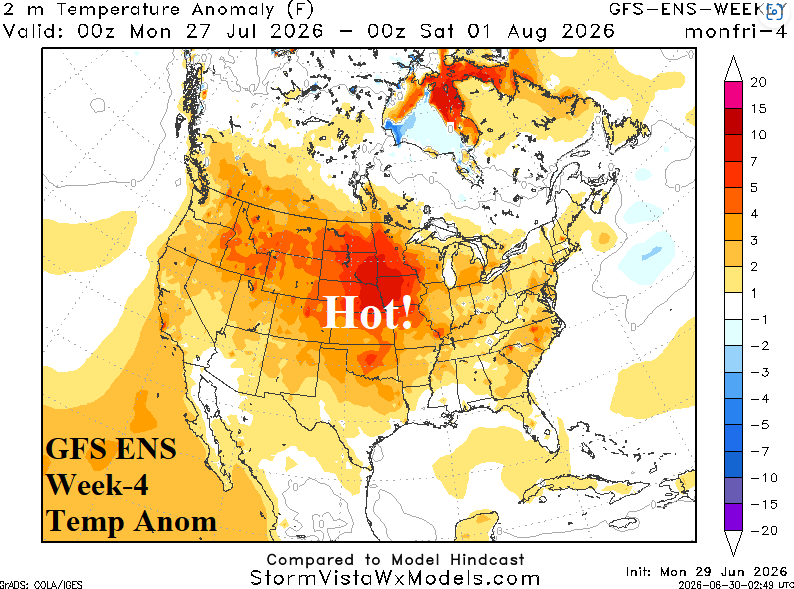
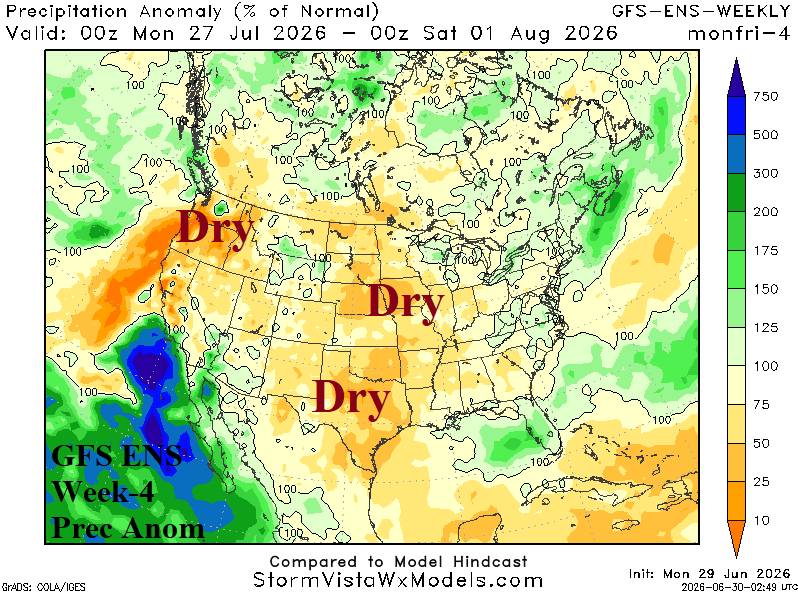
Discussion: Emphasized is mid-summer heat helped by a generally dry climate and much of the U.S. in dry-to-drought condition enabling important heat and dryness for the Great Plains. The peak climatological hot time of summer is very hot across most of the U.S.