
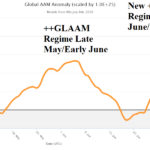
Does Aggressive +GLAAM Maintain Hot U.S. Temperature Bias Through JULY (Vs. Cooler AI Models)?
07/06/2026, 5:14 am EDT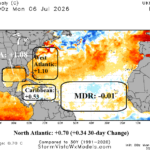
Updating North Atlantic SSTA Regimes
07/09/2026, 11:08 am EDT
Climate Impact Company Week 2-4 Outlook
North America
Issued: Tuesday July 7, 2026
Highlight: Active wet Southwest U.S. monsoon, Northeast rains, developing Midwest rains. Heat is most intense and consistent Mid-south States/Texas.
Chart of the day: U.S. week 3-5 projected CDD using ECM, CFS V2, and 3 AI models.
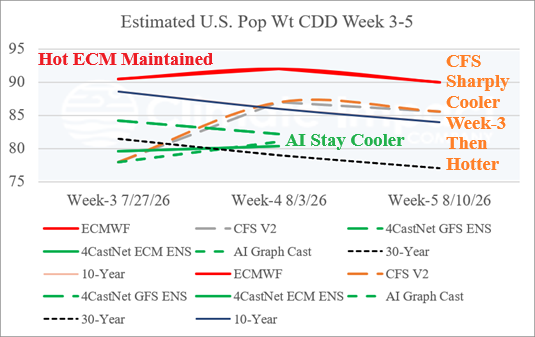
Discussion: The estimated U.S. CDD forecast for week 3-5 ahead remains hot according to ECM while AI models are consistently much cooler. Interestingly, CFS V2 is sharply cooler for week-3 then bounces hotter for week-4/week-5. The primary issue is whether the East U.S. is hot (or not). The East cools off later July but should gradually reheat although not as aggressively as ECM. CFS V2 has the right “trend” and AI models are too cool.
Week-2 Ahead (July 19-26, 2026): Hot bias remains West and Central U.S.; Wet Northeast.
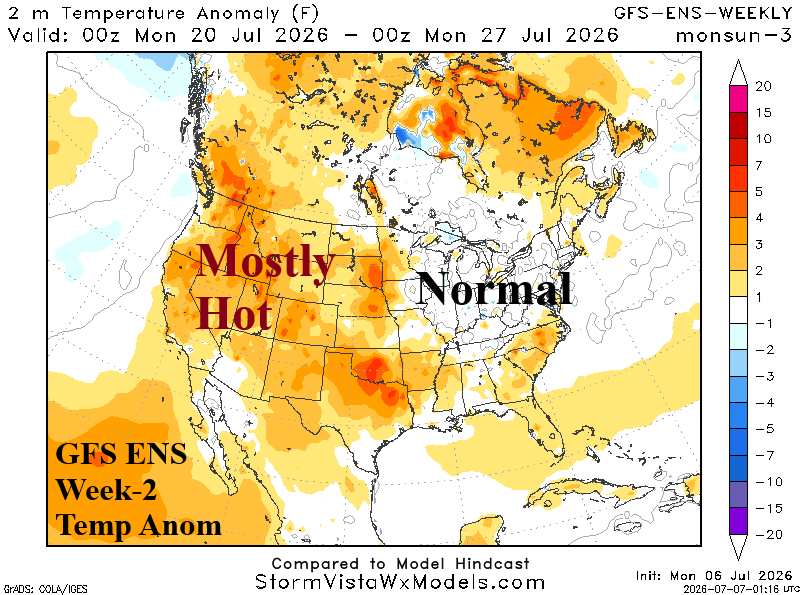
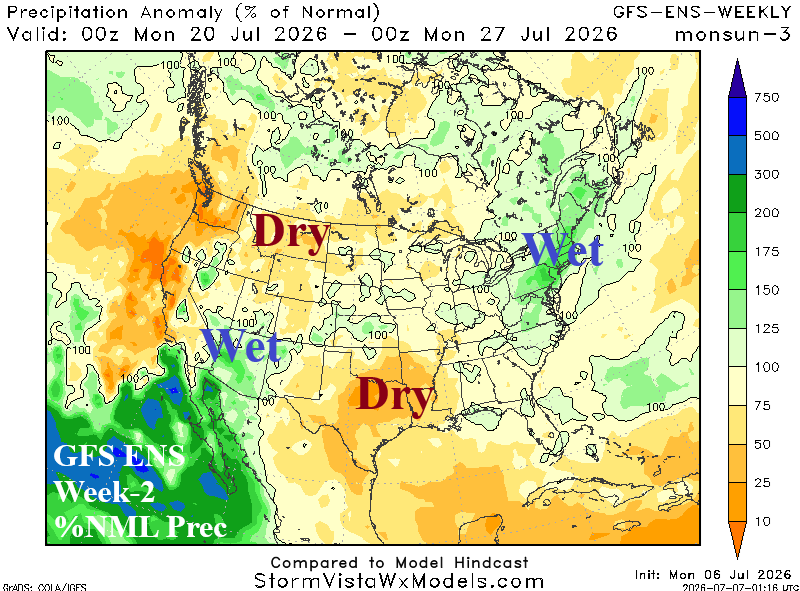
Discussion: Southwest U.S. wet monsoon loses some intensity while the Northeast U.S. Corridor is wet. The dry bias, along with hottest anomalies, shifts to Texas/Oklahoma/Arkansas. California heat continues although Southwest Canada dryness and anomalous heat is likely too strong.
Week-3 Ahead (July 26-August 1): Choppy heat; Northeast stays wet.
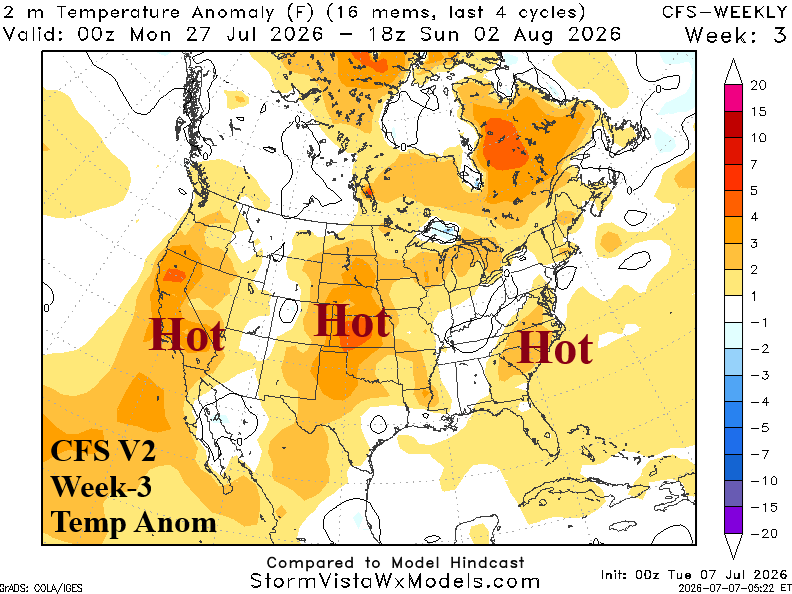
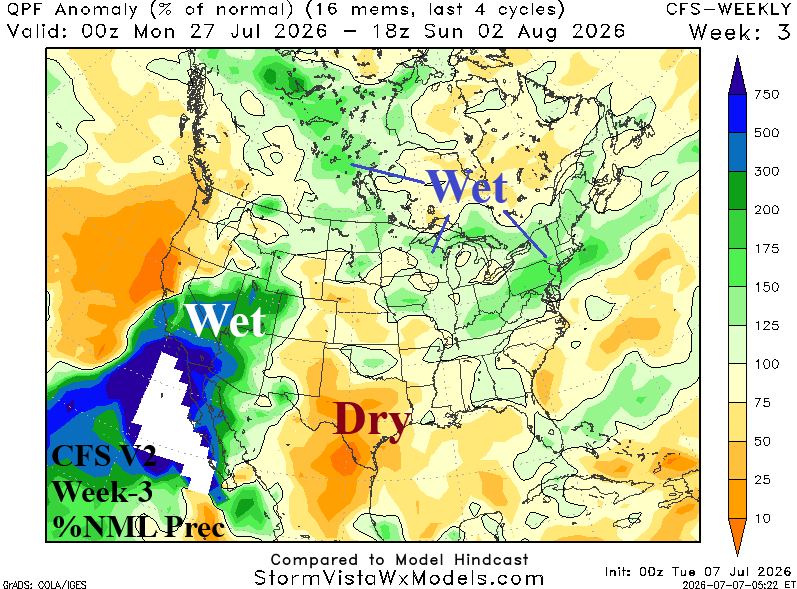
Discussion: “Choppy” heat characterizes the late July/early August outlook featuring zones of hot weather centered on California, the Great Plains, and Carolinas. Wet weather widens arcing from the Southwest U.S. wet monsoon northeastward into the South-central Canada and southeastward from there across the Northeast U.S.
Week-4 Ahead (August 1-8): Anomalous heat either side of the Southwest to Midwest wet arc.
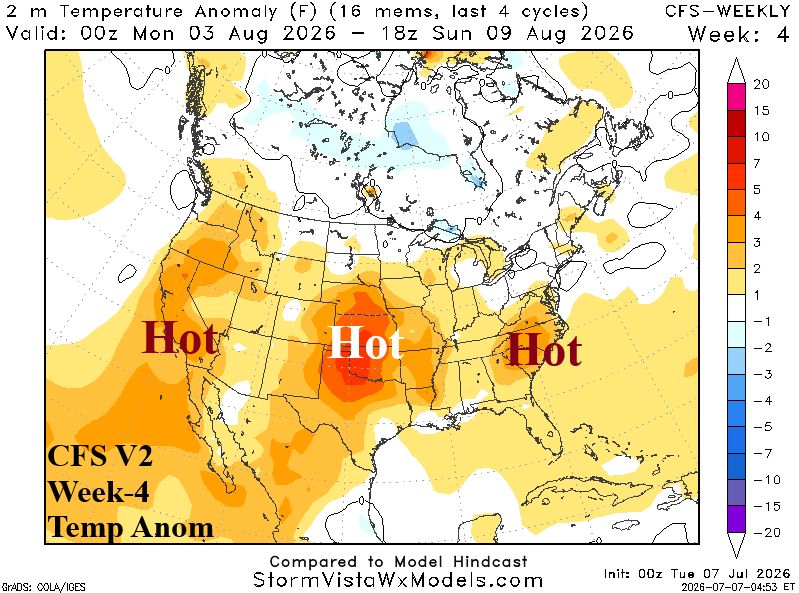
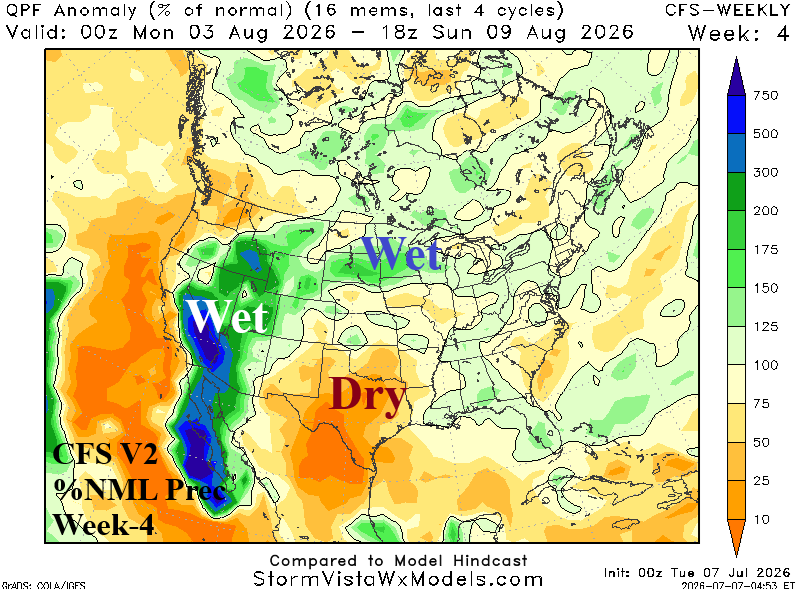
Discussion: The Southwest U.S. wet monsoon arcing into the Midwest States to produce thunderstorms continues while east and south of the wet arc, anomalous heat (and dryness) dominates the Mid-south U.S.