
Medium-range North America Temperature Forecasts Skill Scores
10/19/2026, 8:49 am EDT
Climate Impact Company U.S. Month 1-5 Ahead Wind Outlook
Issued: Tuesday, October 20, 2026
ECMWF favors light cold season wind across Southern Canada, above normal wind for the West Coast and Florida. The constructed analog is disagreeable.
Discussion: The 2026-27 cold season (NOV-26 through MAR-27) wind outlook for the U.S., Southern Canada, and Northern Mexico is issued. The forecast contains two outlooks: 1.) ECMWF wind speed probability; and 2.) Climate Impact Company constructed analog zonal and meridional wind speed anomalies. The constructed analog is based on the most recent strong El Nino events with increasing weight given to more recent events due to the warming mid-latitude oceans. ECMWF is consistent forecasting BELOW to MUCH BELOW normal wind speed across Southern Canada. Stronger than normal wind speeds are biased toward the Southern U.S. particularly the West Coast and Florida. The lighter wind north/stronger wind south is due to mostly the climatology of El Nino winter storm tracks which are displaced farther south leaving high pressure and lighter wind farther north. The Climate Impact Company constructed analog is somewhat variable indicating stronger than normal wind speeds, both zonal and meridional, across Southern Canada while meridional wind speeds are stronger than normal in December across Southern Canada. In the U.S., the NOV/DEC wind speed forecasts from Climate Impact Company are generally lighter than normal. There is increasing agreement between the Climate Impact Company constructed analog and ECMWF lighter than normal wind speed forecast across Southern Canada for JAN/FEB/MAR. The ECMWF strongest wind speed risk is centered on DEC/JAN/FEB on the U.S. West Coast and across Florida and vicinity associated with anticipated atmospheric river storm tracks. Only FEB-27 has a matching wind pattern from Climate Impact Company. The Climate Impact Company methodology heavily weighs the influence of mid-latitude oceanic warming which lowers thermal contrast of the ocean surface and air temperature aloft causing weaker storm tracks than with conventional and colder El Nino episodes which explains the variable and generally lighter wind speeds compared to ECMWF (in the U.S.). The Climate Impact Company constructed analog reveals upper troughs Quebec in November, a broad warm upper ridge across central continent in December, blocking high pressure over the polar region in January, and the ridge shifting to Canada to finish the cold season.
Schematics
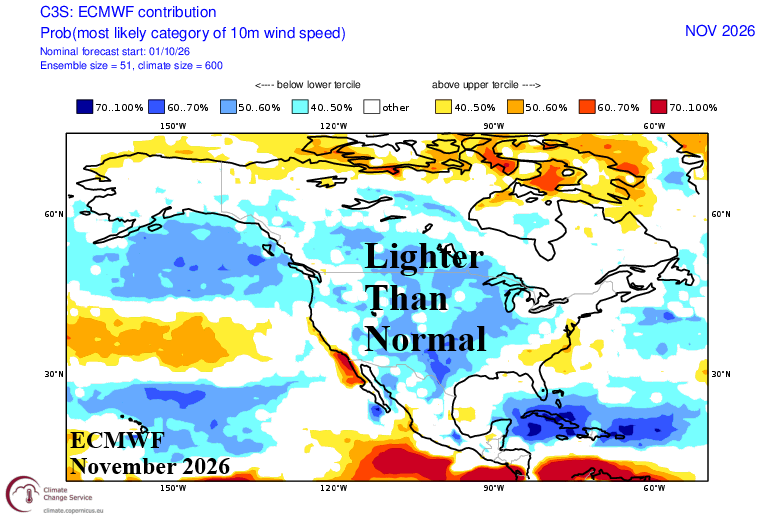
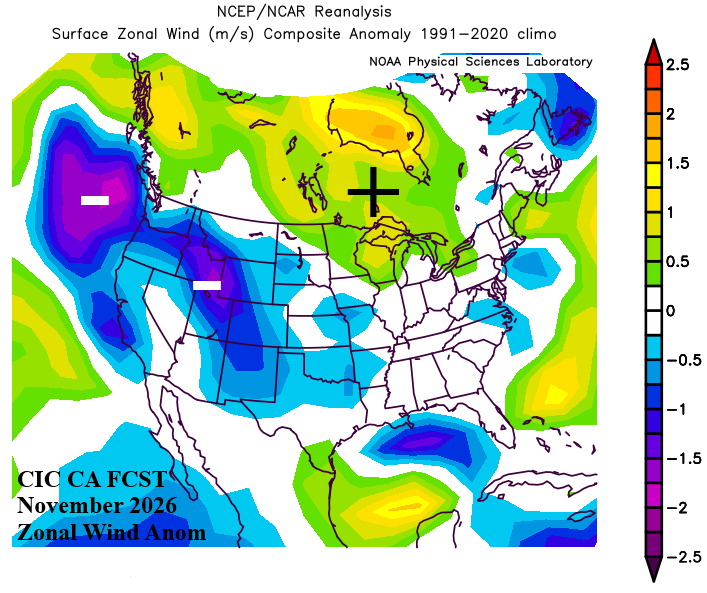
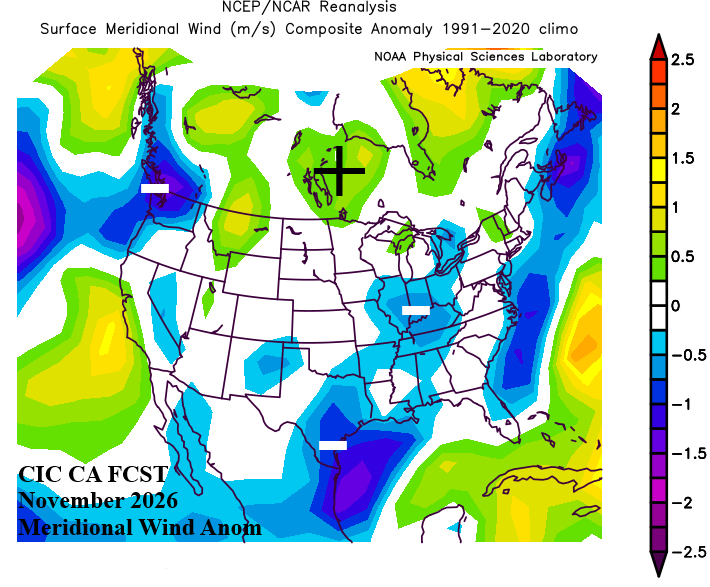
Fig. 1-3: ECMWF wind speed probability forecast for November 2026 and the Climate Impact Company constructed analog zonal and meridional wind speed anomaly outlook.
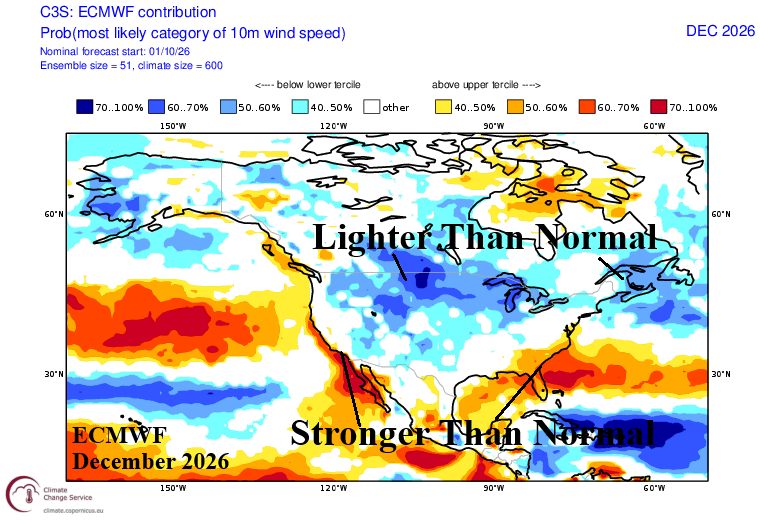
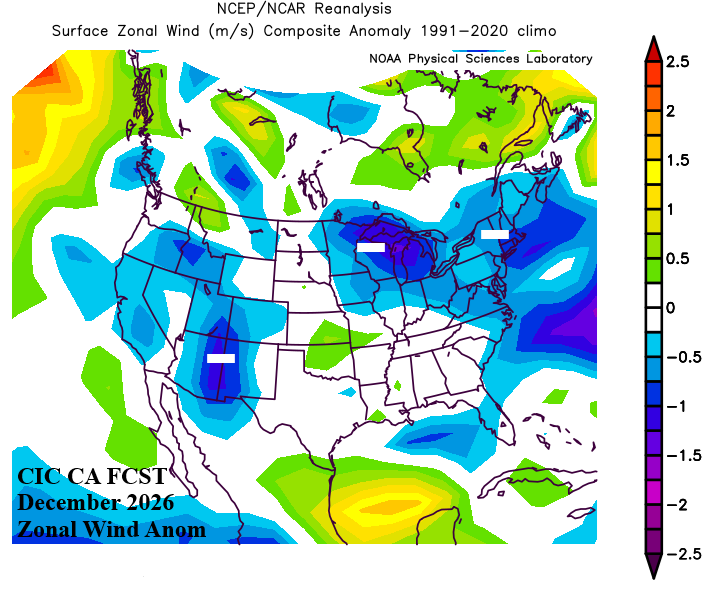
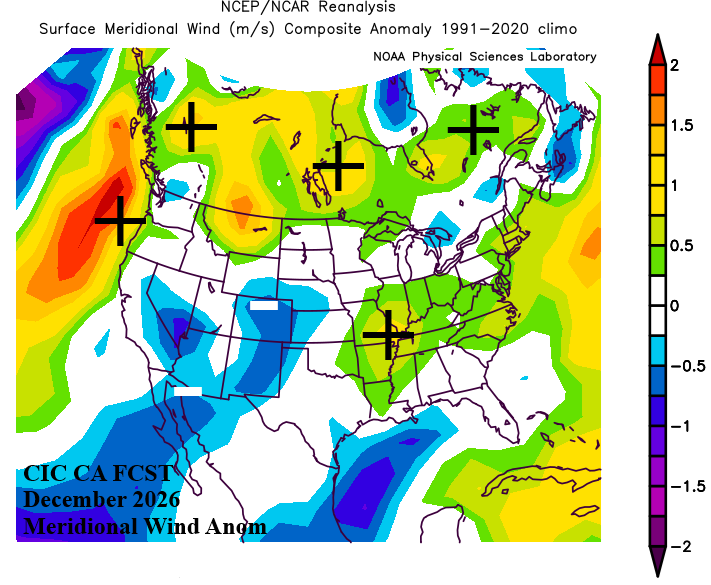
Fig. 4-6: ECMWF wind speed probability forecast for December 2026 and the Climate Impact Company constructed analog zonal and meridional wind speed anomaly outlook.
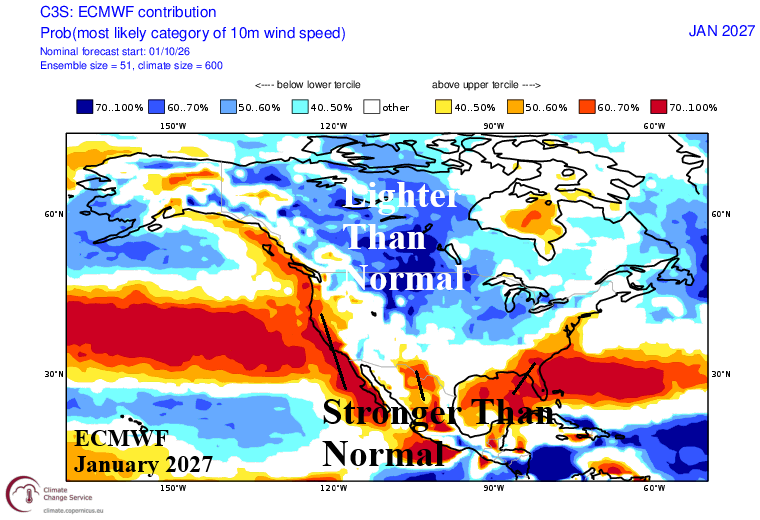
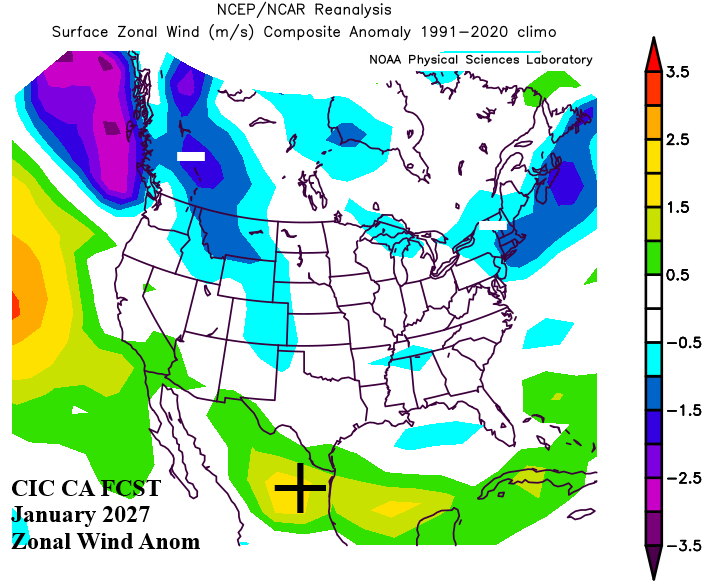
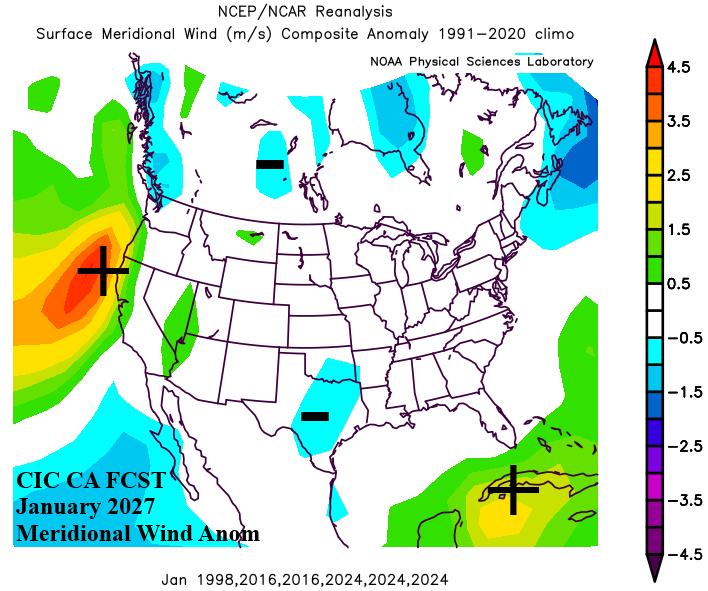
Fig. 7-9: ECMWF wind speed probability forecast for January 2027 and the Climate Impact Company constructed analog zonal and meridional wind speed anomaly outlook.
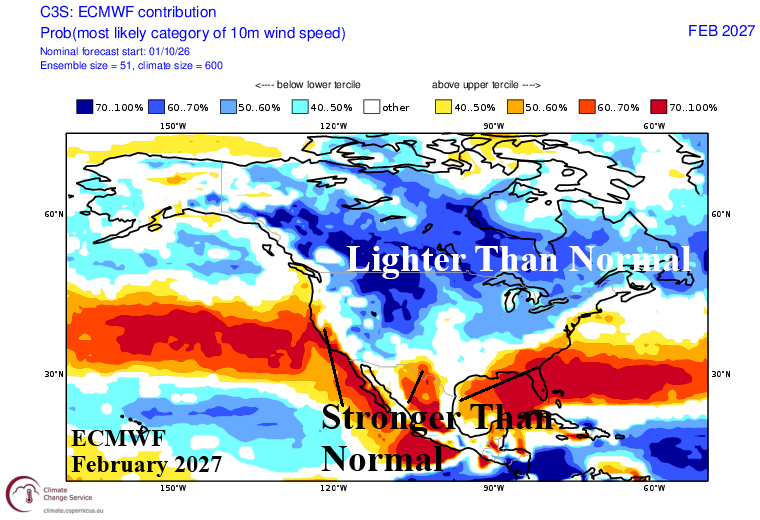
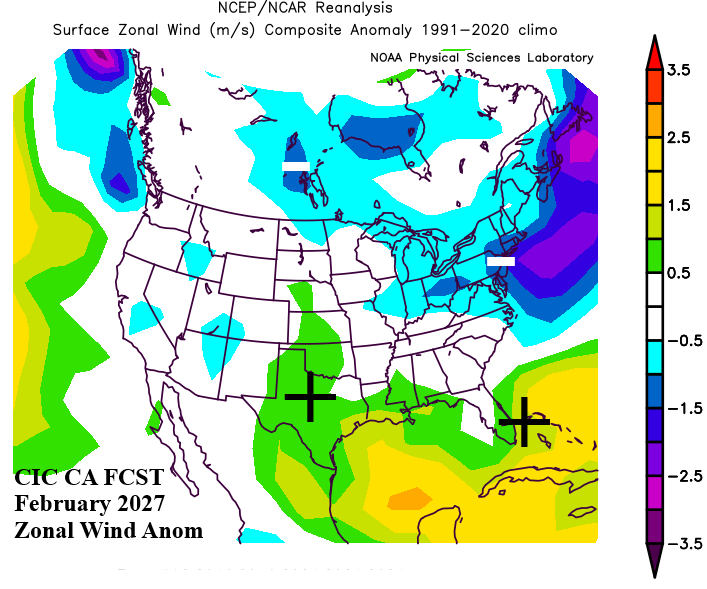
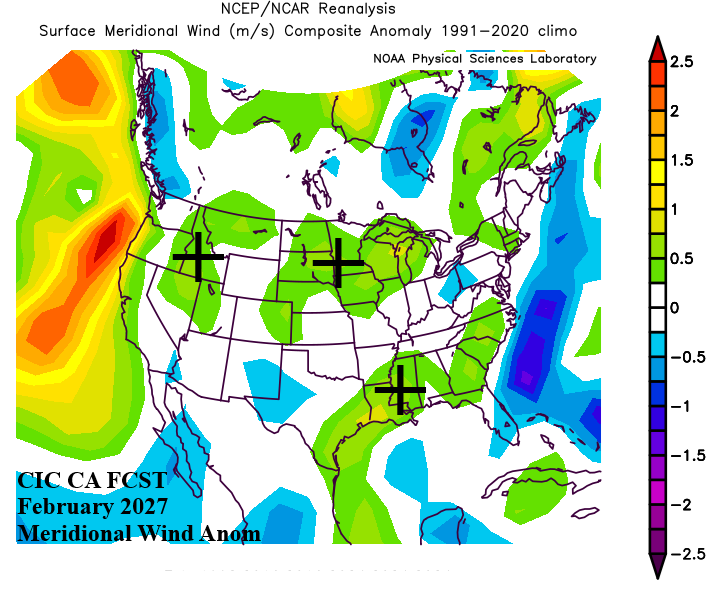
Fig. 10-12: ECMWF wind speed probability forecast for February 2027 and the Climate Impact Company constructed analog zonal and meridional wind speed anomaly outlook.
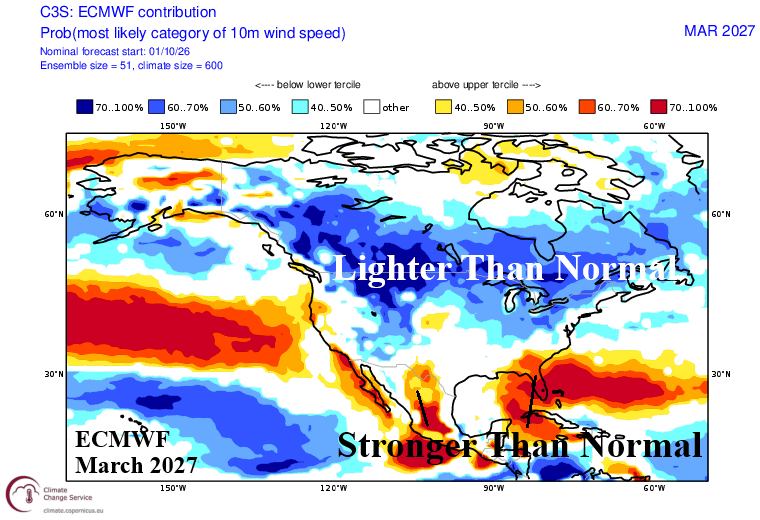
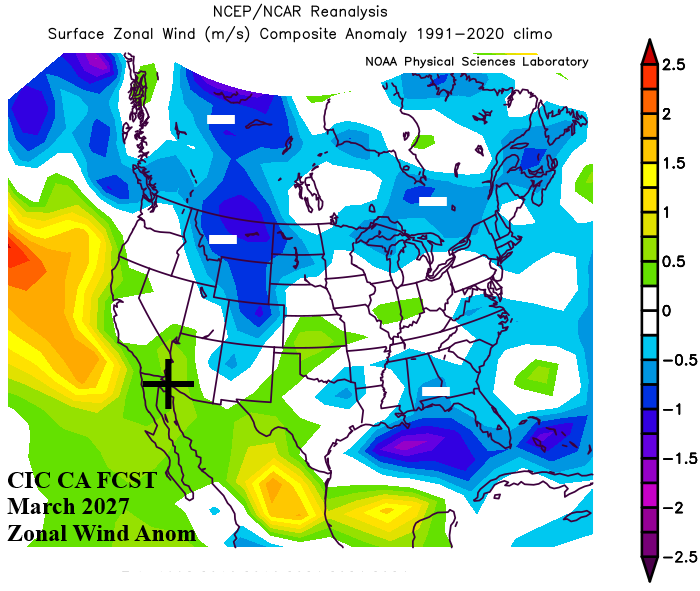
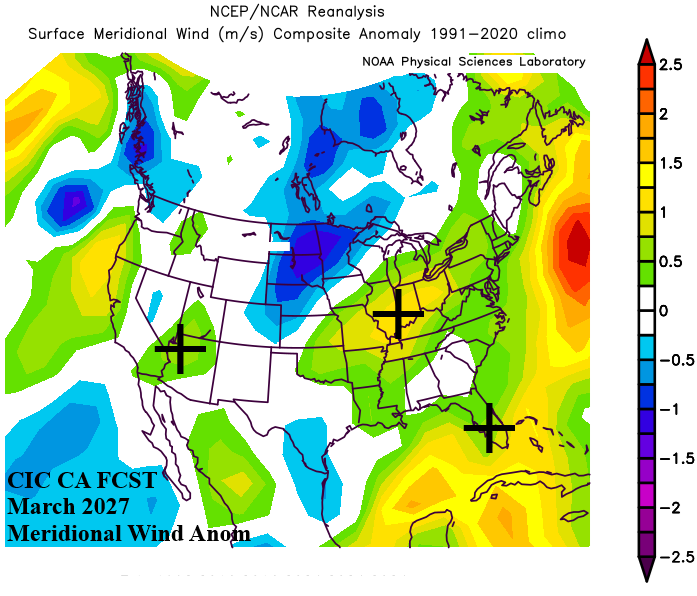
Fig. 13-15: ECMWF wind speed probability forecast for March 2027 and the Climate Impact Company constructed analog zonal and meridional wind speed anomaly outlook.