
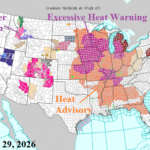
Searing U.S. Heatwave Emerging, Expands This Week
06/29/2026, 4:47 am EDT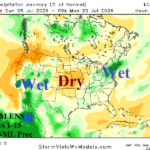
Great Plains Dryness a Mid-Summer Concern?
07/05/2026, 12:52 pm EDT
Climate Impact Company U.S. Medium Range Report
Issued: Thursday July 2, 2026
Highlight: Extreme heat eases; Great Plains shift drier.
Charts of the day: Extended range CDD forecasts shift warmer.
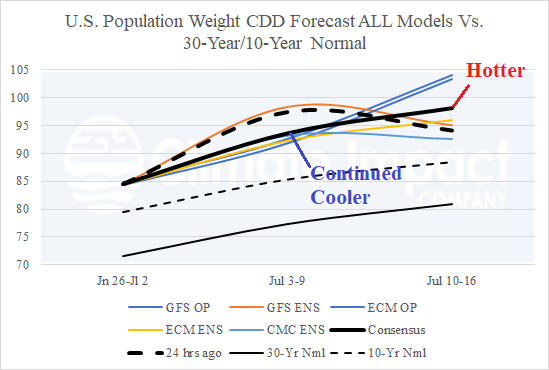
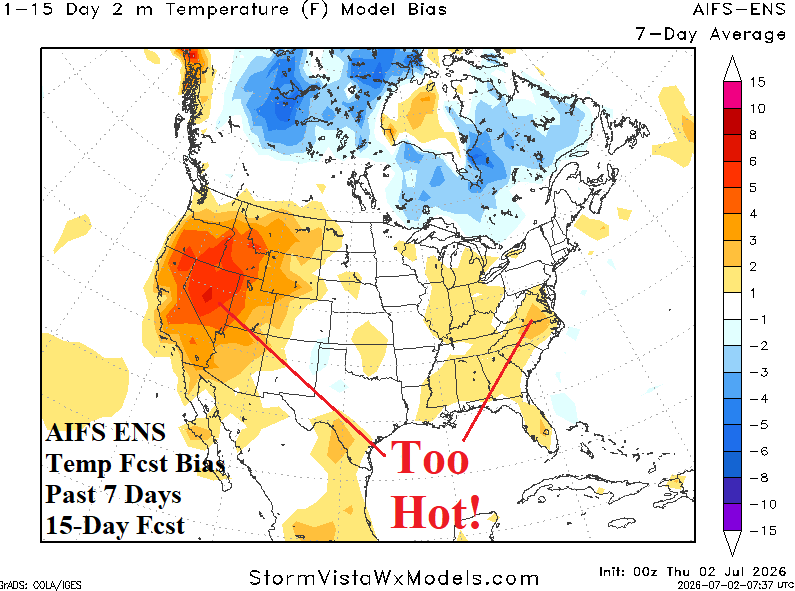
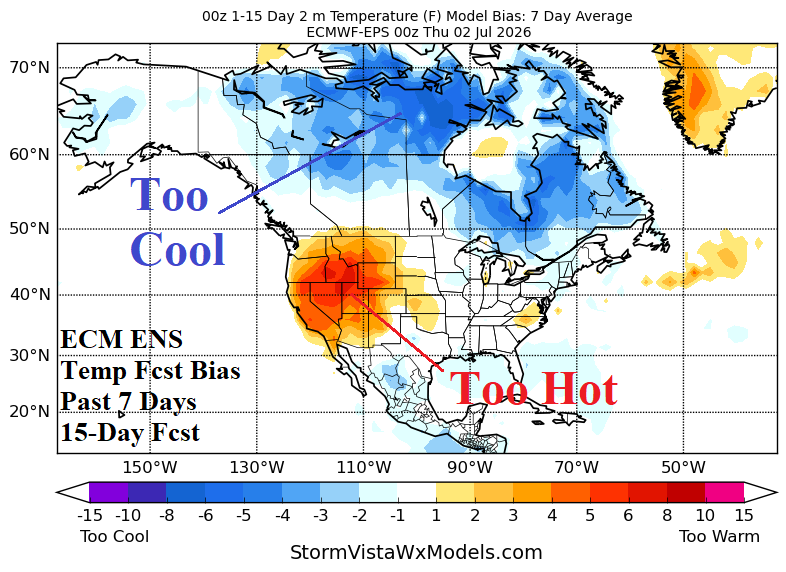
Discussion: Previously, July 3-9 was forecast as the hottest week of July from the past 10 years at 100 CDD edging the previous peak of 99 in 2016 and 2022. However, the July 3-9 forecast is less hot likely verify near 94 CDD. Suddenly, forecasts expected to shift cooler to the 10-year normal July 10-16 are (now) somewhat warmer lead by hot GFS OP and ECM OP projections. Climate Impact Company uses ECM ENS and AIFS ENS for U.S. medium range forecasts. Entering July, the North America temperature forecast bias by both models is too hot West and marginally to hot East. Canadian forecasts are consistently too cool.
Medium-range 6-10 Day Forecast Valid July 7-11, 2026 (AIFS ENS and 24-hour change)
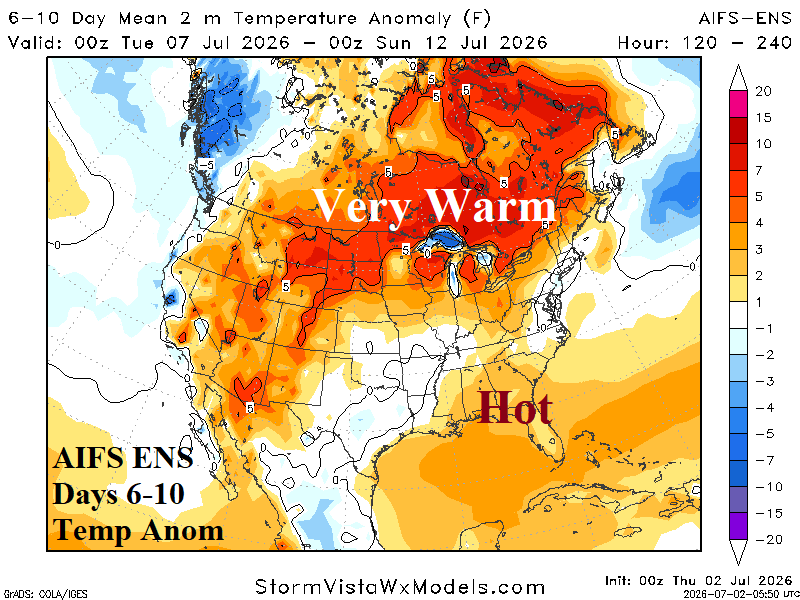
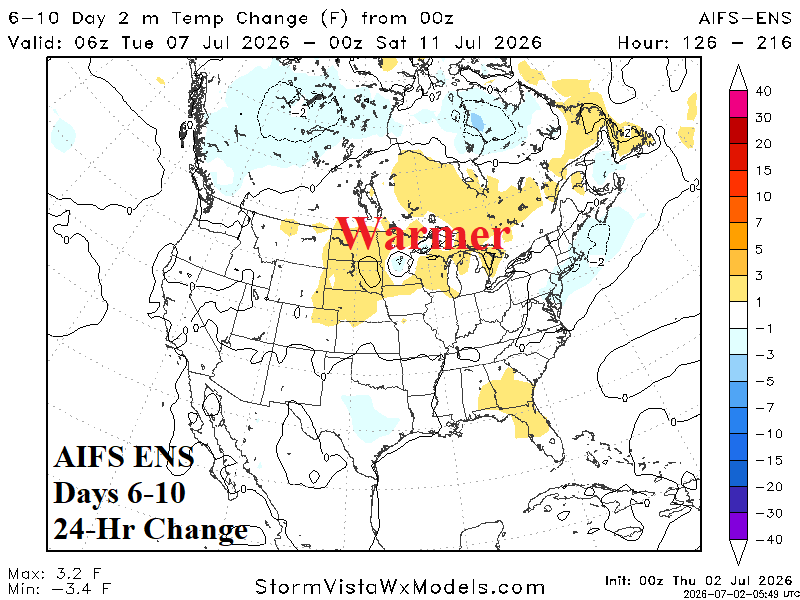
Discussion: Wet weather stretches from Texas to the Mid-Atlantic States cooling those regions. Elsewhere hot weather prevails with strongest anomalies North-central U.S. to Quebec. The cooling Northeast Pacific offers a cool bias to the Canadian West Coast and Coastal Northwest U.S.
Medium-range 11-15 Day Forecast Valid July 12-16, 2026 (AIFS ENS and 24-hour change)
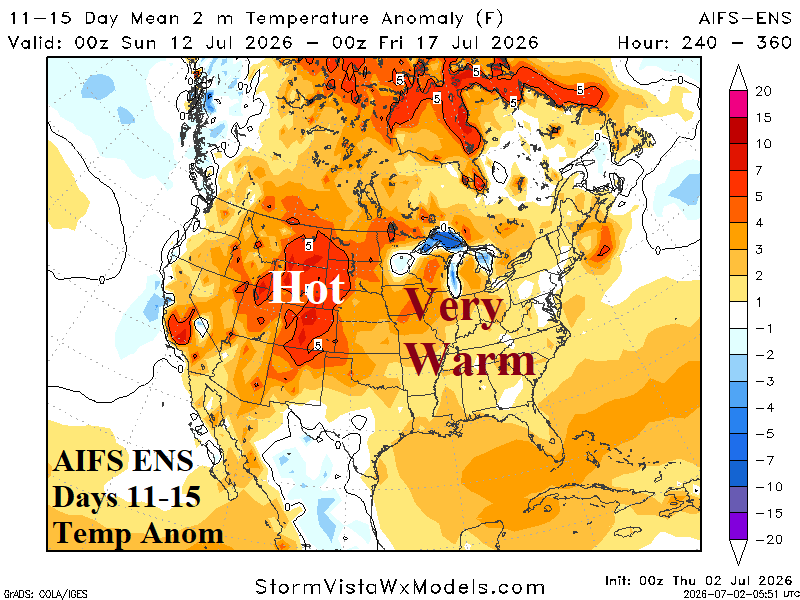
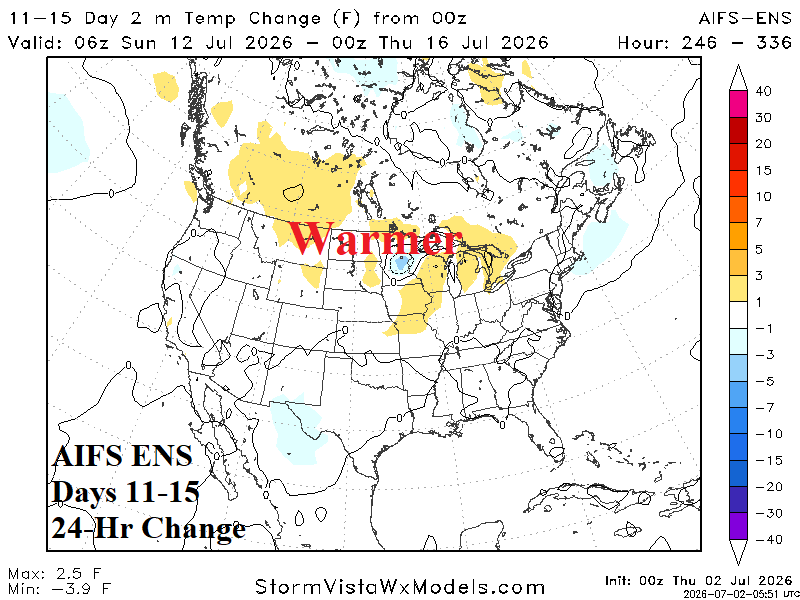
Discussion: The North-central/West-central U.S. heat source region broadens with hot/dry risk strongest across the Great Plains. The East is thundery suppressing heat risk.
U.S. Medium-range Precipitation Forecast
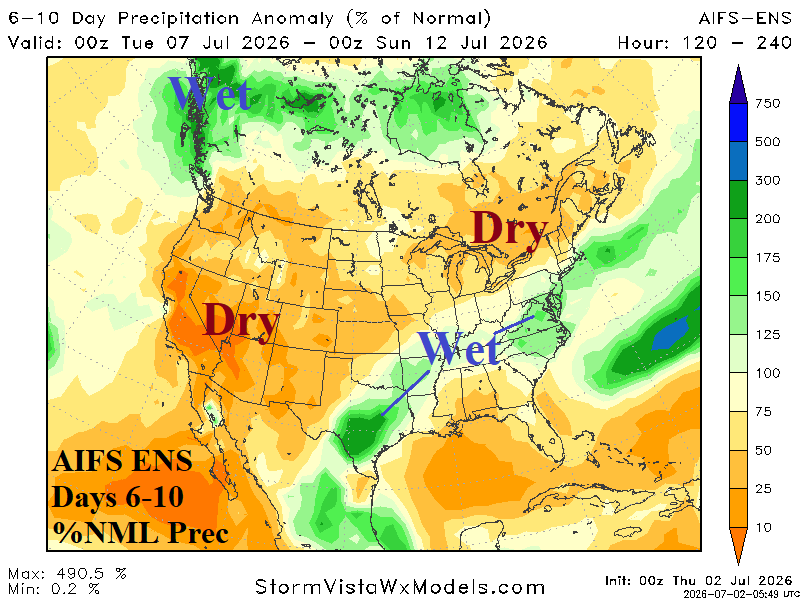
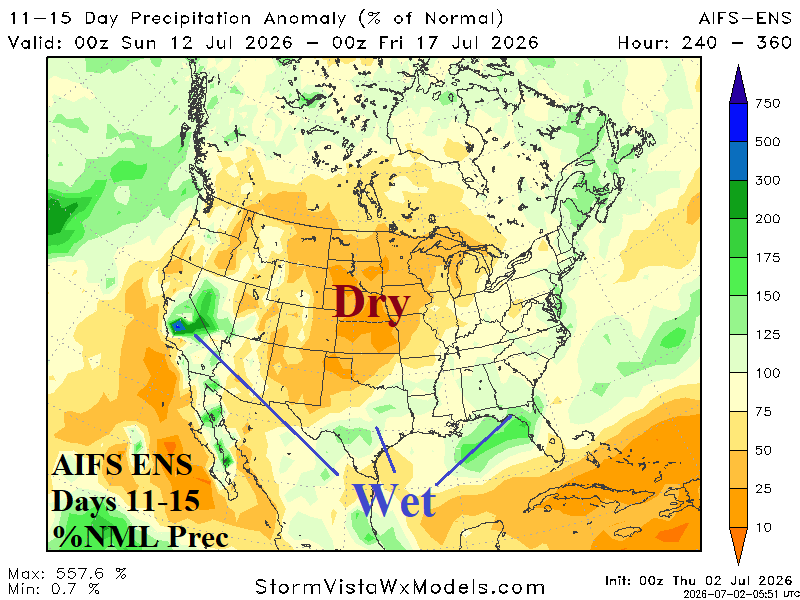
Discussion: Stalled front inspires heavy thundershowers in Texas to the Mid-Atlantic States while elsewhere is dry in the 6-10-day period. The 11-15-day outlook is vividly dry in the Great Plains.
Days 16-20 Extended range Temperature Forecast valid July 17-21, 2026
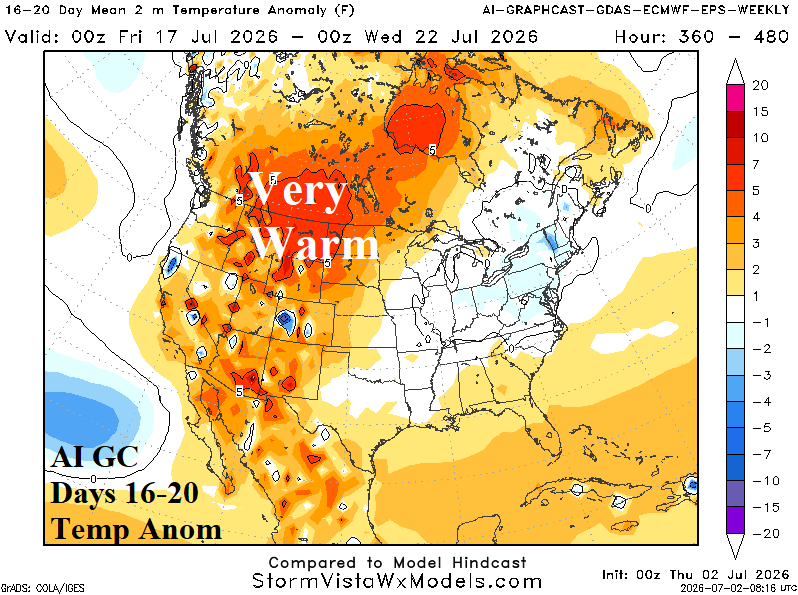
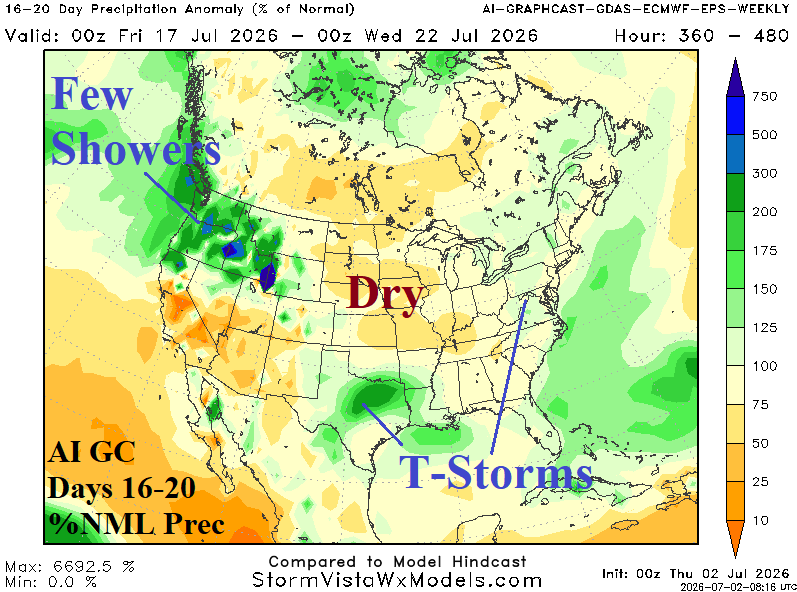
Discussion: Cool bias offered by expanding Norh Atlantic warm hole to the south of Greenland and the Northeast Pacific therefore North America West Coast avoids heat and the Northeast U.S. shifts cooler. The Great Plains stay dry.