
Deep Polar Vortex Over Amundsen Sea and Downstream Trough Eastern South America
06/23/2026, 9:21 am EDT
ALERT Issued for Hot/Dry Weather Centered on Western U.S. Corn Belt Later July
06/28/2026, 1:29 pm EDT
Climate Impact Company Climate Research
Issued: Thursday, June 25, 2026
Highlight: Summertime “cold blob” climatology for Europe. Current Europe heatwave linked to NAWH and likely to regenerate in July and August.
Discussion: The North Atlantic warm hole (NAWH) is vividly displayed in daily sea surface temperature anomalies (SSTA) analysis centered south of Greenland and extending southwestward (Fig. 1) while compensating marine heatwaves (MHW) are present off the Europe West Coast, record warm in the Mediterranean Sea (Fig. 2), with additional MHW’s in the Norwegian Sea and North Sea to Baltic Sea (Fig. 3). The NAWH pattern became semi-permanent in 2005 and increasingly consistent since 2015. During June, with varying intensity, NAWH patterns were observed in 2025 and 2015-22, strongest 2015-18. A weighting of the strongest NAWH years (for June) twice and weaker NAWH years once produces an upper air pattern featuring an amplified high-pressure ridge over Europe for June (Fig. 4) with similarity to the current pattern. The SSTA regimes described are slow to change and effective when incorporated into climate forecast methodology. Utilizing the NAWH analog to project July and August 500 MB anomaly expectations for Europe yields regenerating amplified high pressure ridge areas over Western Europe in July (Fig. 5) and Eastern Europe/Western Russia in August (Fig. 6).
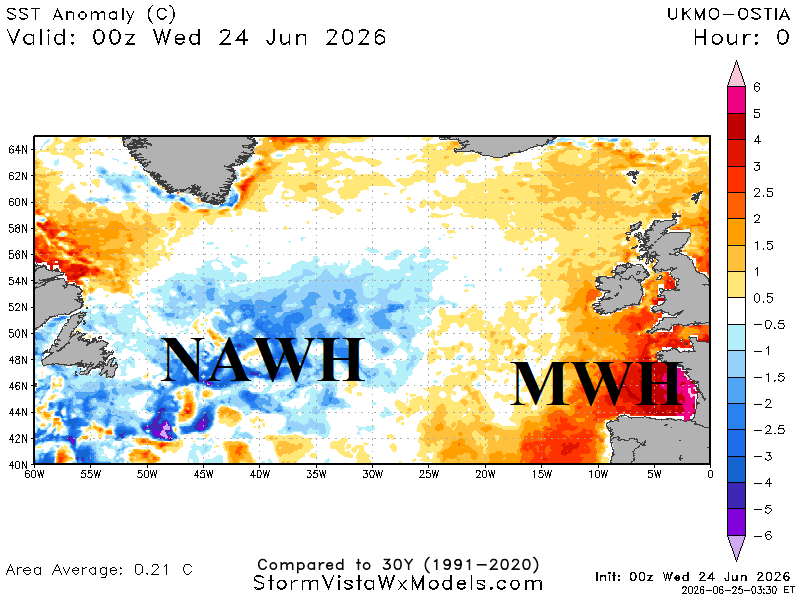
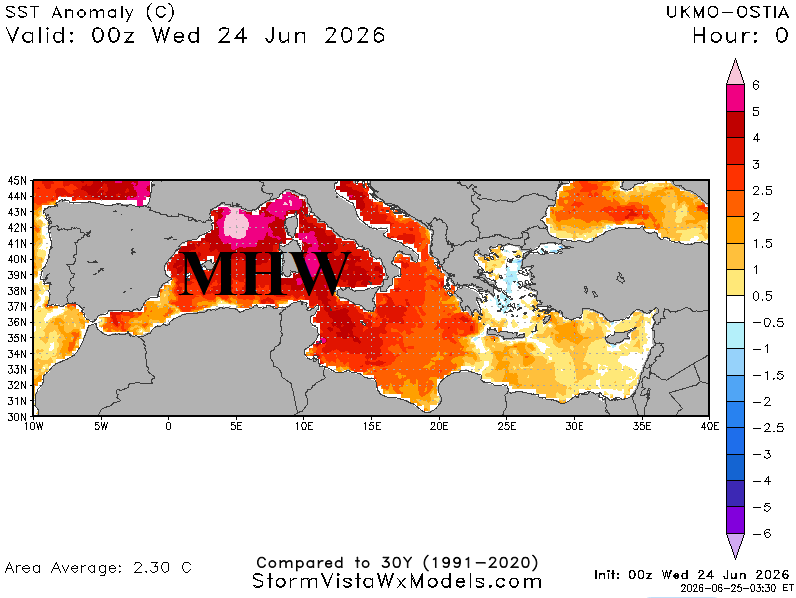
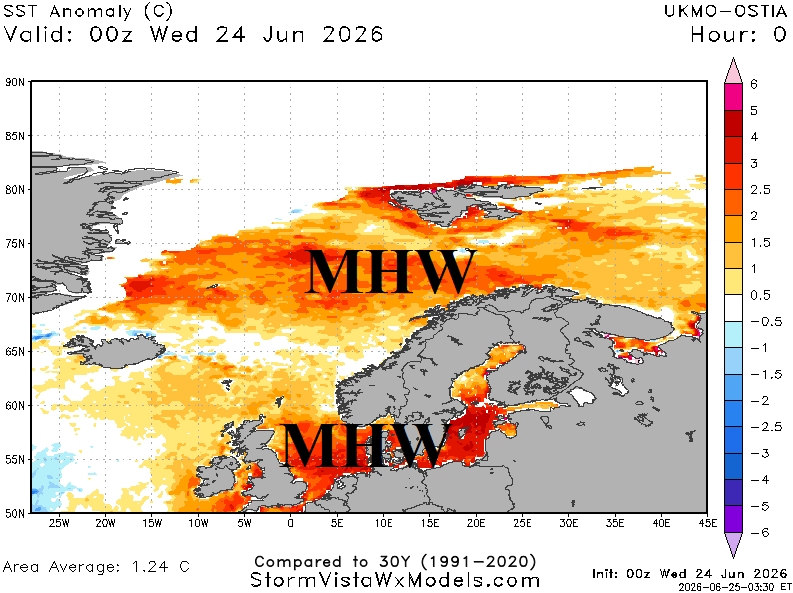
Fig. 1-3: Pictures of the intense North Atlantic warm hole and the downstream marine heat waves surrounding Europe.
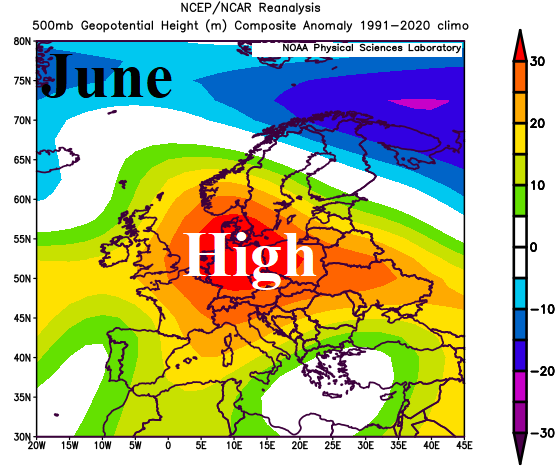
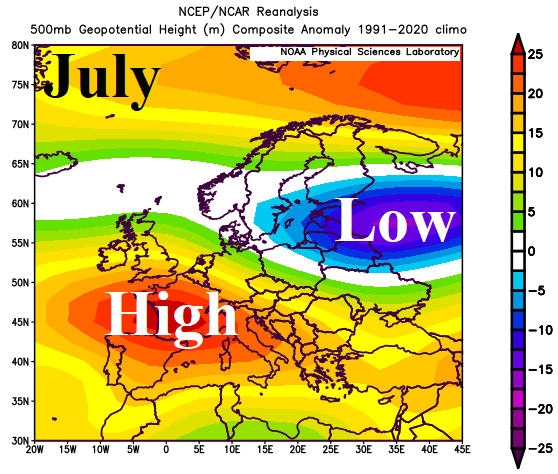
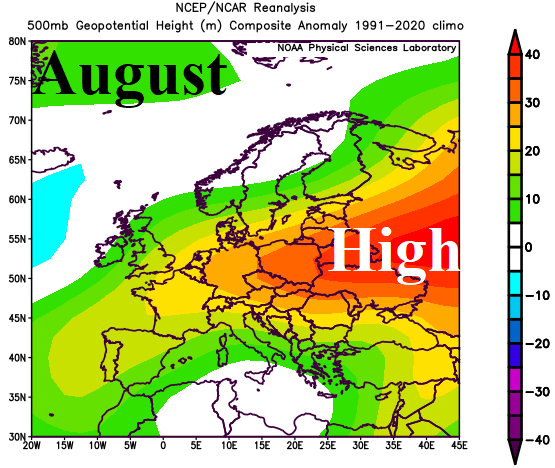
Fig. 4-6: Summertime “cold blob” (NAWH) climatology of 500 MB anomaly patterns.