
El Nino Climate Ahead! Intense +GLAAM Supports!
06/21/2026, 1:27 pm EDT
North Atlantic Warm Hole Correlated With Europe Heat Risk; Expect Repeat in July and August
06/25/2026, 7:58 am EDT
Climate Impact Company Daily Feature
Issued: Tuesday, June 23, 2026
Highlight: Historic cold beneath an intense polar vortex across Antarctica centered near the Amundsen Sea which produces an upstream trough on the South America East Coast.
Discussion: Earlier this month, record warm temperatures dominated parts of Antarctic located due south of the southern tip of Argentina. Esperanza Base located on the northern tip of the Trinity Peninsula observed a winter record 15.4C on June 6th. Other research stations observed similar record warmth and for nearly 3 straight weeks, daily maximum temperatures in this region stayed above 32F causing extreme melting leaving the mountain bases of the Collins Glacier with bare ground.
However, the real meteorological story across Antarctica is not the record warmth due south of Argentina, but the ferocious cold resting on the remainder of the continent (Fig. 1).
The Antarctic oscillation (AAO) will surge to +5.0 later this week and is forecast to stay at +2 (or stronger) through the first third of July (Fig. 2). The strong +AAO indicates presence of an extremely intense polar vortex. The polar vortex is strongest near and west of the Amundsen Sea (Fig. 3), a location which historically has a dipole trough off the Central East Coast of South America during the winter season which causes a cold pattern for Argentina and creates a cold air source region to potentially surge into Brazil and threaten coffee growing areas.
The 15-day temperature anomaly forecast certainly keeps central and southern South America chilly (Fig. 4) but, for now, important cold does not reach Brazil Coffee.
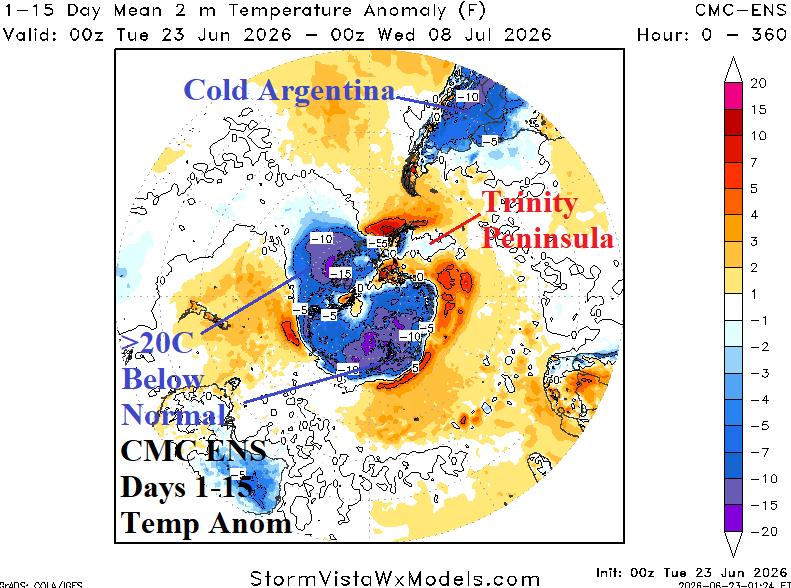
Fig. 1: CMC ENS 15-day temperature anomaly forecast for Antarctic indicates most of the continent is more than 20C colder than normal.
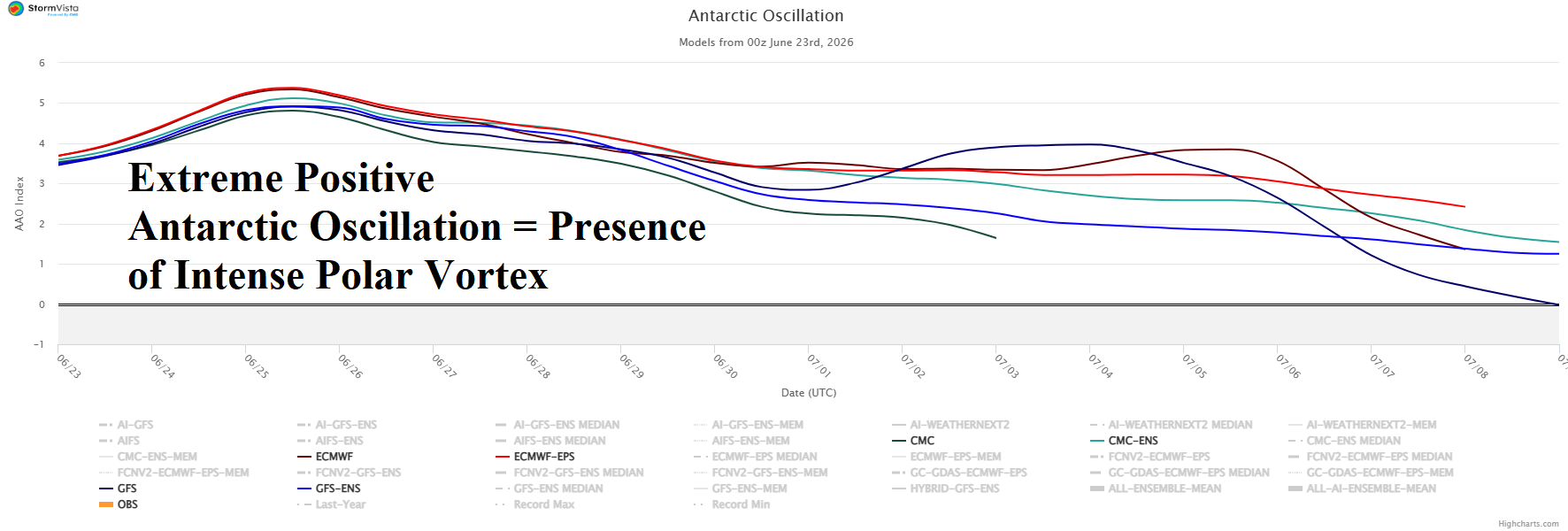
Fig. 2: The Antarctic oscillation surges to +5.0 later this week representative of an intense polar vortex located over the continent.
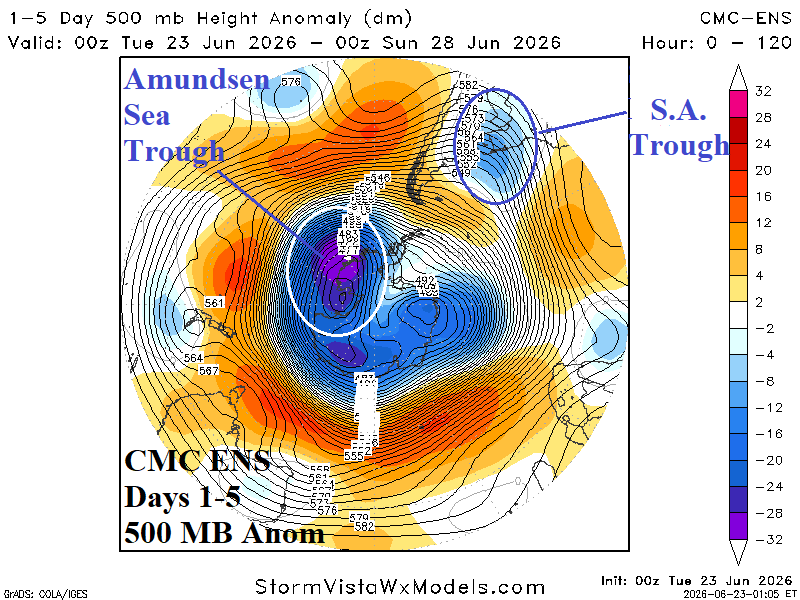
Fig. 3: The CMC ENS 5-day 500 MB anomaly forecast indicates the Antarctic polar vortex is strongest near the Amundsen Sea. The upper trough induces a second upstream trough ff the East Coast of South America.
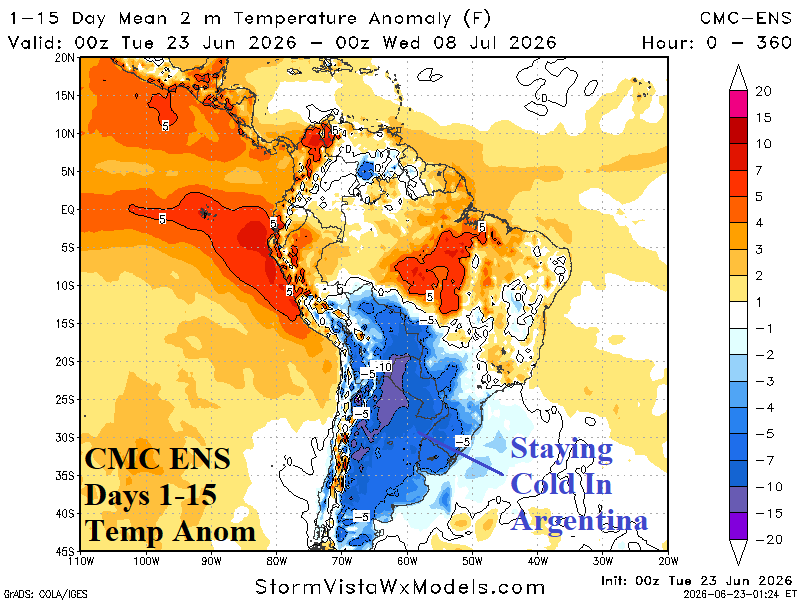
Fig. 4: CMC ENS 15-day temperature anomaly forecast for South America identifies the persistent chilly air mass dominating central and southern continent but, for now, having limited influence on Brazil.