
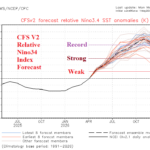
Upper Ocean Heat East of Dateline 2nd Warmest Historically
05/11/2026, 12:33 pm EDT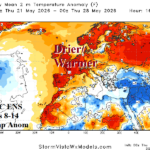
Cool/Wet Pattern in Europe Reverses Very Warm Western Europe Days 8-14
05/14/2026, 8:25 am EDT
Climate Impact Company Climate Research
Issued: Tuesday, May 12, 2026
Highlight: Super El Nino increasingly likely. Where are the first (climate) targets?
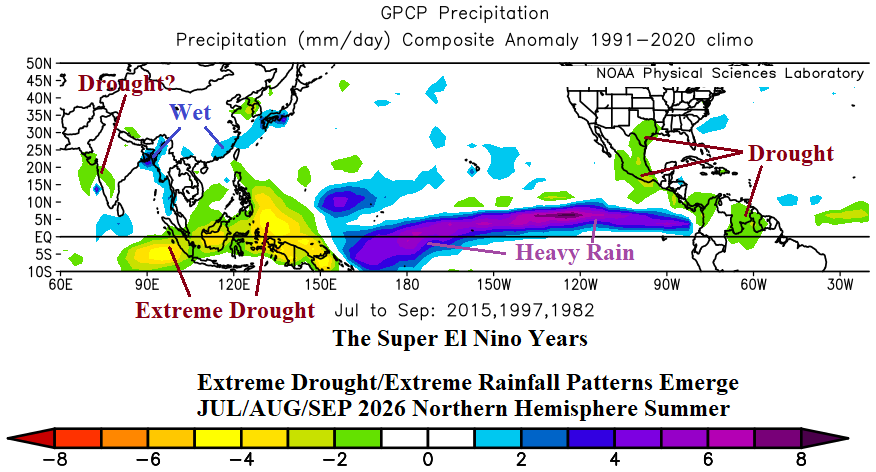
Fig. 1: Super El Nino precipitation anomalies during JUL/AUG/SEP.
Discussion: Super El Nino is increasingly likely for the second half of 2026. The El Nino climate following the equatorial East Pacific warming of the next several months unfolds beginning in JUL/AUG/SEP. Northern hemisphere tropical/subtropical latitudes are highly impacted by this phenomenon. Most striking is the likely extreme drought for Indonesia (Fig. 1). As impressive is the streak of heavy rain across the central and east tropical Pacific Ocean likely to fuel an intense East Pacific tropical cyclone season. Note the dry region that develops in Mexico to Texas, an area where short-range wet forecasts are indicated (expect a dry reversal second half of summer). Also note that patchy wet areas from Bangladesh to East China and Southeast Asia.
The latest ECMWF Nino34 SSTA extended range forecast reveals El Nino onset soon (Fig. 2), possibly announced by NOAA this Thursday. Peak El Nino is forecast for NOV/DEC and although weakening, El Nino extends to mid-2027.
The subsurface temperatures identify why confidence is high that El Nino will become intense during the second half of 2026. Australia Bureau of Meteorology identifies a large intense warm plume of subsurface water in the eastern equatorial Pacific which will surface as trade winds ease (or reverse) in the coming months (Fig. 3). Also note the sudden strong warming in the eastern equatorial Atlantic subsurface. As indicated in earlier report today, the deep tropics of the North Atlantic are forecast to warm significantly during tropical cyclone season.
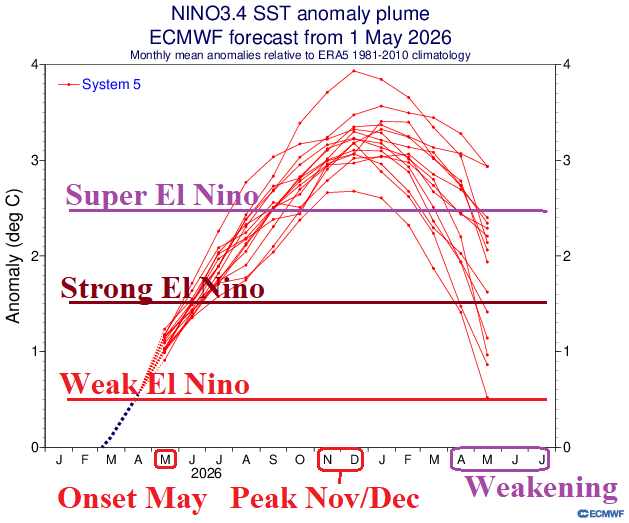
Fig. 2: Extended range ECMWF Nino34 SSTA forecast.
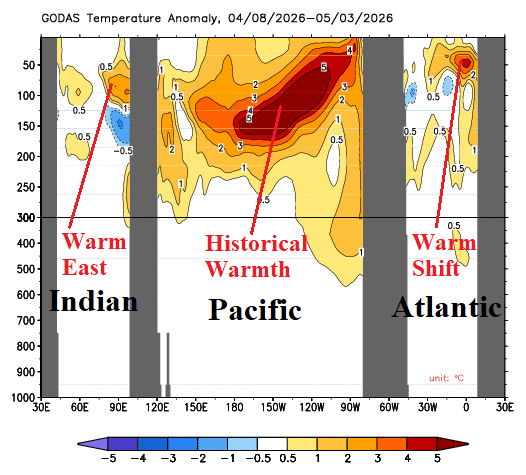
Fig. 3: Australia Bureau of Meteorology subsurface temperature anomalies in the global equatorial ocean regions.