
Active MJO and/or El Nino Onset to Ignite Wetter U.S. Pattern Not Indicated (Yet)
05/07/2026, 1:47 pm EDT
El Nino Onset Ignites U.S. Pattern Change
05/13/2026, 12:25 pm EDT
Climate Impact Company Daily Feature
Issued: Tuesday, May 12, 2026
Highlight: Decelerating solar intensity.
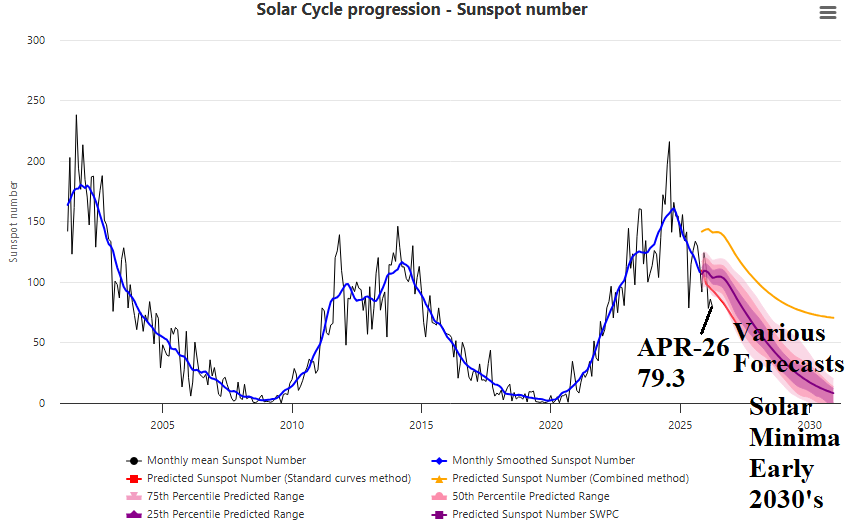
Fig. 1: NASA plot of sunspot number this century.
Discussion: Solar Cycle 25 has passed peak and is now decelerating in intensity which will continue into solar minimum beginning in 2030 (Fig. 1). Once solar minimum is reached, solar cycle 26 begins. The APR-26 sunspot number was 79.3 and weaker than various forecast model projections. According to NASA, solar minimum is the quiet phase of the solar cycle with key effects: “Less dense upper atmosphere which causes less drag on satellites, increased galactic cosmic ray penetration into the solar system, and cooler northern hemisphere winters”.
Despite higher sunspot numbers during solar cycle 23 maximum observed in 2001, the overall strength of solar cycle 25 maximum is the strongest this century so far as defined by number of M and X flares (Fig. 2). X Flares are the most powerful and largest type of solar explosions capable of “causing significant radio blackouts, long-lasting radiation storms, and disruption of satellites and power grids” according to NASA.
We’re entering a quiet period of solar activity likely to last 7-10 years. The number of satellites in low orbit around the earth is about 15,400 as of April 2026, an increase of over 25% since the end of 2024.
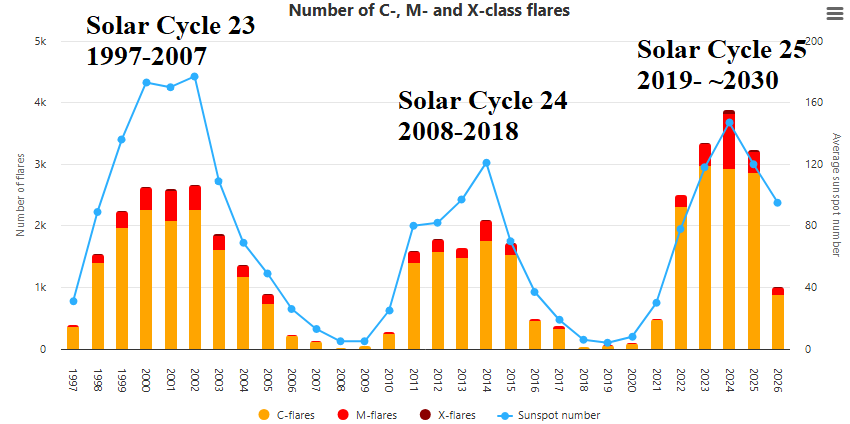
Fig. 2: NASA plot of C, M, and X class solar flares this century.