
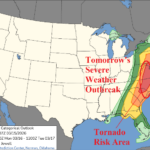
Major Severe Weather Outbreak East-Central U.S. Today; Atlantic States Tomorrow
03/15/2026, 10:44 am EDT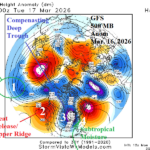
How Hawaiian “Kona Storm” Shaped March 15-16 Severe Weather
03/17/2026, 7:58 am EDT
Climate Impact Company Early U.S. Notes
Highlight: Severe weather episode East U.S. today. Following cold. Record warmth West.
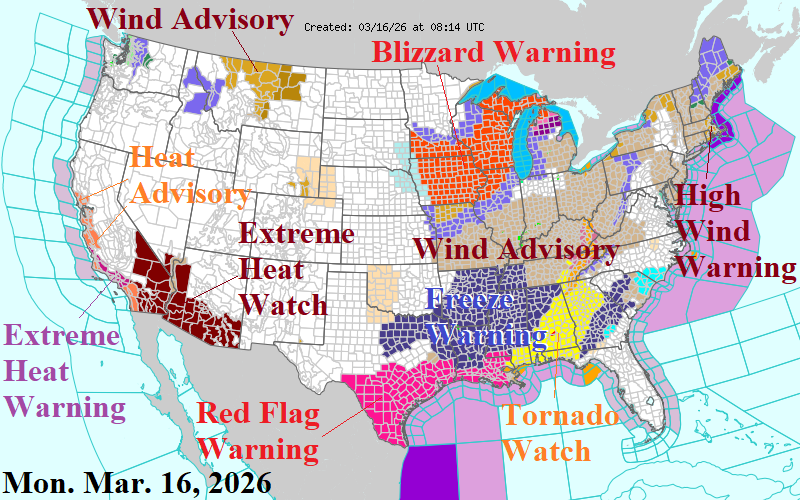
Fig. 1: Latest NOAA/NWS weather watch, warning, and advisory areas.
Discussion: A squall line has (temporarily) lost severe weather qualifiers moving east across the east/southeast Ohio Valley this morning while the southern end of the squall line maintains tornado risk for Mississippi and Alabama (Fig. 1). Later today, the squall line re-energizes and brings severe storms including a large tornado risk area to the East (Fig. 2-3). The Midwest Blizzard winds down later today after another 5-15 in. of snow (Fig. 4). Snow will follow tonight’s cold front into the central and northern Appalachian Mountains. High wind advisories are widespread with this East U.S. storm. A High Wind Warning is issued for southeast New England. HRRR indicates wind gust potential of 60-70 mph across the southern half of New England tonight causing another round of power outages (Fig. 5). Following the storm, the energy demand PJM region receives a late season cold blast braking for milder weather later this week (Fig. 6). Interestingly, the PJM 15-day forecast indicates 2 additional chilly bursts. Meanwhile record heat dominates the West (Fig. 7). An Excessive Heat Watch is issued for the Southwest U.S. and Excessive Heat Warnings are already issued for the Los Angeles area. The U.S. population weight HDD forecast shifts slightly cooler for next week and the following week except for a renegade warm ECM forecast (Fig. 8).
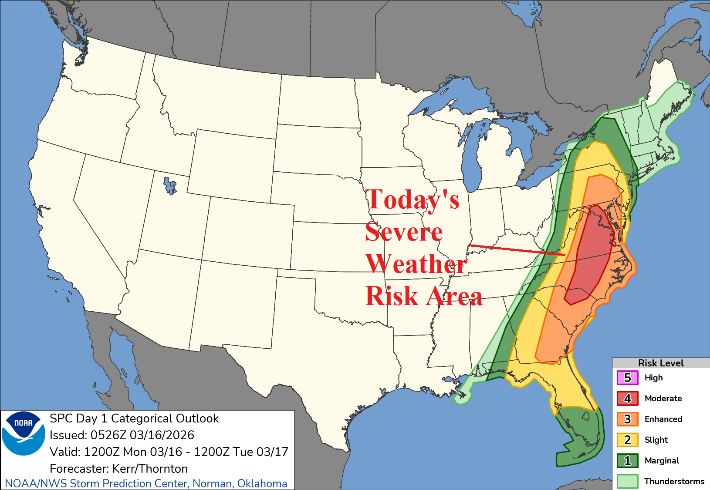
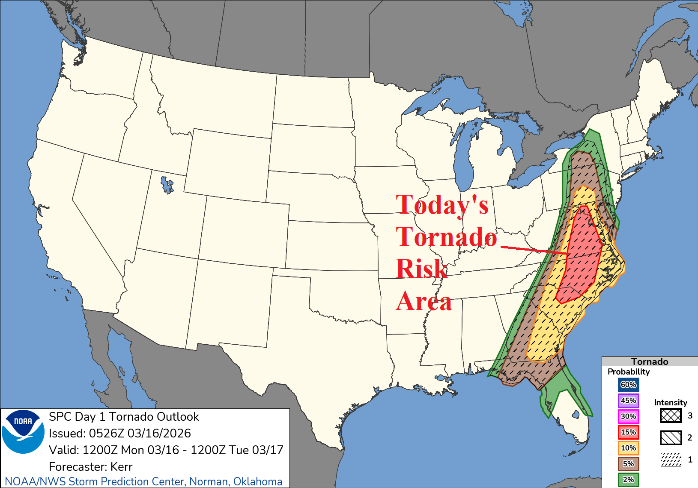
Fig. 2-3: NOAA/SPC severe weather regions for today.
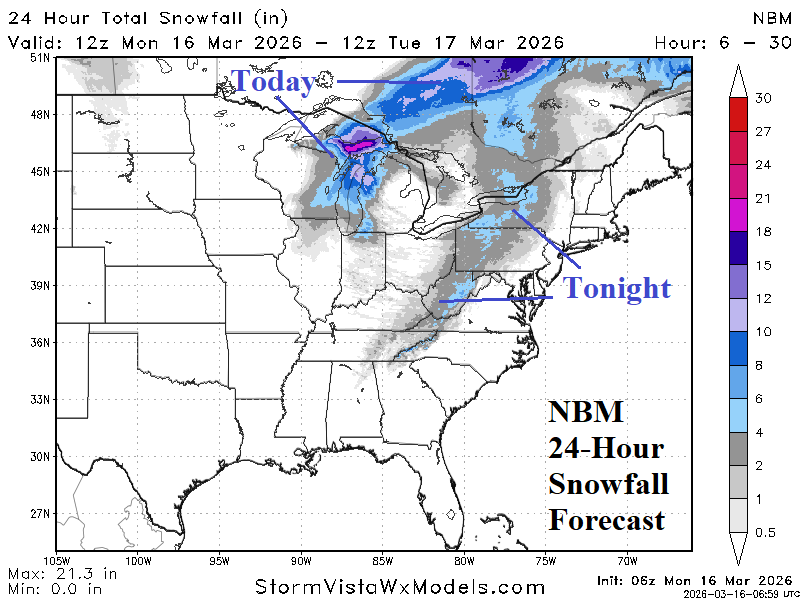
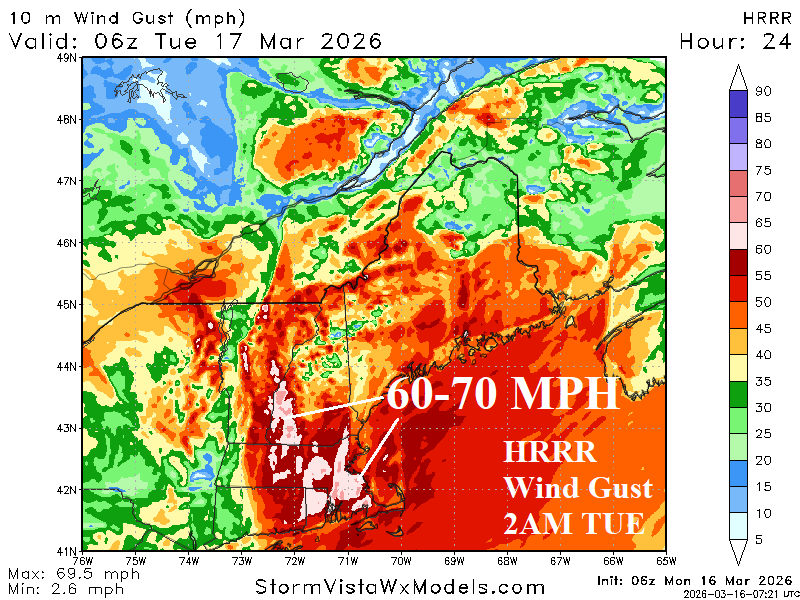
Fig. 4-5: NBM 24-hour snowfall forecast and HRRR wind gust forecast for tonight in New England.
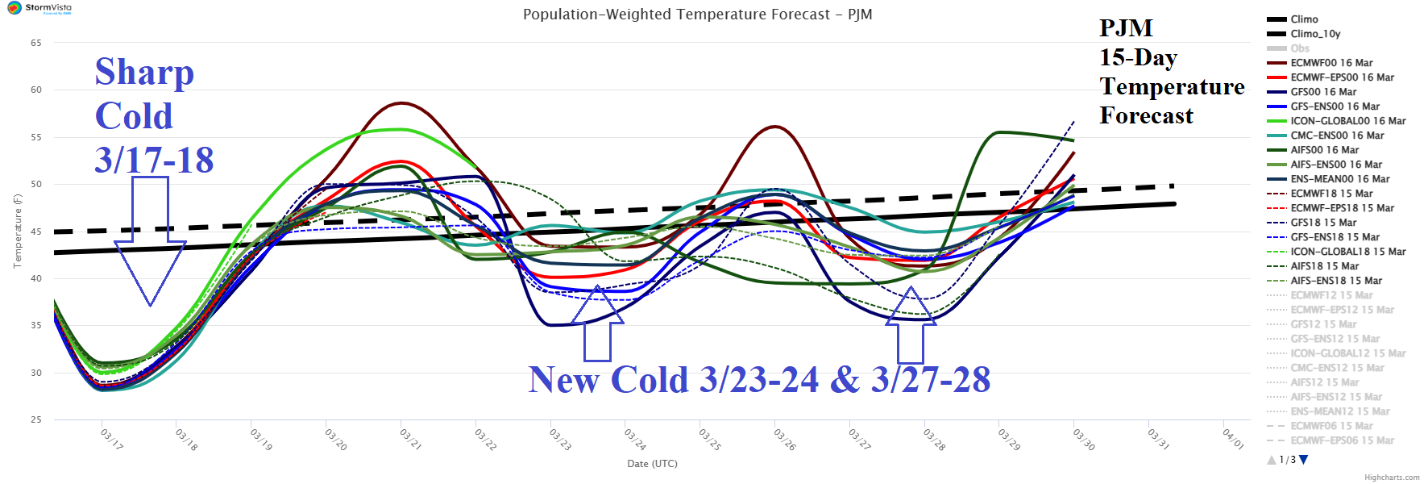
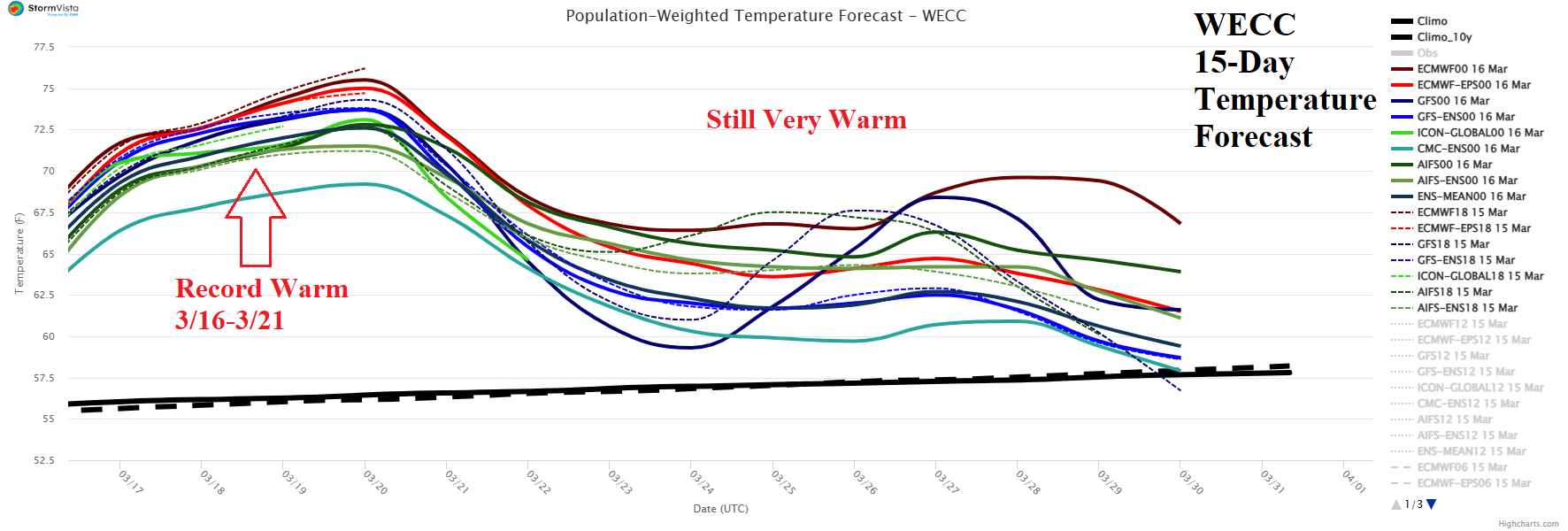
Fig. 6-7: Population weight 15-day daily temperature forecast for PJM and WECC.
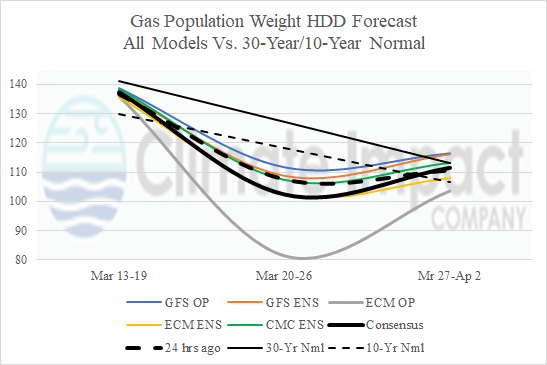
Fig. 8: The U.S. gas population weight HDD forecast utilizing all operational models, their consensus, and comparison with 24 hours ago and 30/10-year normal.