
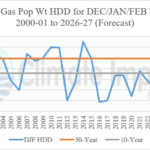
DEC/JAN/FEB 2026-27 HDD Forecast Ranks 7th Warmest This Century
11/04/2026, 12:57 pm EST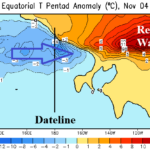
Super El Nino Peaking. Expecting Rapid Demise During Early 2027.
11/10/2026, 8:40 am EST
Climate Impact Company Research Report
Issued: Monday, November 9, 2026
Highlight: +AAO pattern responsible for wet weather in Australia and Brazil.
Discussion: Several deep low-pressure centers are located along coastal Antarctica (Fig. 1) forcing a strong positive phase Antarctic oscillation (+AAO) regime (Fig. 2). In response to widespread aerial coverage of low pressure across Antarctica, 4 amplified high pressure ridge areas are located across the middle latitudes of the southern hemisphere in the latest 15-day outlook. South of the high-pressure areas, low pressure troughs persist in the subtropics responsible for wetter than expected regimes in Australia and Brazil. Further enhancing the subtropical trough areas is above normal low-level atmosphere moisture associated with marine heatwaves (Fig. 3) entrained into upper-level trough areas to cause over-achieving rainfall. The dynamic described, linked to persistent +AAO, may linger into December as +AAO persists (Fig. 4). Consequently, the expected drier Brazil regime forecast by most operational and AI models in the extended range may be too dry.
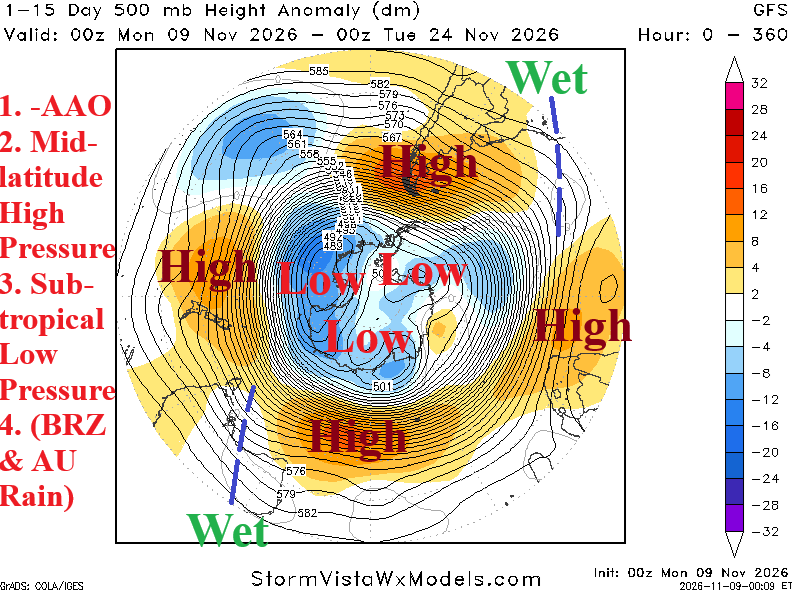
Fig. 1: The GFS 15-day 500 MB anomaly forecast for the southern hemisphere identifying the response of the atmosphere to a -AAO regime.
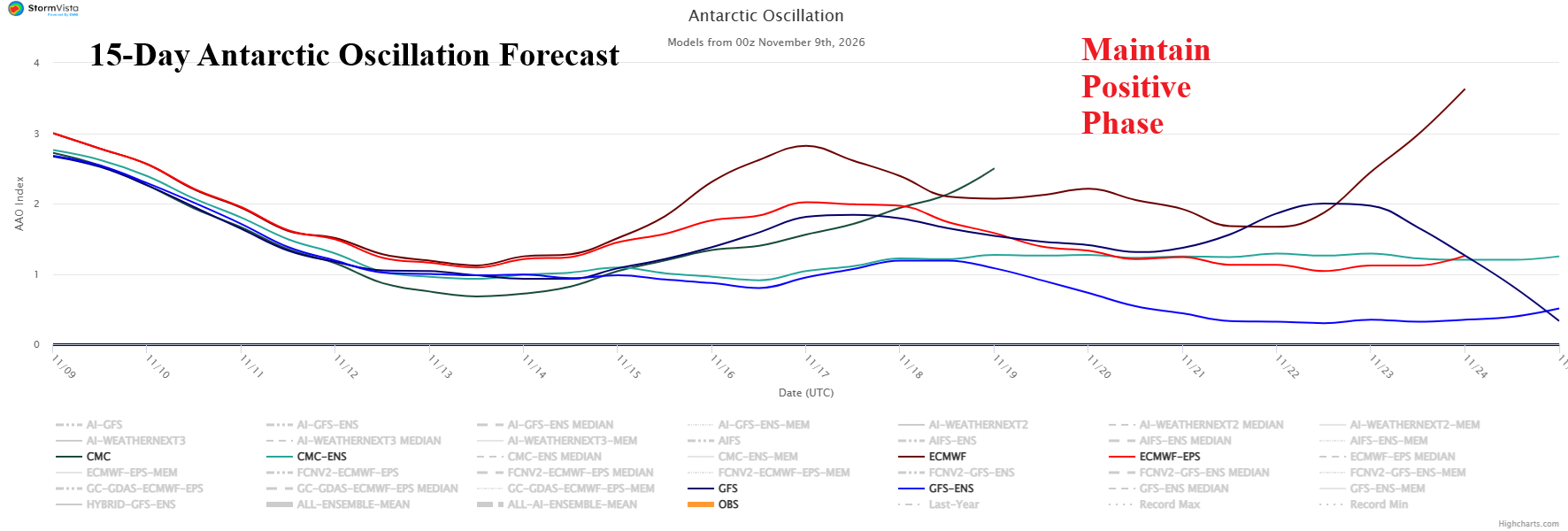
Fig. 2: Utilizing all operational models, the 15-day Antarctic oscillation forecast.
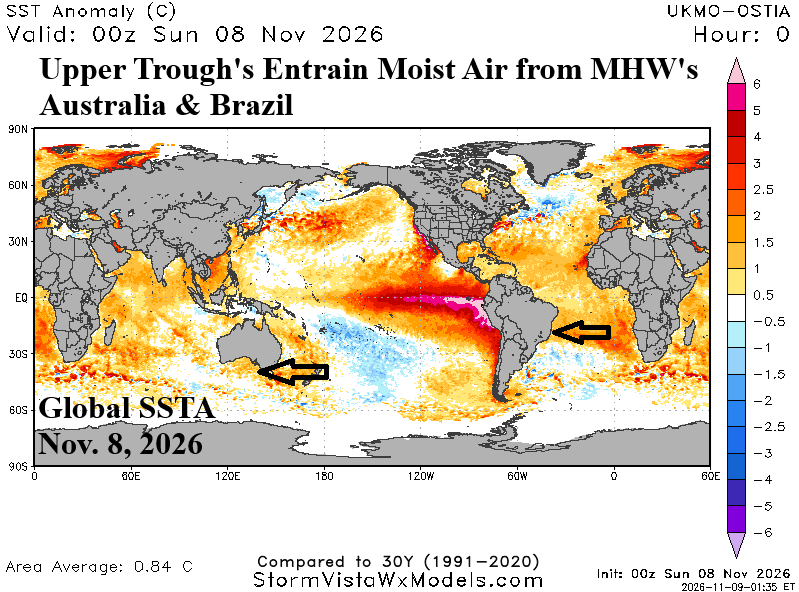
Fig. 3: Global SSTA observations identifying marine heatwaves near and east of both Australia and Brazil helping to enhance rainfall.
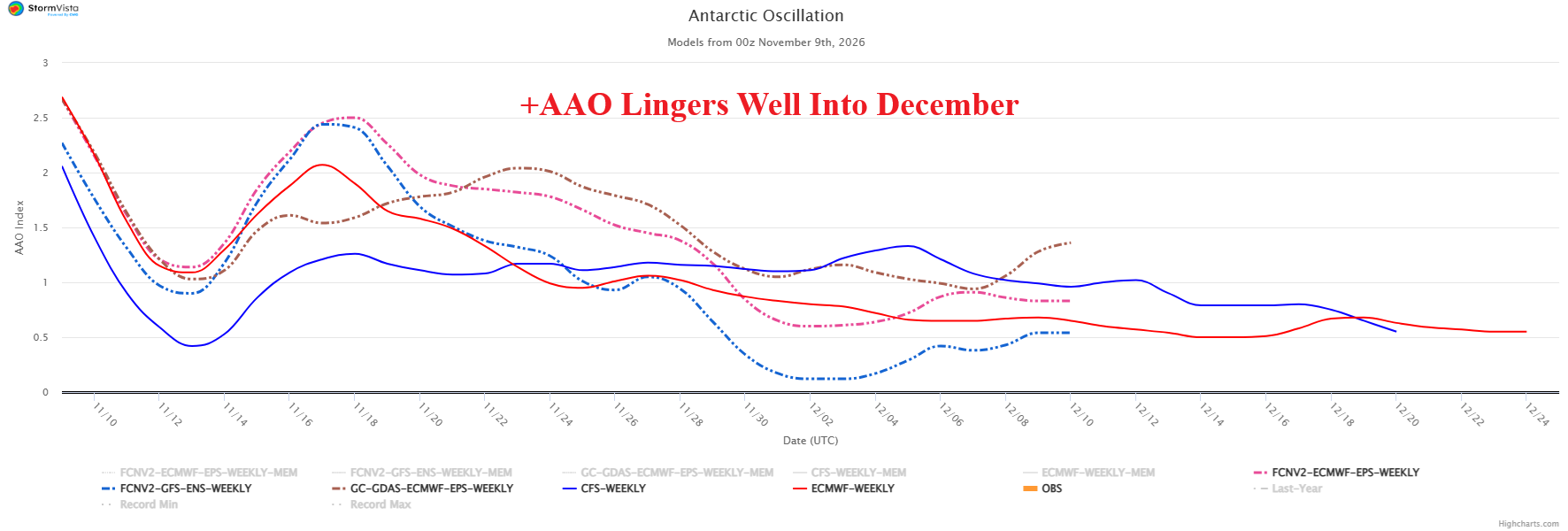
Fig. 4: The Antarctic oscillation forecast reveals lingering positive phase well into December.