

High Impact Cold Weather Continues East; Colder Shift for February 6-12
01/29/2026, 4:13 am EST
Using Cleveland and Baltimore HDD’s, 2026 (and 2025) Rank Coldest Since 2014-15. JAN-26 Cold Similar to JAN-25 in Houston.
02/02/2026, 5:13 am EST

Climate Impact Company Daily Feature
Issued: Friday, January 30, 2026
Highlight: Southern U.S. drought could end if El Nino forms in 2026. Stratospheric warming in February?
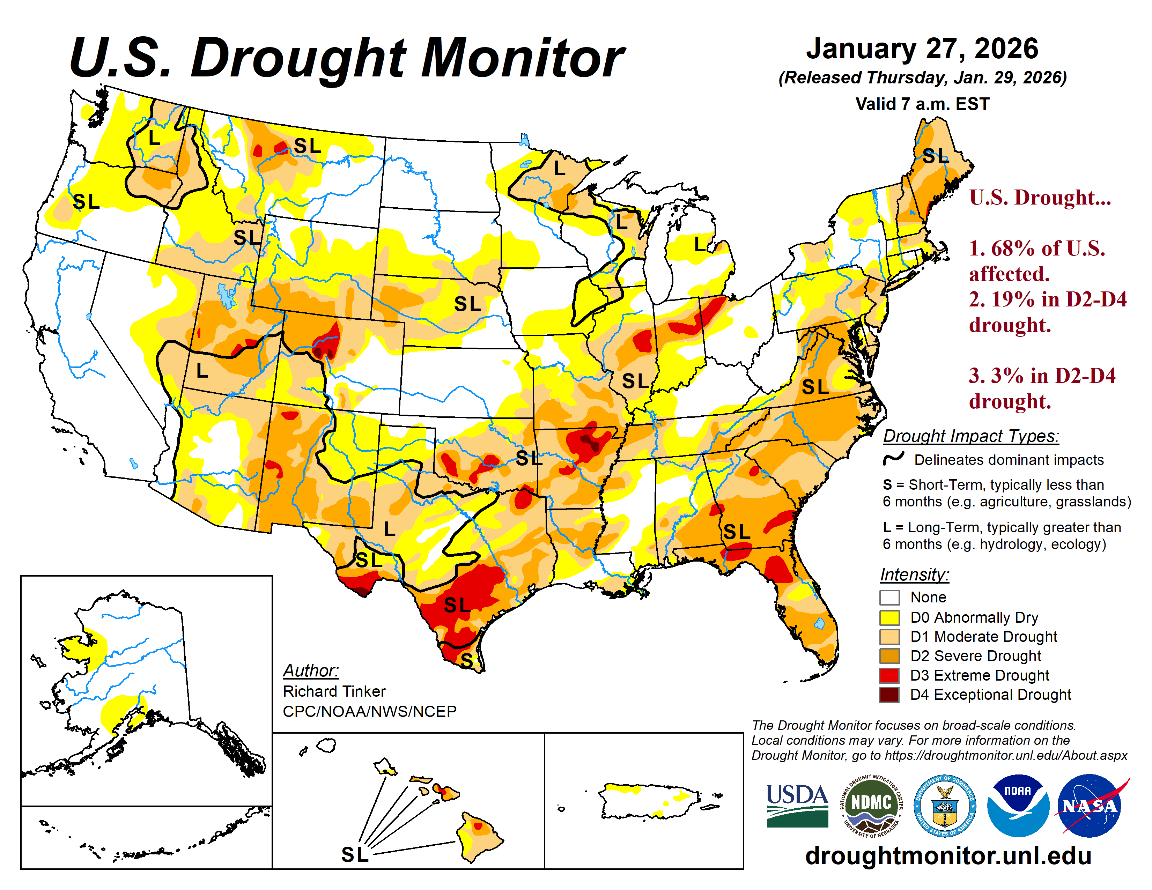
Fig. 1: The U.S. Drought Monitor reveals about 68% of the U.S. is affected by dry-to-drought conditions.
Discussion: The U.S. Drought Monitor reveals widespread dry-to-drought conditions across the U.S. biased toward the South and Southeast U.S. due to the La Nina climate (Fig. 1). About 68% of the U.S. are observing dry-to-drought conditions although D2-D4 severe drought is observed by only 3% of the U.S. Nino34 SSTA forecasts are aggressively indicating El Nino ahead for 2026 (Fig. 2). If so, the Southern U.S. shifts wetter and long-term drought eases or ends. The dry climate bias shifts to the Northern U.S. during El Nino. Recently, a Kelvin Wave shifted east across the equatorial East Pacific subsurface and should dissipate La Nina in February (Fig. 3). A second Kelvin Wave has formed in the West Pacific subsurface across the equatorial region and if another eastward shift is generated, El Nino develops by late meteorological spring. The stratosphere has been cold during January (Fig. 4). Outlooks indicate a reversal, stratospheric warming, is possible as the middle third of February approaches (Fig. 5).

Fig. 2: Nino34 SSTA forecasts are aggressive developing El Nino is 2026.

Fig. 3: Kelvin Wave has shifted across the equatorial East Pacific and is likely to end La Nina by February. A second Kelvin Wave is required to follow and if so an El Nino forms during late spring.


Fig. 4-5: The JAN-26 stratosphere was cold while outlook indicates warming is ahead.in February.