
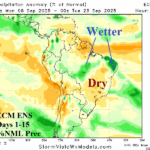
Extended-range Brazil Wet Weather Risk Easing Back
09/08/2025, 5:48 am EDT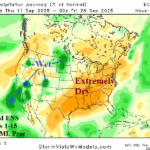
Super Dry Pattern East/South U.S. Continues
09/11/2025, 6:07 am EDT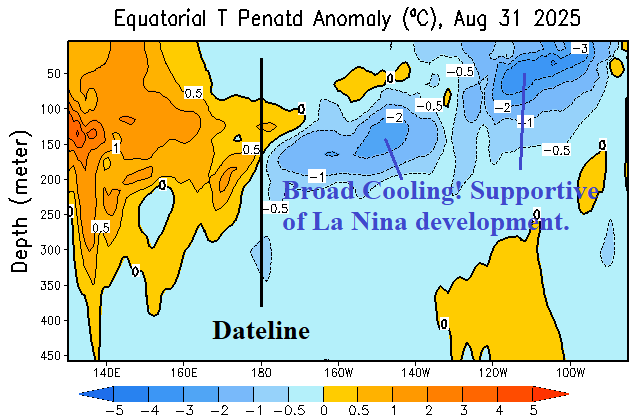

Climate Impact Company Weekly ENSO Climate Diagnostics
Issued: Monday September 8, 2025
Highlight: La Nina likely for Q4/2025; El Nino possible by APR/MAY 2026.
Discussion: The Nino SSTA regions in the central and eastern equatorial Pacific Ocean used to monitor ENSO phase have cooled in recent weeks are close to the La Nina threshold (Fig. 1). Signaling additional cooling ahead is the cool-off of the subsurface equatorial East Pacific (Fig. 2). The subsurface cooling has accelerated in September. The NCEP CFS V2 Nino34 SSTA forecast continues to indicate La Nina development for Q4/2025 (Fig. 3). Interestingly, the NCEP CFS V2 La Nina forecast has been consistent since late last spring. The latest NCEP CFS V2 forecast indicates La Nina is brief and followed by the onset of El Nino by APR/MAY 2026. ECMWF is forecasting a robust El Nino developing by the middle third of 2026. ENSO has been neutral for a while. However, an active ENSO pattern featuring both La Nina and El Nino within 1 year is increasingly likely for 2025-26.
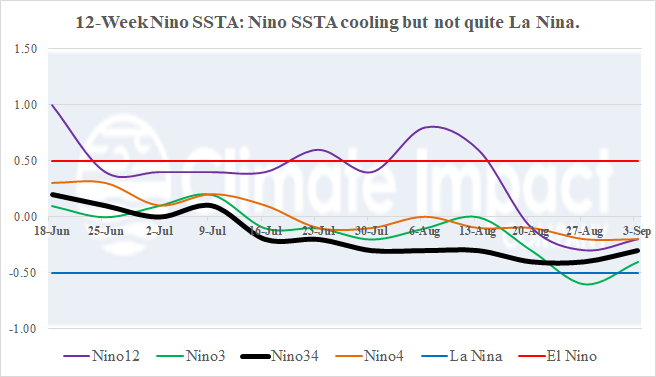
Fig. 1: The 12-week monitor of the Nino SSTA regions indicates a cooling trend toward the La Nina threshold.
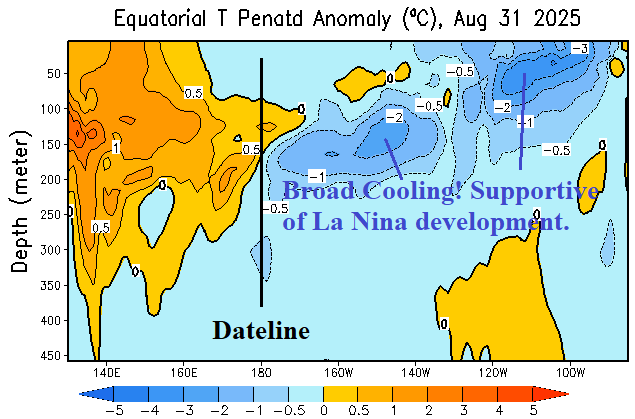
Fig. 2: The subsurface equatorial East Pacific has cooled dramatically in September and supportive of a La Nina episode ahead.
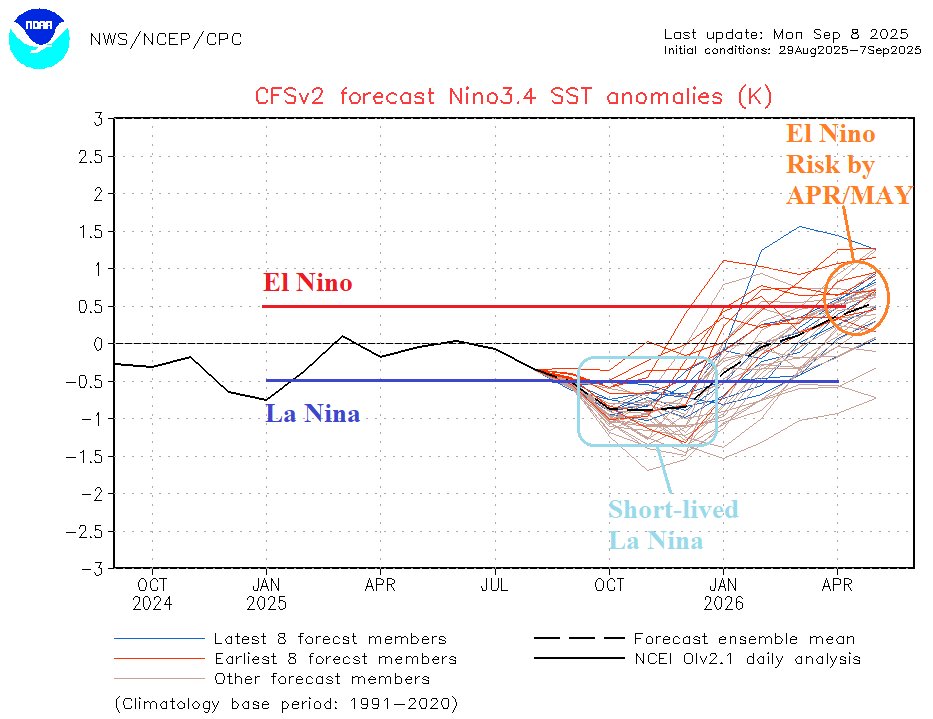
Fig. 3: The NCEP CFS V2 Nino34 SSTA forecast reveals La Nina to finish 2025 with El Nino potential toward middle of next year.