
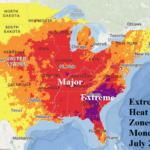
Extreme Heat Southeast U.S.
07/24/2025, 7:21 am EDT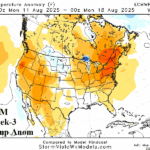
Another Hot Blast for Mid-August in U.S.
07/28/2025, 4:38 pm EDT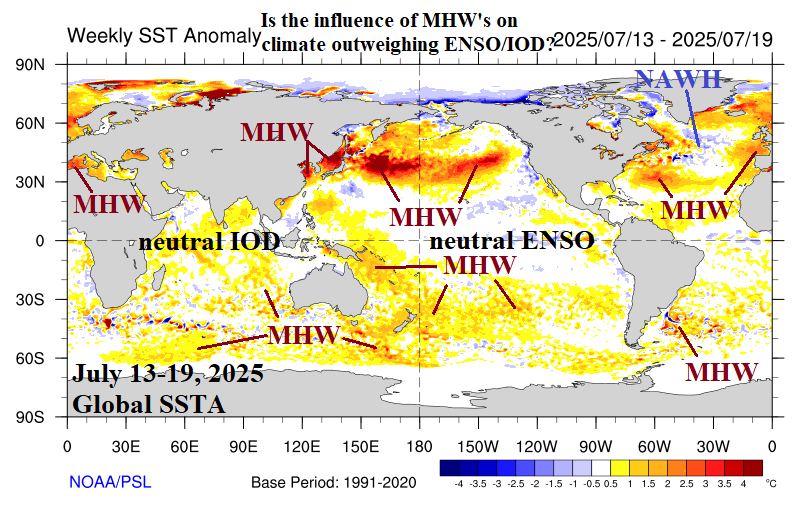

Climate Impact Company Early AG Market ALERT
Issued: Friday July 25, 2025
Highlight: Influence of marine heatwaves dominating climate.
Discussion: Market commentary on weather events and regimes this week highlight the influence of marine heatwaves (MHW) on extreme weather and climate (Fig. 1). Historical heat is affecting China and Japan. The number of hot days since March in Eastern China is a record amount and the extreme heat of late July from East China to Japan is unprecedented in many locations. The effect of the heat is taking a toll on the public and infrastructure. Meanwhile, in Australia, drought used to be a major concern. However, this decade has been consistently producing buckets of rain. An unusually wet mid-winter pattern is developing now. Of course, Europe began the summer season with oppressive heat. U.S. heatwaves have been consistent this summer peaking in intensity during the hottest time of summer, later July.
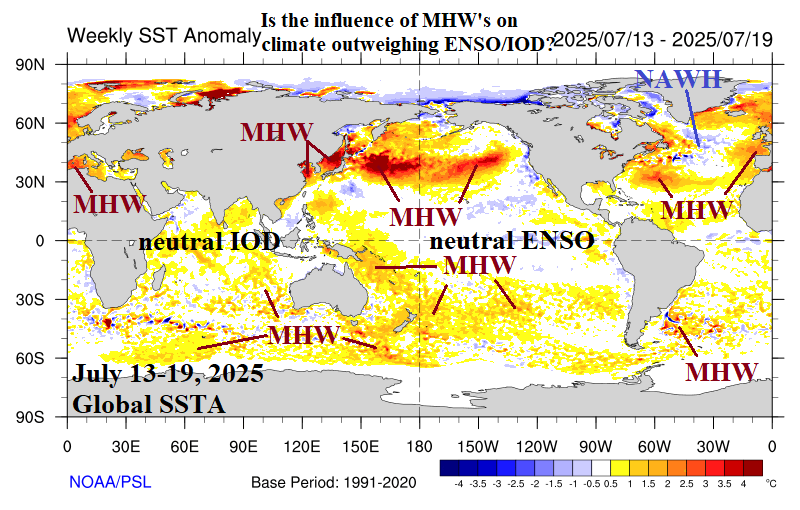
Fig. 1: Global SSTA analysis for mid-July and MHW identification.
Each of the regimes and events mentioned, and there are many more, are associated with stronger subtropical high pressure linked to areas of a very warm ocean surface and extending over land to cause extreme heat. The warmer oceans also produce above normal low atmosphere water moisture that can cause a wetter than normal climate observed across Australia this decade to MHW’s persisting either side of the continent. Unusual is a summer pattern which is both wetter and hotter than normal as observed across the East U.S. all linked to a MHW across the western North Atlantic.