
Long Duration -AO Pattern Eventually Supports Cold Return to North/East U.S.
01/13/2026, 4:07 am EST
Negative Arctic Oscillation Produces Cold-to-Frigid Weather Most of Mid-latitude Northern Hemisphere
01/14/2026, 5:06 am EST
Climate Impact Company Season 1-4 Outlook
South America
Issued: Wednesday, January 14, 2026
Highlight: An El Nino climate to develop in 2026. Dry Brazil/hot autumn Argentina, a mild winter, dry and hot spring//summer Brazil.
Executive Summary: The Climate Impact Company constructed analog climate forecast for season 1-4 ahead across South America is updated. The forecast is primarily reliant on the very warm waters off the West Coast compared to the cool waters east of Argentina and the relationship of each anomalous ocean temperature zone on late summer climate. Into mid-year through early next year, the climate forecast is primarily reliant on the arrival of El Nino. Forecast highlights include a hot and dry Southeast Brazil regime in February followed by a mostly dry Brazil during autumn while lingering anomalous heat affects Argentina. The winter season is milder than normal. Next spring and summer are mostly hotter/drier than normal across Brazil away from the coast.
Climate discussion: Currently, Nino34 SSTA is -0.57C and steady. The most recent multivariate ENSO index (MEI) is -0.8. Indicated is steady albeit slightly weaker oceanic and atmospheric La Nina. The action is in the subsurface. A warm Kelvin Wave has shifted eastward across the subsurface equatorial East Pacific estimated to reach the northwest coast of South America in 2 weeks (Fig. 1). Following that sequence, La Nina should erode significantly. Waters off the West Coast of South America have warmed significantly due to strengthening marine heatwaves off the northern coast of Chile and west of the southern coast of Chile (Fig. 2). Significant warming in this region is generally favorable for El Nino ahead. Interestingly, and unusual for the modern (ocean) climate, the traditional summertime MHW off the Argentina Coast is absent. Instead, waters are (somewhat) cooler than normal (Fig. 3). The latest Nino34 SSTA forecasts all reveal El Nino ahead for 2026 (Fig. 4). The forecast trend is for a stronger El Nino. ENSO forecasts made during this time of year, especially MAR/APR are low skill due to the ENSO prediction barrier. However, subsurface warming of the equatorial East Pacific and off the coast of Western South America support the El Nino forecasts. The South America season 1-4 ahead climate forecast is based on fading La Nina and the warm West Coast/cool East Coast SSTA pattern through autumn 2026 followed by modern-day El Nino climate anomalies for winter 2026 into early next year.
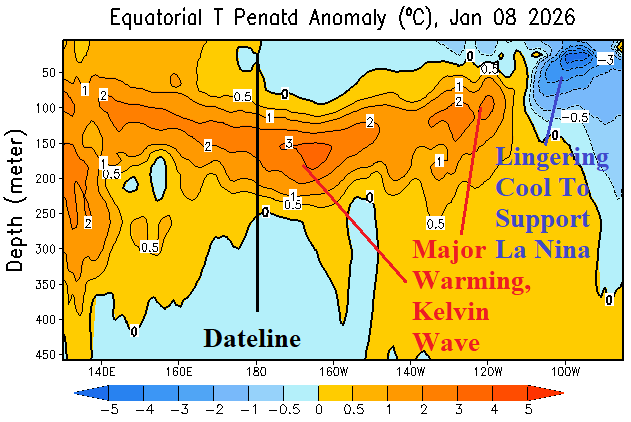
Fig. 1: A warm Kelvin Wave is shifting east across the subsurface East Pacific.
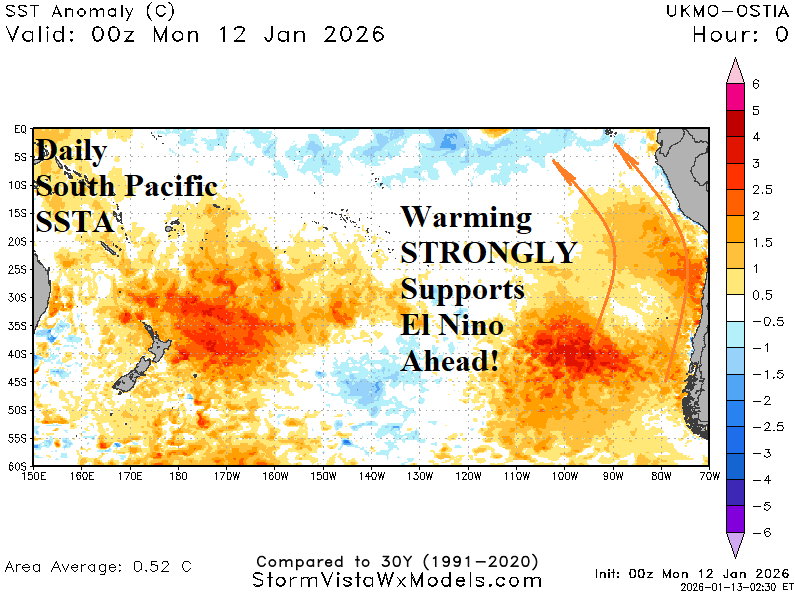
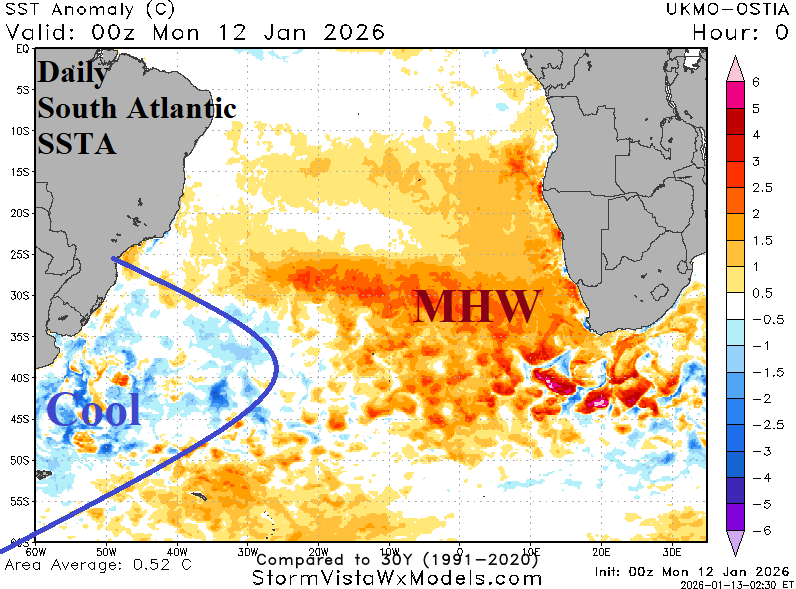
Fig. 2-3: The daily SSTA analysis for the South Pacific and South Atlantic.
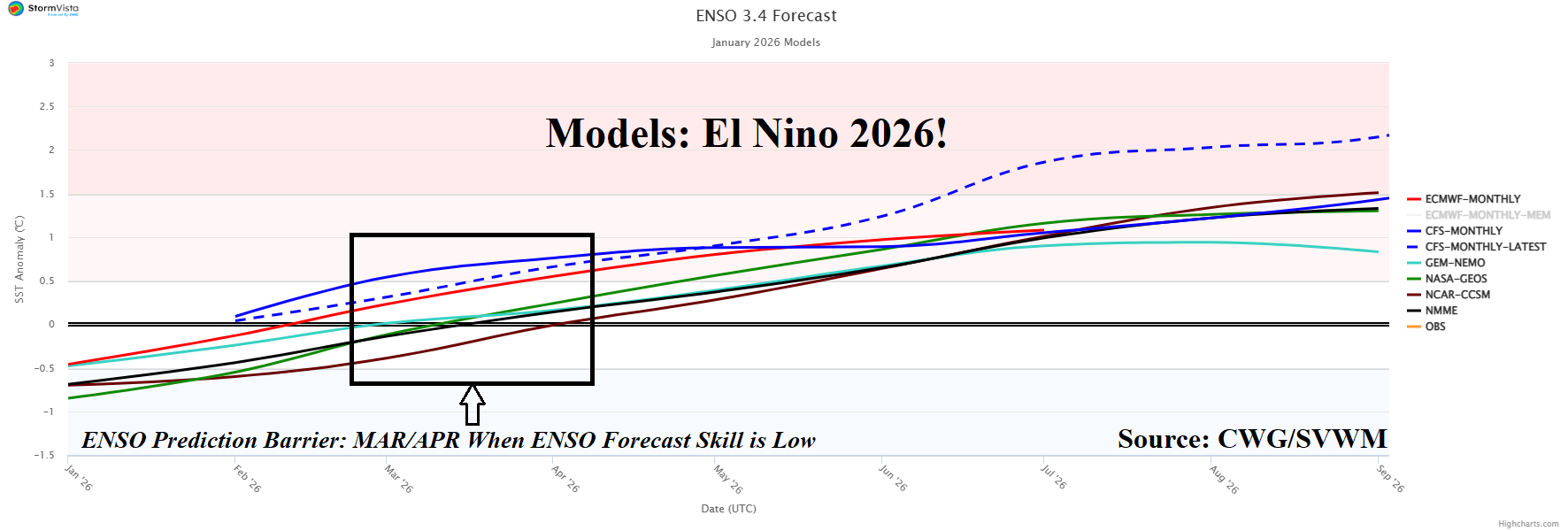
Fig. 4: Nino34 SSTA forecasts utilizing all models reveal El Nino ahead in 2026.
February 2026: The late meteorological summer 2025-26 climate pattern across South America features anomalous dry and hot conditions for Southeast Brazil, and significant thunderstorm activity across Northern Brazil and North/Northeast Argentina. Central Argentina is hotter than normal.
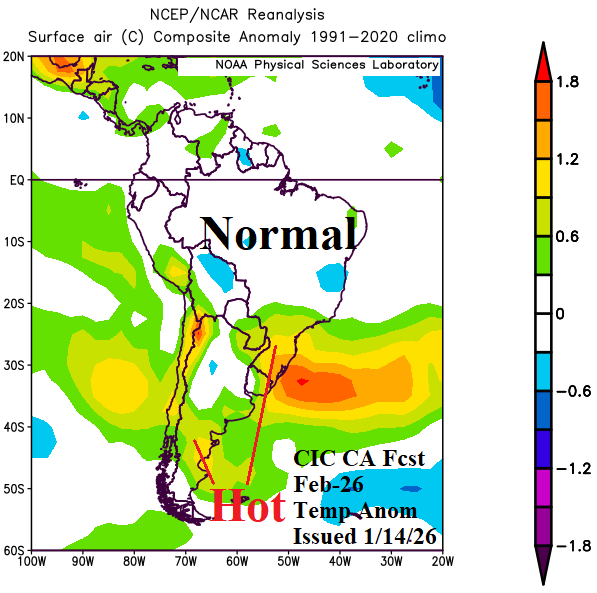
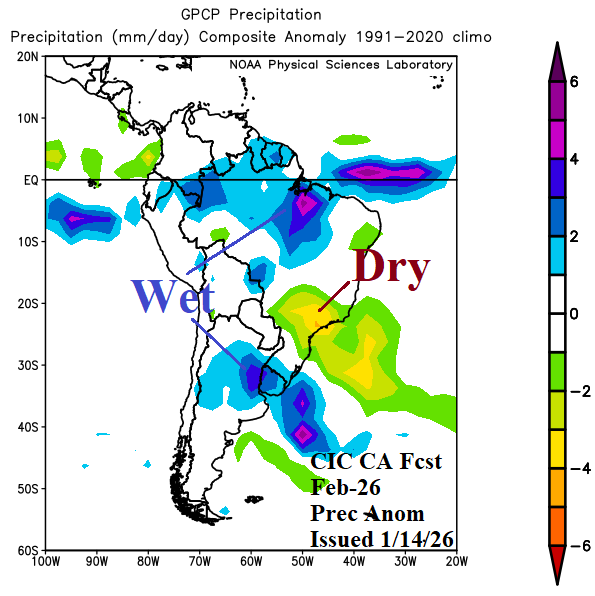
Fig. 5-6: The Climate Impact Company-constructed analog forecast of temperature and precipitation anomalies valid for February 2026.
MAR/APR/MAY 2026: The global climate pattern is shifting toward El Nino during autumn 2026. While the seasonal temperature across Brazil is near normal, anomalous heat lingers across Argentina. The rainfall pattern is mostly drier than normal in Brazil except marginally wet along the Northeast Coast. Northern Argentina is marginally drier than normal.
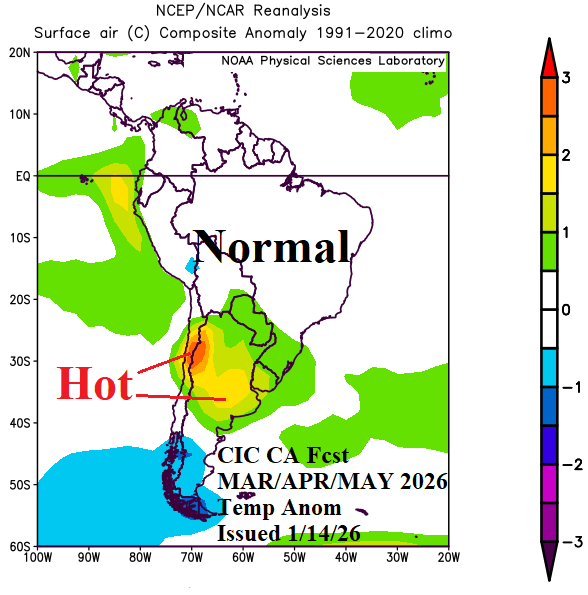
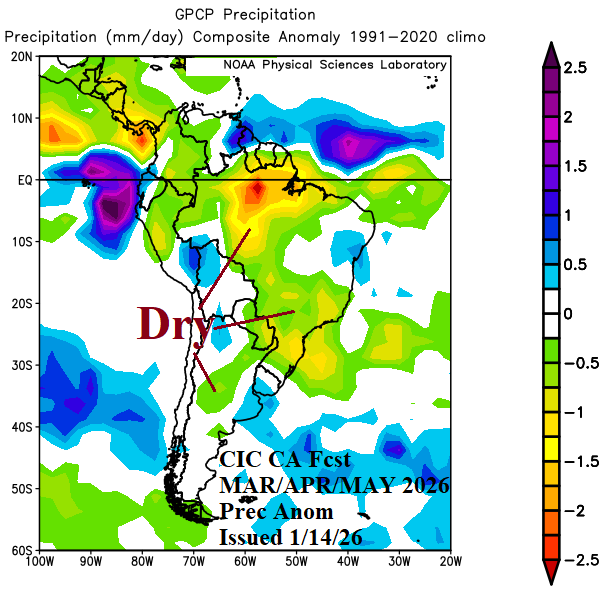
Fig. 7-8: The Climate Impact Company-constructed analog forecast of temperature and precipitation anomalies valid for MAR/APR/MAY 2026.
JUN/JUL/AUG 2026: Full El Nino conditions are expected for the winter season. The temperature pattern is biased warmer than normal, and the risk of a central South America freeze is below normal. The precipitation pattern is seasonably dry except drier than normal on the north coast of the continent and Central America.
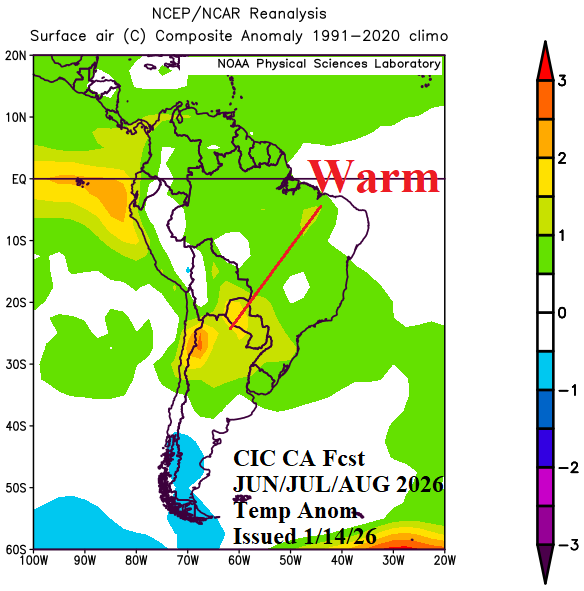
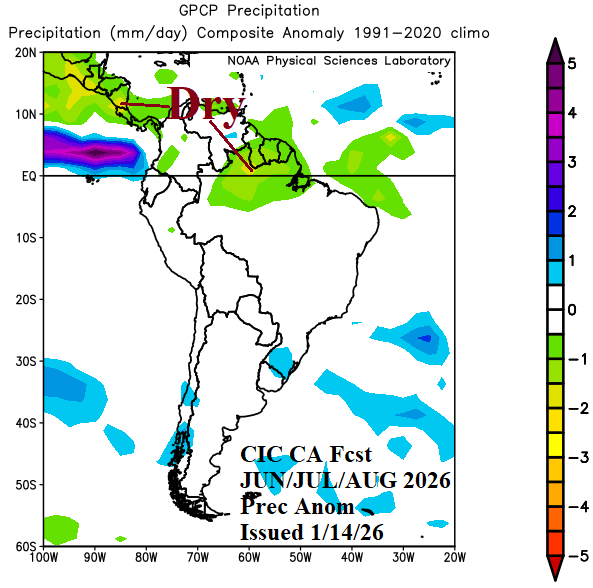
Fig. 9-10: The Climate Impact Company-constructed analog forecast of temperature and precipitation anomalies valid for JUN/JUL/AUG 2026.
SEP/OCT/NOV 2026: El Nino continues during spring (and may intensify). Brazil is warmer and drier than normal for the season. An area of intense rainfall is projected for Uruguay/Southeast Brazil. Late season cool weather is likely in Argentina especially southern sections.
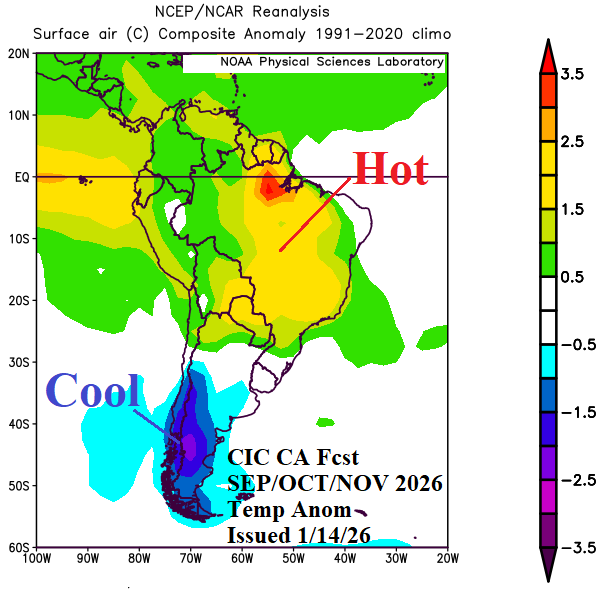
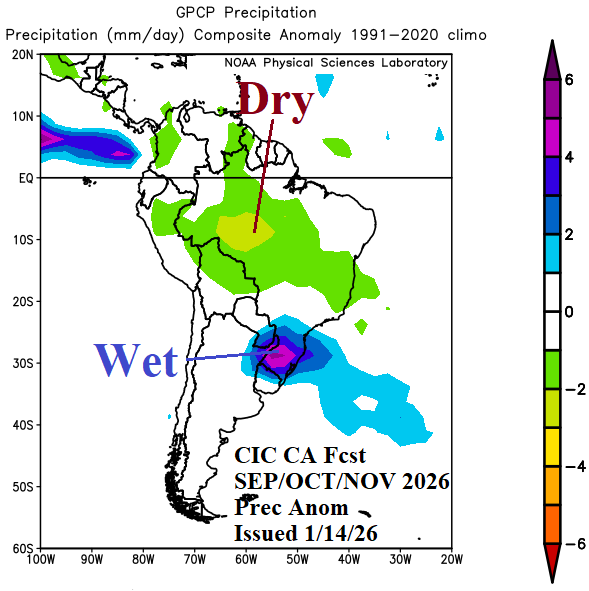
Fig. 11-12: The Climate Impact Company-constructed analog forecast of temperature and precipitation anomalies valid for SEP/OCT/NOV 2026.
DEC/JAN/FEB 2026-27: Summer 2026-27 is hotter and drier than normal across Brazil except in the East where locally heavy rains are likely. Northeast Argentina is thundery and Northern Argentina is hotter than normal.
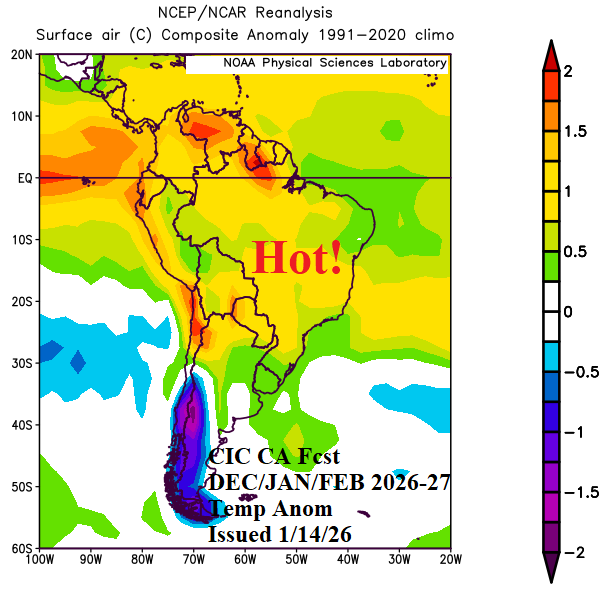
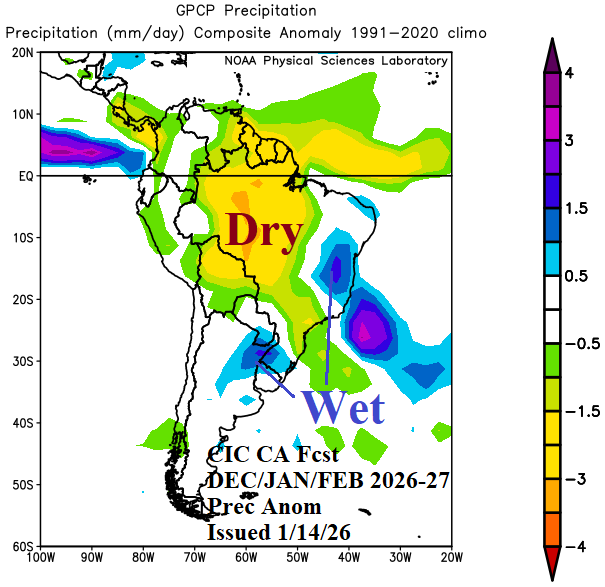
Fig. 13-14: The Climate Impact Company-constructed analog forecast of temperature and precipitation anomalies valid for DEC/JAN/FEB 2026-27.