
Signs of Returning U.S. Cold Later January.
01/04/2026, 7:03 am EST
Fluctuating Heating Demand Ahead in the U.S.
01/09/2026, 8:02 am EST
Climate Impact Company Early AG Market ALERT
Issued: Monday January 5, 2026
Highlight: Dry-biased Graph Cast used to project South America rainfall, Australia forecast shifts wetter.
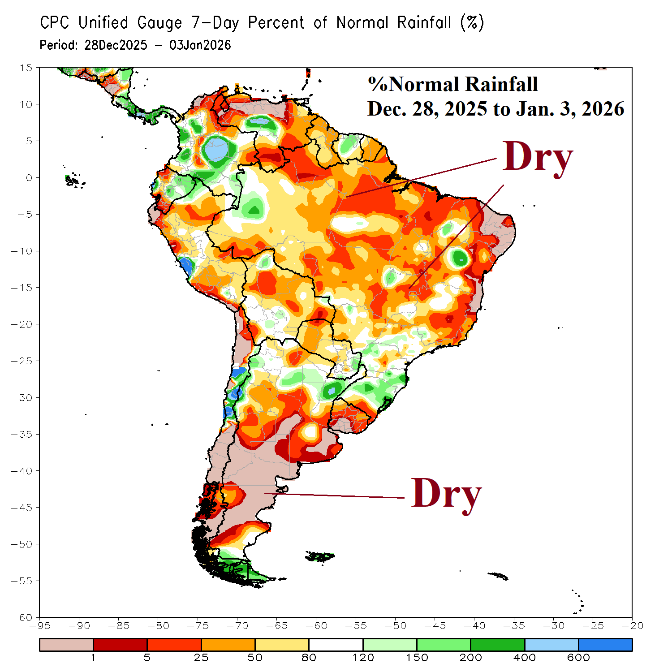
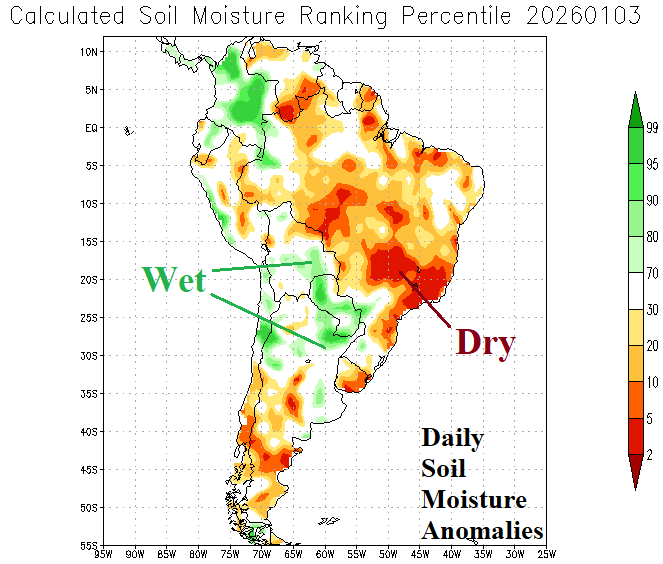
Fig. 1-2: Percent normal rainfall across South America for the past week and daily soil moisture anomalies analysis.
Discussion: During the past week, a drier rainfall bias continued to evolve across South America (Fig. 1). Only Southeast Brazil to Northeast Argentina observed above normal rainfall. Entering January, dry soil bias persists in Brazil while Northern Argentina soils are generally wetter than normal (Fig. 2). As indicated in yesterday’s report, operational and AI 15-day rainfall forecasts have been too wet. The AI Graph Cast ECM ENS is the least wet biased model. Today’s 15-day AI GC percent of normal rainfall outlook for South America reveals a drier than normal pattern across most of Brazil and Central Argentina (Fig. 3) while the 24-hour change suggests a sneaky wet regime in Northern Argentina (Fig. 4).
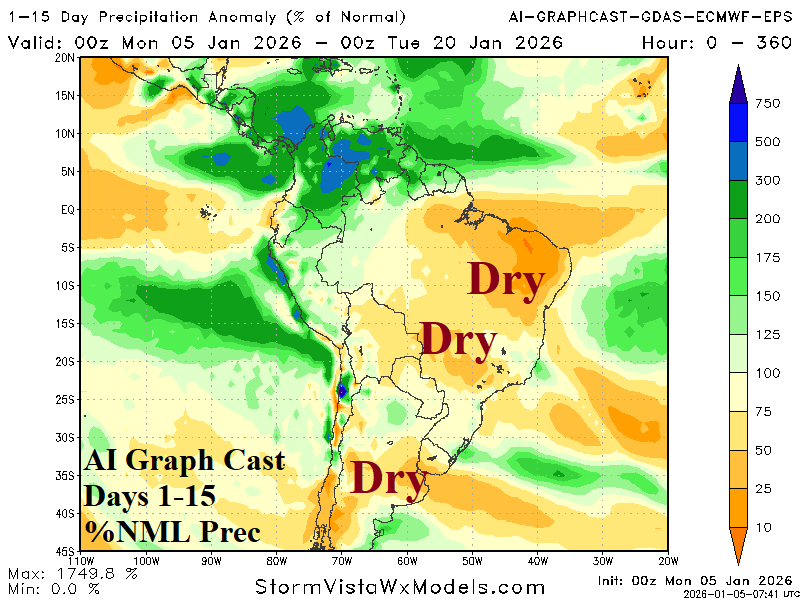
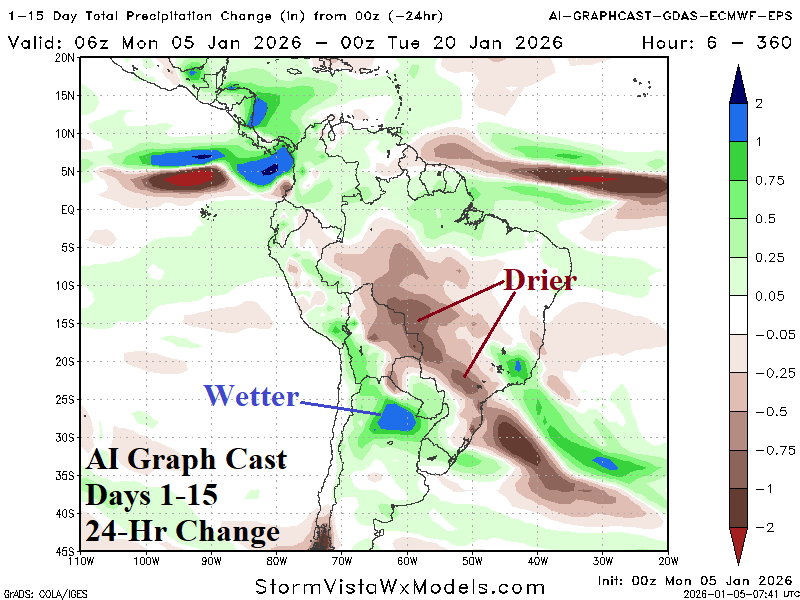
Fig. 3-4: AI Graph Cast ECM ENS 15-day percent of normal rainfall forecast and 24-hour change.
Surprisingly, the lowest 15-day rainfall bias forecast for the past 30 days in Australia is the GFS. Other dynamic and AI models are too wet in the East and too dry on the North Coast. The latest GFS 15-day percent of normal rainfall forecast for Australia reveals heavy rain risk increasing, especially during the medium range, across North and East Australia (Fig. 5-6). A tropical cyclone forms off the Northeast Coast of Queensland on Wednesday and strikes the coast late in the week and brings a deluge of rainfall.
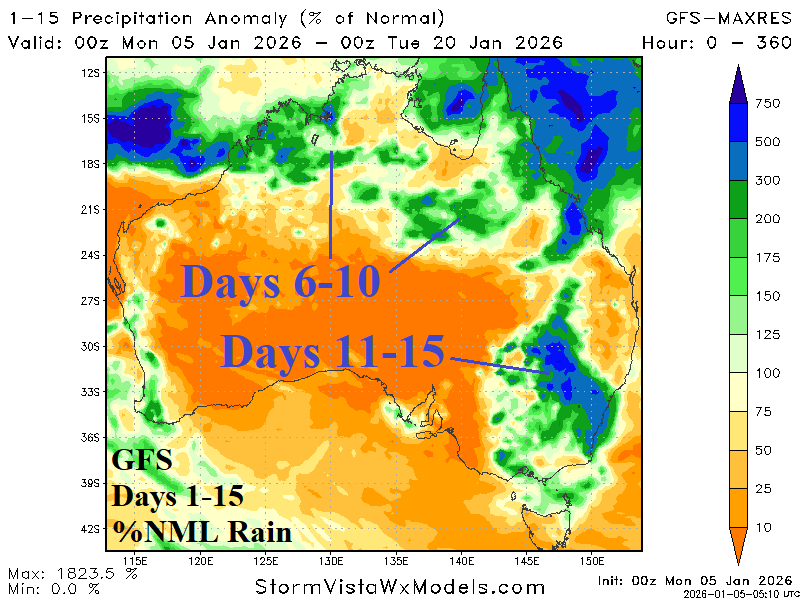
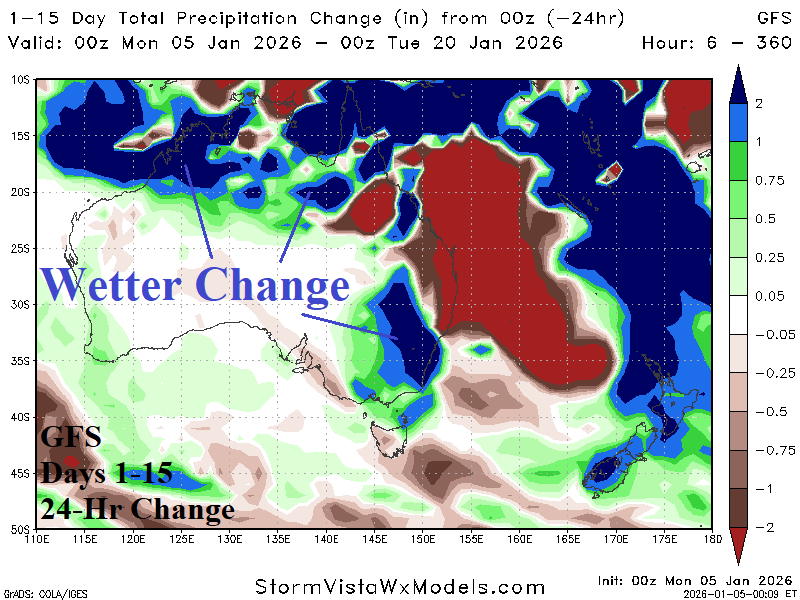
Fig. 5-6: AI Graph Cast ECM ENS 15-day percent of normal rainfall forecast and 24-hour change.