
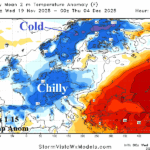
Stormy and Cold Europe!
11/19/2025, 4:41 am EST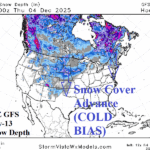
Expected Evolving Snow Cover Is The Cold Weather Key for December
11/21/2025, 12:54 pm EST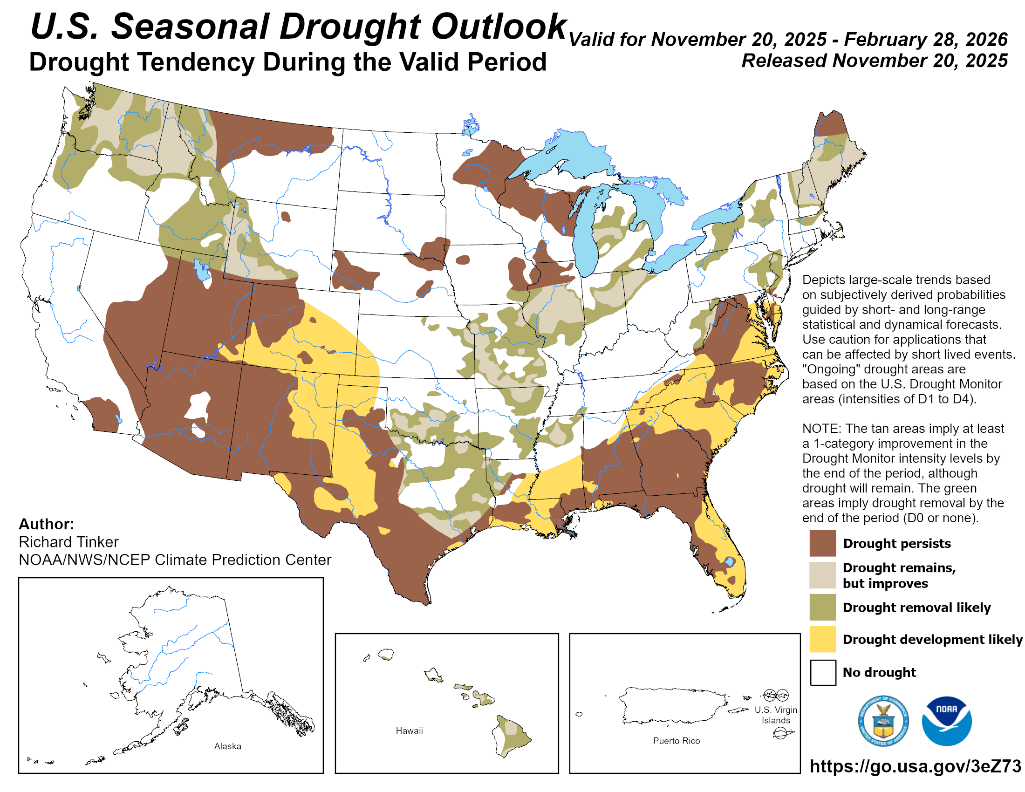

Climate Impact Company Daily Feature
Issued: Thursday, November 20, 2025
Highlight: Latest NOAA/CPC seasonal drought and long-lead climate forecasts. Snowy and cold Northern U.S. winter; Mostly dry and warm Southern States.
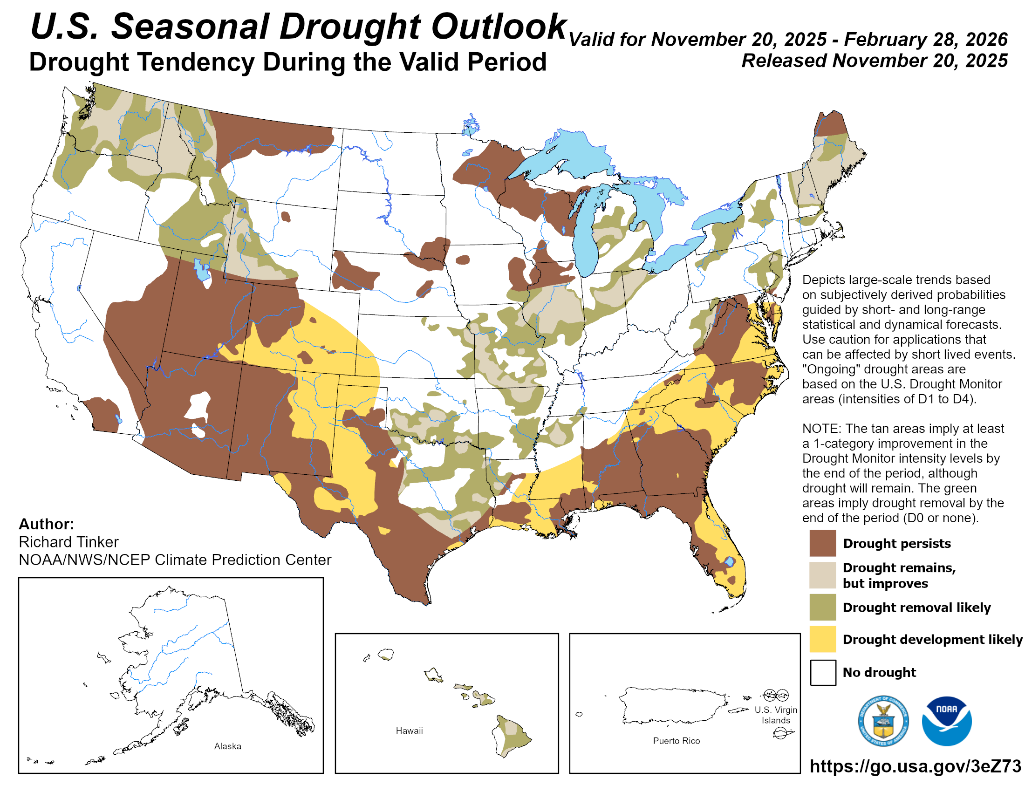
Fig. 1: The latest NOAA/CPC Seasonal Drought Outlook valid through February 28, 2026.
Discussion: The latest NOAA/CPC Seasonal Drought Outlook indicates expanding drought from the Southwest U.S. across the 4-Corners region and Western Texas plus into the Mid-Atlantic region from the Southeast U.S. (Fig. 1). The Florida Peninsula is added to the developing drought forecast. Drought erosion is indicated across the northeast quadrant of Texas northeastward to the Midwest States. New England drought also eases. The Northwest U.S. drought is forecast to weaken (and end in some locations). Except for south coastal areas, drought development in California is not expected.
The month ahead forecast valid for December 2025 indicates a larger sprawl of cold risk across the Northern U.S. compared to previous outlooks (Fig. 2). Additionally, above normal precipitation is expected within the cold risk area promising a potentially very snowy scenario (Fig. 3). The Southern U.S. is likely warmer than normal with dryness across Southwest Texas and Florida.
The meteorological winter (DEC/JAN/FEB) 2025-26 outlook is consistent and reminiscent of La Nina winter climate. Cold risk is across the Northwest/North-central U.S. while warm risk stretches across the South and Southeast U.S. (Fig. 4). The winter outlook is snowy across the North, stormy (rain, snow, and ice) in the Ohio Valley, and dry throughout the Gulf States (Fig. 5).

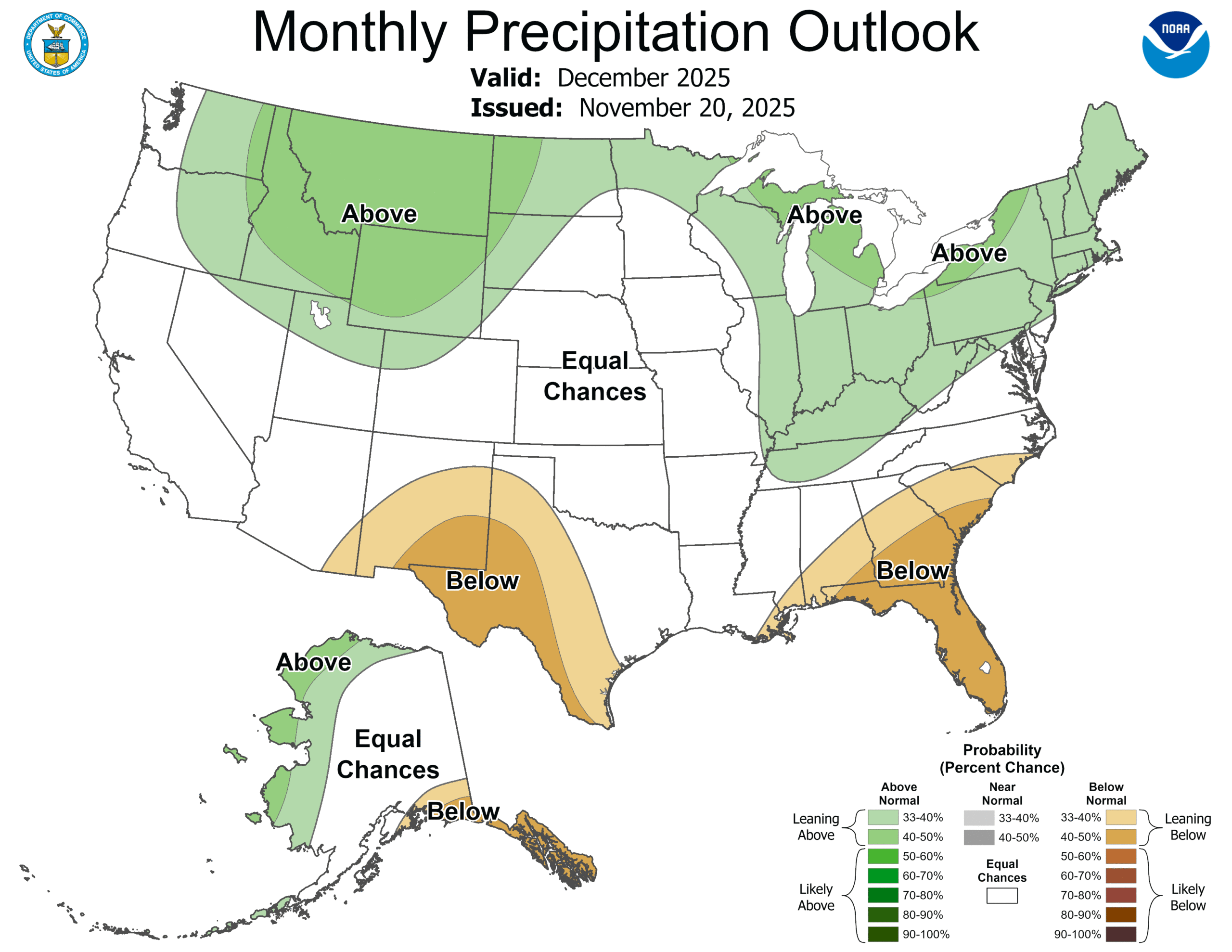
Fig. 2-3: The NOAA/CPC long-lead temperature and precipitation probability forecast for December 2025.
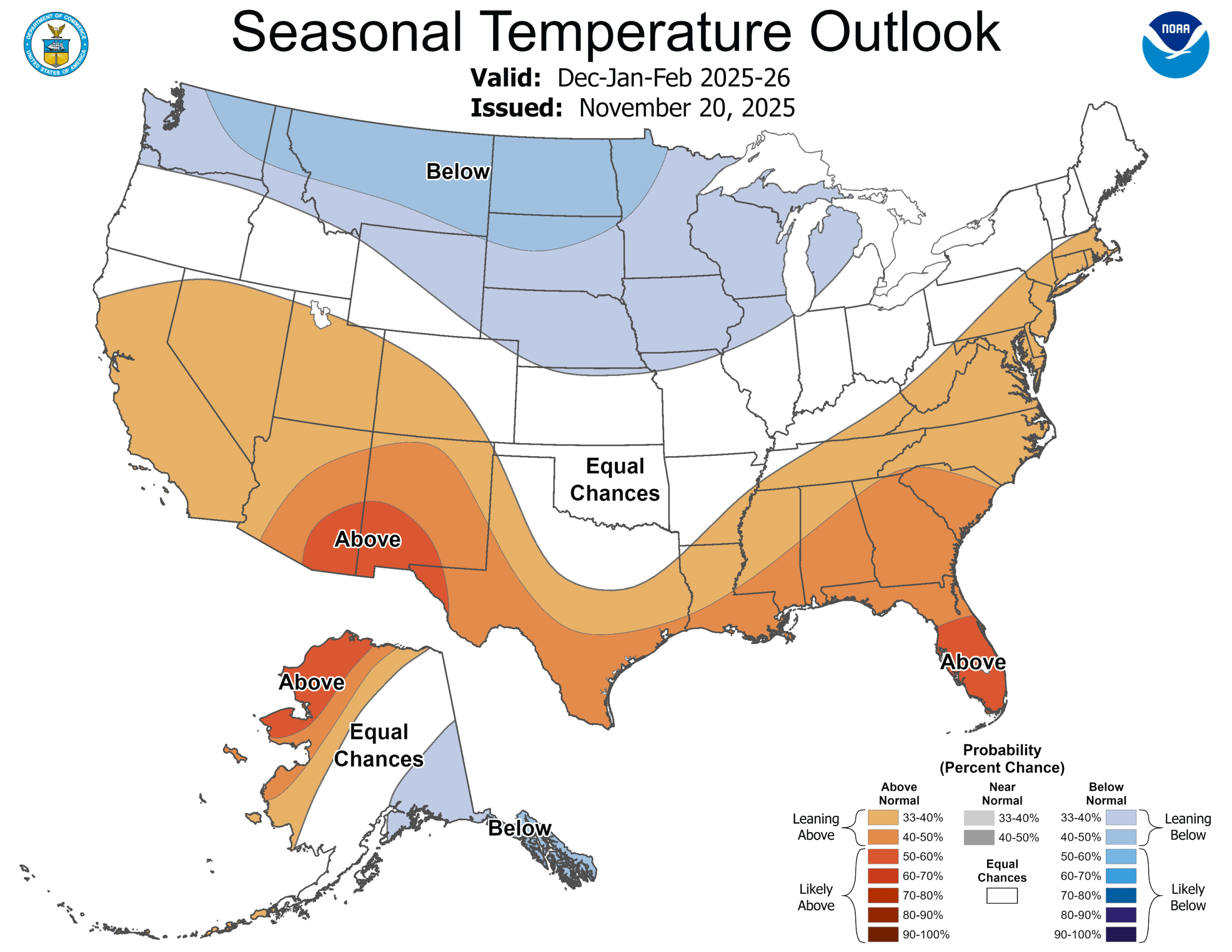

Fig. 4-5: The NOAA/CPC long-lead temperature and precipitation probability forecast for DEC/JAN/FEB 2025-26.
The meteorological spring 2026 outlook expands the warm risk areas to include the East U.S. and California (Fig. 6) while the precipitation forecast is limited to dryness Southwest and lingering wet weather in the Great Lakes region (Fig. 7). Meteorological summer 2026 indicates hotter than normal climate risk for the entire U.S. except the North-central States (Fig. 8). The East Coast is wet, and the Northwest is dry (Fig. 9).
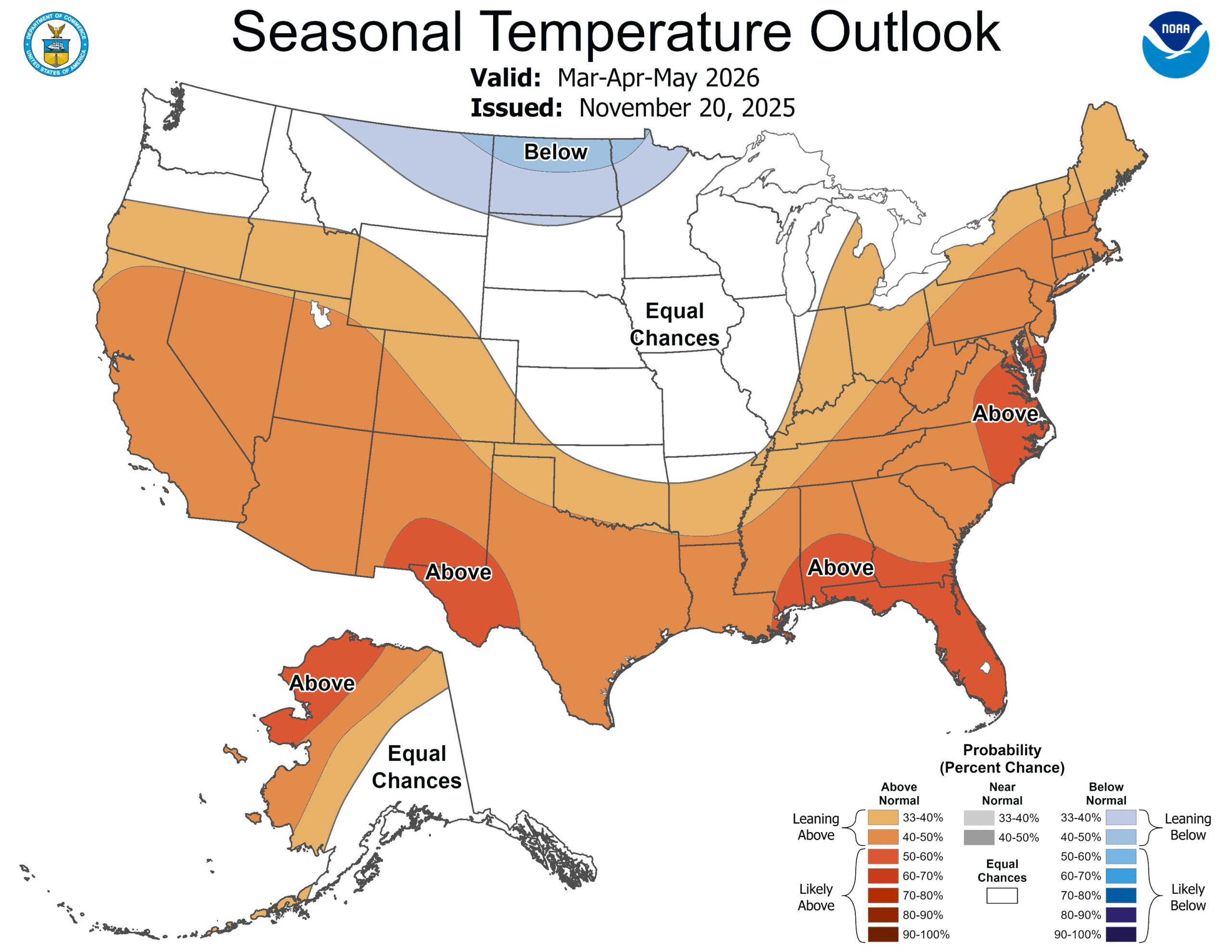
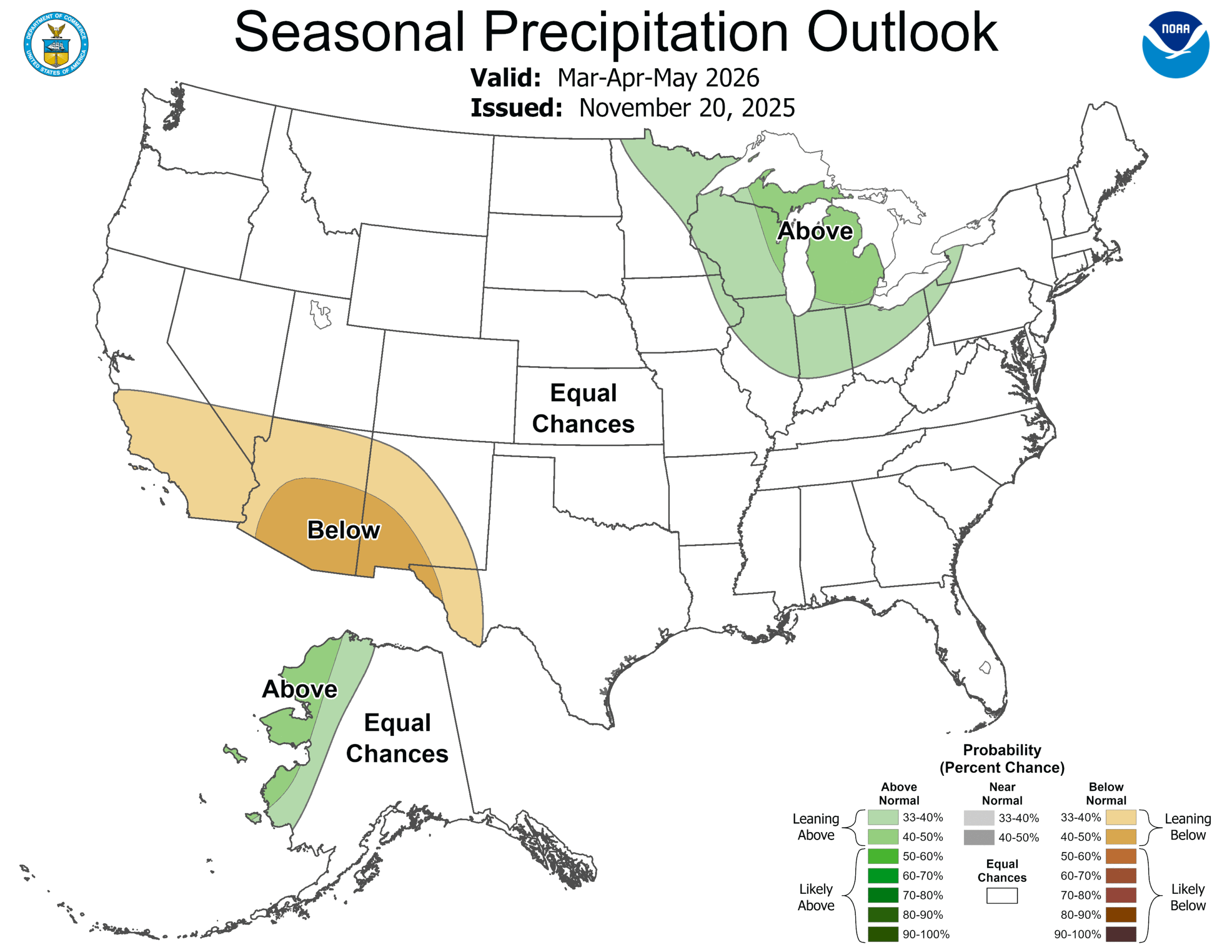
Fig. 6-7: The NOAA/CPC long-lead temperature and precipitation probability forecast for MAR/APR/MAY 2026.
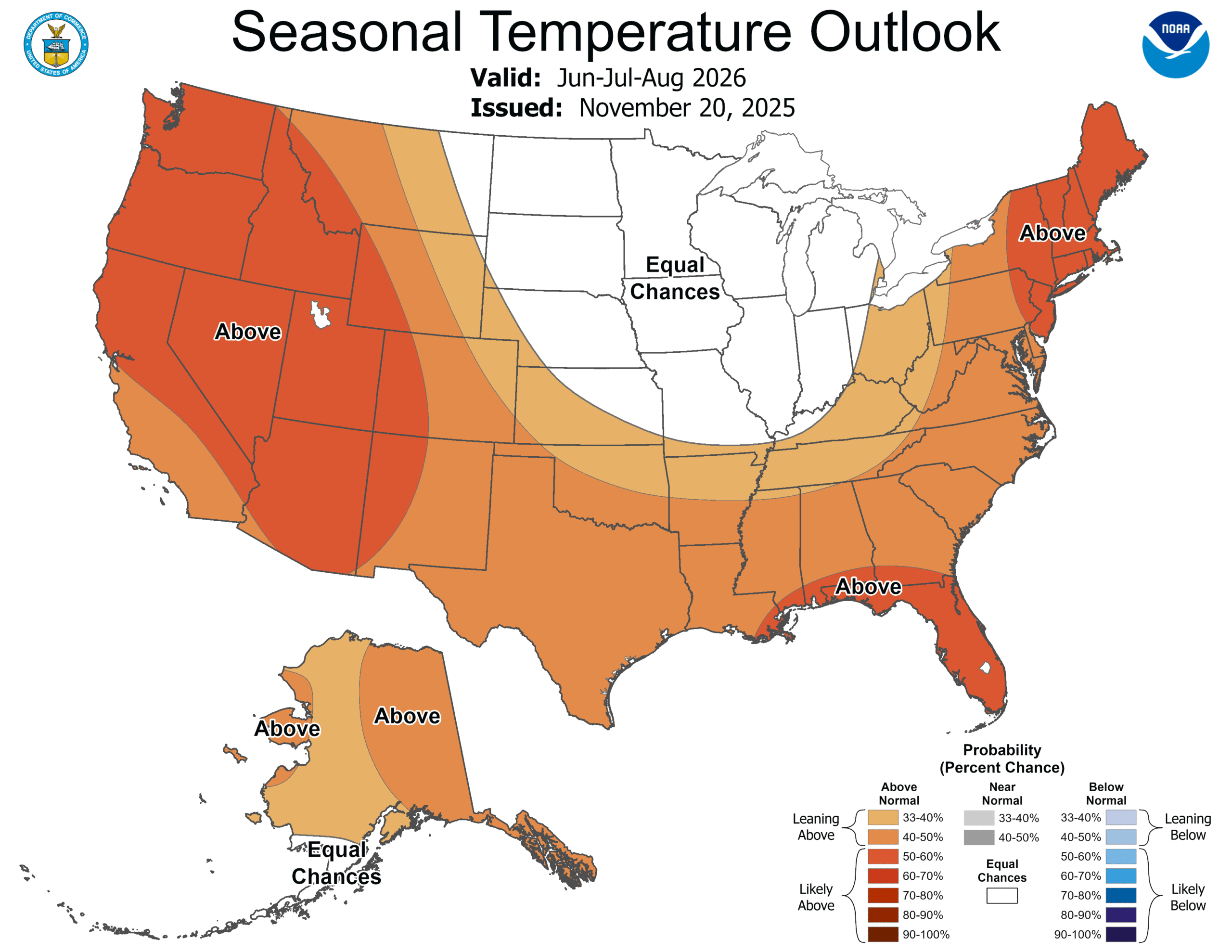
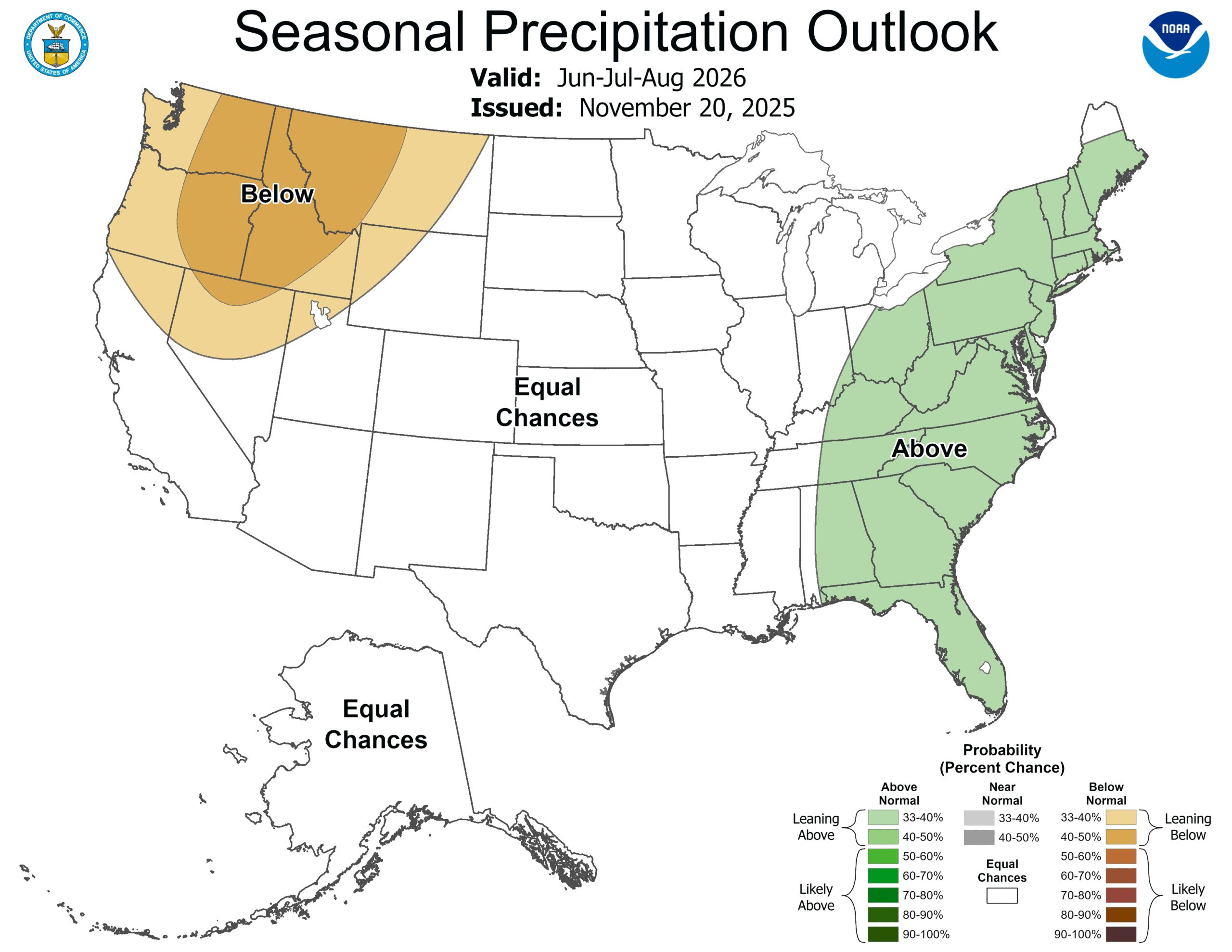
Fig. 8-9: The NOAA/CPC long-lead temperature and precipitation probability forecast for JUN/JUL/AUG 2026.