
High Wind Is Precursor To The “Atmospheric River” Pattern
12/17/2025, 8:20 am EST
-NAO Shifting East U.S. Medium Range Forecasts Colder
12/23/2025, 8:27 am EST
Climate Impact Company Month 1-4 Outlook
South America
Issued: Monday, December 22, 2025
Highlight: Q1/2026 is marginally dry/hot in Brazil, moderately hot and dry in Argentina.
Executive Summary: The Climate Impact Company month 1-4 climate outlook for South America valid for January through April is updated. The constructed analog forecast is based primarily on lingering La Nina climate through Q1/2026 coupled with unusually warm SSTA off the West Coast. A trend toward El Nino could initiate as early as April. The climate outlook for Q1/2026 shifts less wet in Brazil compared to the previous forecast. The wetter bias for Brazil is across Paraguay and eastward. Northern Brazil shifts wetter. Broad drier than normal soil conditions across Brazil are not likely to change significantly. In Argentina, soil conditions are generally ideal as meteorological summer 2025-26 begins. The outlook for Q1/2026 remains drier and hotter than normal although the dryness is not as strong as previously indicated. Drought concerns in Argentina are pushed to late summer.
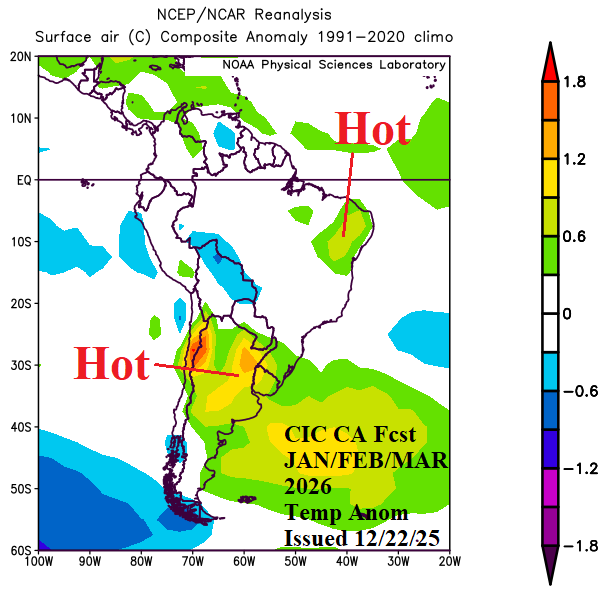
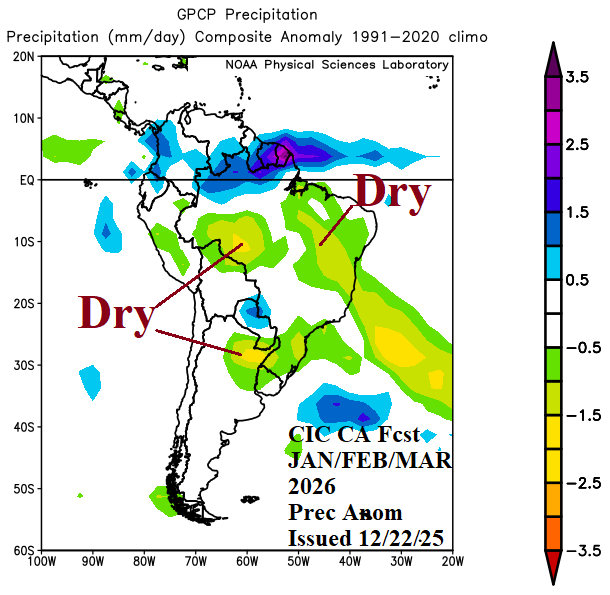
Fig. 1-2: The Climate Impact Company constructed analog temperature and precipitation forecast for JAN/FEB/MAR 2026 across South America.
Climate discussion: The SSTA pattern off the West Coast of North and South America is warmer than normal during a weak La Nina episode. Normally, warming off the West Coast of The Americas during cold ENSO signals a potential ENSO phase change ahead including a collapsing La Nina followed by neutral ENSO with risk of El Nino afterward. One key diagnostic to monitor to determine the described ENSO regime change potential is the trend in subsurface equatorial ocean temperatures east of the Dateline. A Kelvin Wave (large subsurface warm anomaly) has shifted east of the Dateline at moderate depth while the remainder of the subsurface equatorial East Pacific is cool and supportive of La Nina. The upper ocean heat anomalies for the entire Pacific Basin east of the Dateline are slowly warming. The progress of the eastward shifting Kelvin Wave is key as to whether La Nina weakens over the next 3-6 weeks. The multivariate ENSO index (MEI) indicates moderate strength La Nina climate is present and will take longer to weaken than oceanic La Nina. Therefore, the updated constructed analog forecast for South America is based on a La Nina climate for Q1/2026 coupled with warm SSTA off the West Coast and neutral ENSO with potential El Nino-like tendencies developing by April.
January 2026: The mid-summer climate forecast for South America shifts cooler/wetter across Southwest to East-coastal Brazil while the Northeast Brazil forecast reverses sharply from wet to dry (and hotter). Northern South America is adjusted wetter. In Argentina, the outlook remains hotter than normal with dryness confined to Northern Argentina and extending to Uruguay and Southeast Brazil. As previously stated, the constructed analog is based on a La Nina climate and warm SSTA off the West Coast of South America.
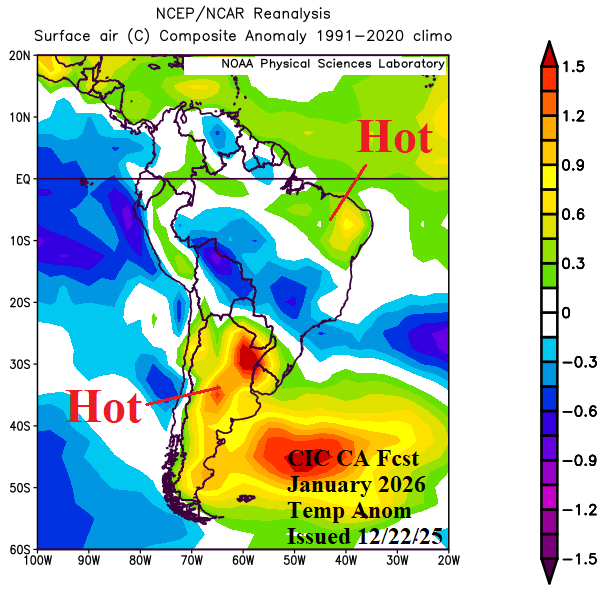
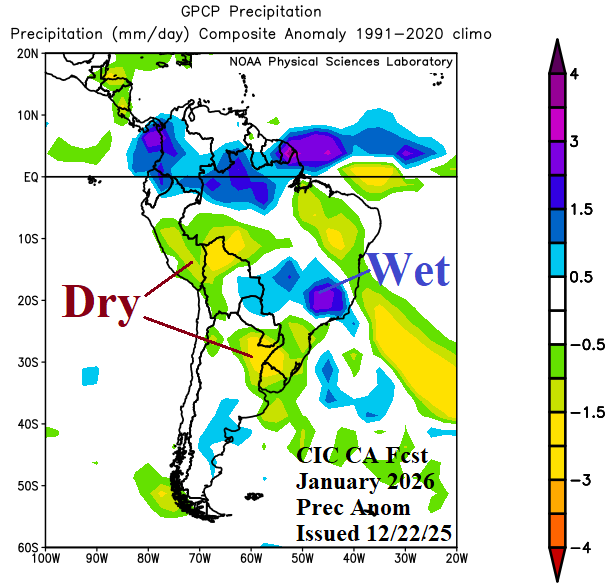
Fig. 3-4: The Climate Impact Company constructed analog temperature and precipitation anomaly forecast for January 2026.
February 2026: The primary changes are across Brazil focused on the rainfall pattern. The revised forecast is not as wet as previously indicated. Marginal dryness extends from Southwest Brazil to the central east coastal zone. Paraguay is adjusted wetter while Argentina is not as dry. The drier Brazil forecast supports a wider hot anomaly while the Argentina forecast stays hotter than normal. As meteorological summer winds down, Brazil soil moisture conditions are generally drier than normal and earlier forecasts anticipating an Argentina drought development are less likely.
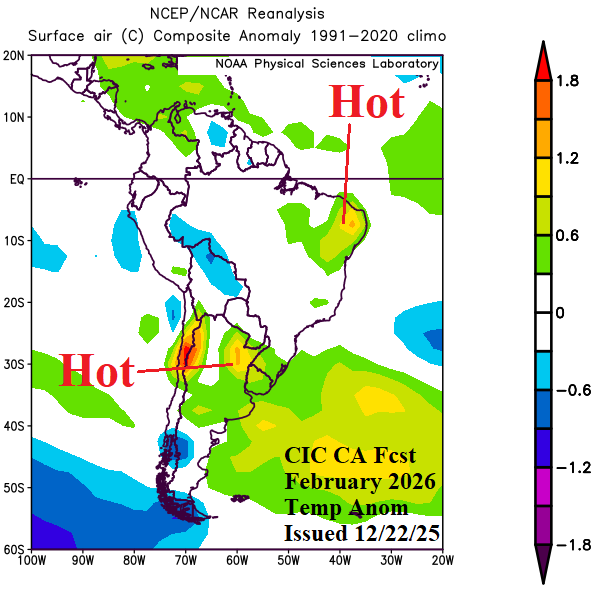

Fig. 5-6: The Climate Impact Company constructed analog temperature and precipitation anomaly forecast for February 2026.
March 2026: La Nina climate fades in March. The projected climate pattern is similar with the previous forecast indicating broad dryness across Brazil while Argentina is drier and hotter than normal. Some drought conditions developing in Argentina are likely by March.

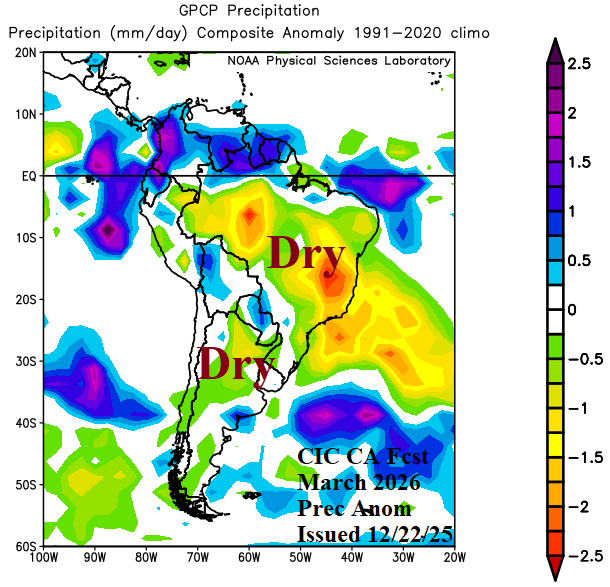
Fig. 7-8: The Climate Impact Company constructed analog temperature and precipitation anomaly forecast for March 2026.
April 2026: The outlook favors wet and temperate weather Central to East Brazil although not as wet as previously indicated. The Argentina forecast trend is drier and warmer.
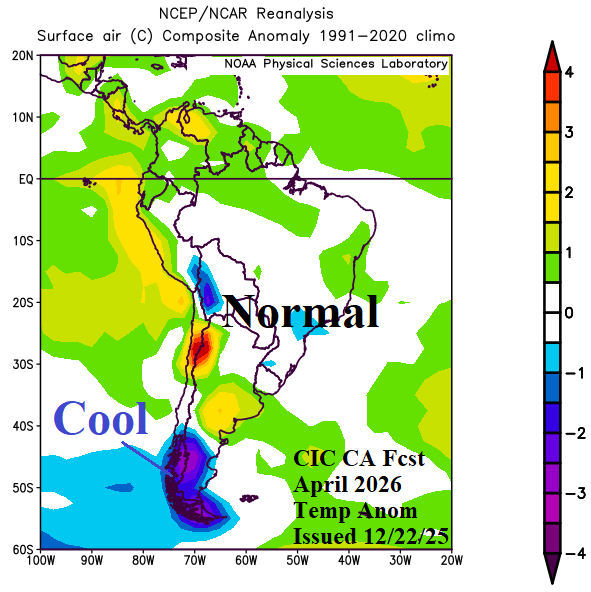

Fig. 9-10: The Climate Impact Company constructed analog temperature and precipitation anomaly forecast for April 2026.