
Support To Keep U.S. Warm Increasing; Comments on New NOAA RONI Index
02/13/2026, 5:55 am EST
Aerial Coverage of Great Lakes Ice and FEB/MAR/APR Temperature
02/18/2026, 8:47 am EST
Climate Impact Company ENSO Climate Diagnostics
Issued: Monday February 16, 2026
Highlight: Oceanic La Nina has ended, subsurface warming validates El Nino forecasts for mid-year, but atmosphere not responding yet.
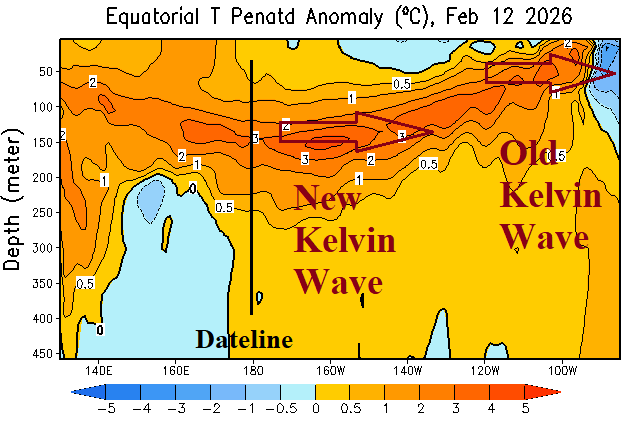
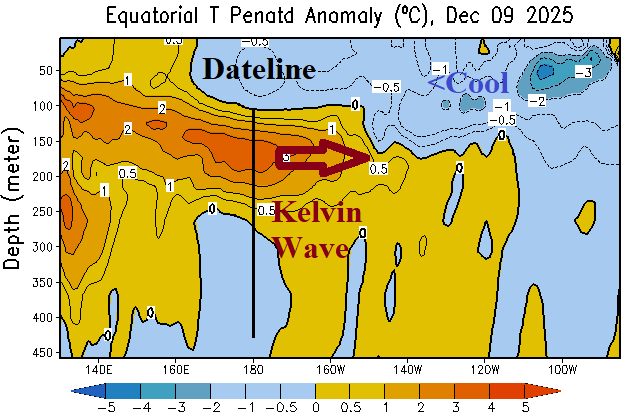
Fig. 1-2: A second Kelvinn Wave has developed in the equatorial Pacific subsurface. Note the dramatic warming during the past 2 months of the eastern equatorial Pacific Ocean.
Discussion: The subsurface eastern equatorial Pacific continues to steadily warm (Fig. 1). A Kelvin Wave moving east across the Dateline during early December (Fig. 2) reached waters off northwest South America recently while a second Kelvin Wave emerged near and east of the Dateline and is drifting eastward. The subsurface warming is a significant contributor to La Nina demise and increased risk of El Nino by the middle third of 2026 (Fig. 3). The weekly Nino SSTA reveals that warming ius beginning to organize (Fig. 4). The atmosphere remains slow to respond as southern oscillation index (SOI) stays positive and 15-day forecasts maintain the positive phase.
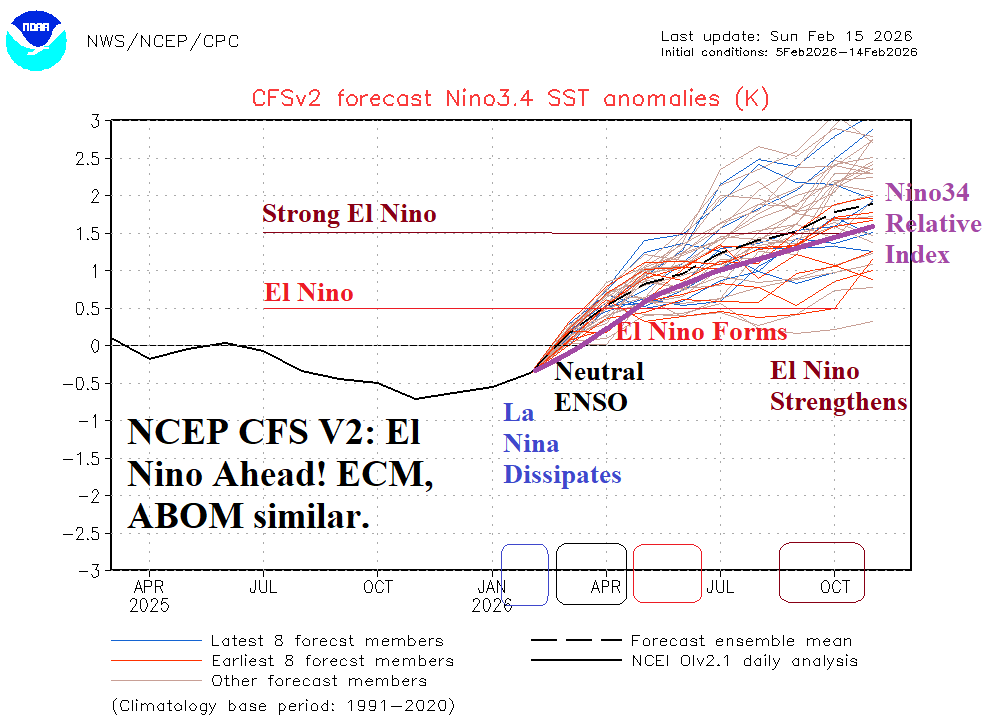
Fig. 3: The dynamic models forecast of Nino34 SSTA, including NCEP CFS V2, remain aggressive developing a mid-year El Nino which intensifies later this year. Note the (new) relative Nino34 SSTA index is not quite as strong because long-term oceanic warming is removed.
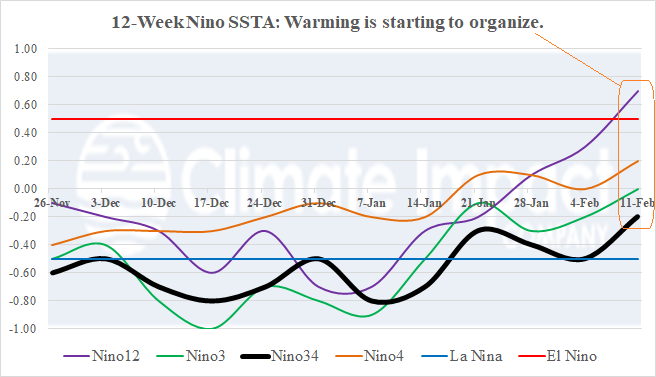
Fig. 4: The weekly SSTA observations reveal that warming is beginning to organize and oceanic La Nina has clearly ended.