
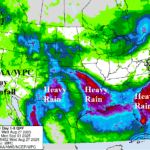
Heavy Rains Shift Across Southern U.S.
08/27/2025, 5:33 am EDT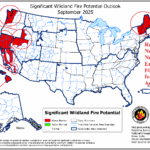
NOAA September Wildland Fires: Rare New England Risk, Widespread California Risk, and All Hawaii Risk
09/03/2025, 1:28 pm EDT
Climate Impact Company Weekly ENSO Climate Diagnostics
Issued: Tuesday September 2, 2025
Highlight: Slight cooling trend toward La Nina continues.
Discussion: The Nino SSTA regions continue to slowly cool toward the La Nina threshold (Fig. 1). The Nino34 SSTA is very close to the La Nina threshold at -0.4C for a second consecutive week. The Nino3 region, located in the eastern equatorial Pacific, has shifted to a La Nina-like -0.6C. In the subsurface, the coolest anomalies are beneath the Nino3 region. Overall, the equatorial Pacific subsurface cooled (again) during August (Fig. 2) with marginally cool anomalies basin wide as of Sep. 1st.
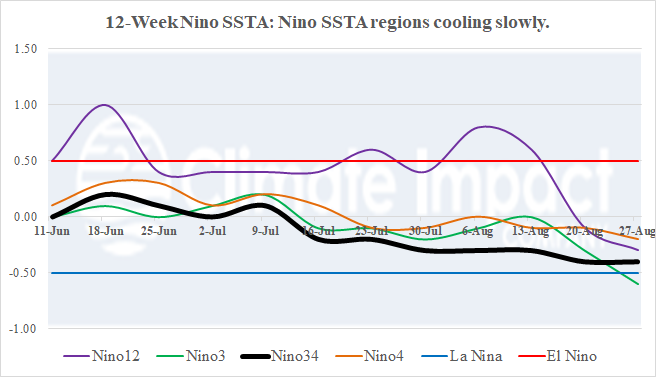
Fig. 1: The 12-week monitor of the Nino SSTA regions indicates a slightly cooler trend.
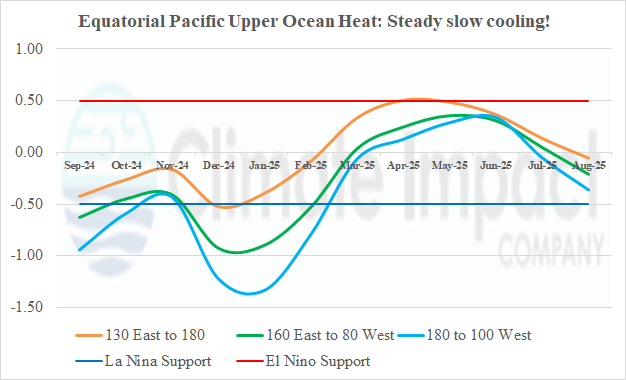
Fig. 2: Equatorial Pacific Ocean upper-ocean temperature anomalies.