News
06/28/2025, 3:52 pm EDT
A graph showing negative phase AI-generated content may be incorrect.

Strong -GLAAM Stalls Weather Patterns, Continues in July

Global atmospheric angular momentum (GLAAM) is currently sharply negative. Negative GLAAM patterns are frequently represented by a slower jet stream, tendency for semi-permanent trough and ridge patterns (caused by the slow down), and responsible for persistent and sometimes harsh weather patterns. The 15-day forecast by all operational models indicates -GLAAM eases but does not end while the CFS V2 6-week forecast carries -GLAAM through July.
06/24/2025, 5:58 am EDT
A map of the world AI-generated content may be incorrect.

Deep Tropics Not Likely to Activate Until Around August 1st

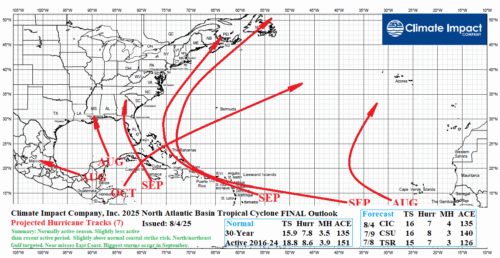
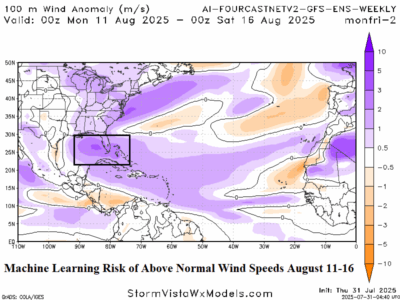
ECMM "weeklies" maintain a much drier than normal precipitation regime across the deep tropics through late July. Implied is lack of any tropical cyclone activity through July emerging in the tropical North Atlantic basin. Areas to watch for possible development is the northern Gulf of Mexico and Bahamas. However, there is the possibility that tropical cyclone season may wait until August 1st for onset.
06/22/2025, 9:40 am EDT
A map of the world AI-generated content may be incorrect.

NAWH Pattern Strongest Since 2018, Fuels Mid-summer East N.A./Europe Heat (and Dryness)

Formation of the North Atlantic warm hole (NAWH), the strongest since 2018 fuels an upper air pattern promoting hot and potentially dry high pressure ridge areas across the East U.S. and much of Europe for mid-summer. Dangerously hot weather is developing and the risk of continuation during July has increased significantly.
06/19/2025, 9:36 am EDT
A map of the united states AI-generated content may be incorrect.

NOAA/CPC Long-lead Climate Forecast JUL/AUG/SEP 2025: Dry/Hot West; Wet East!

Earlier this week, Climate Impact Company updated the month 1-4 ahead outlook. Indicated was a wetter trend in the East/Southeast and drier/hotter trend in the West. Today's NOAA/CPC matches that sentiment. The East/Southeast should be prepared for flooding rains and increased risk of coastal tropical cyclone risk while the Northwest/West U.S. is hot and dry and headed for a hostile fire season later this summer.