News
12/31/2025, 9:58 am EST
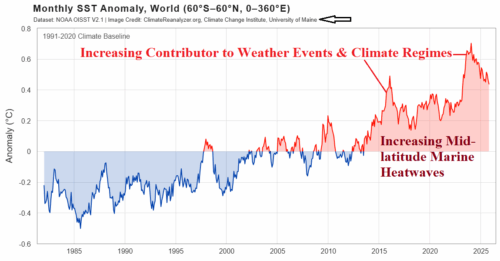
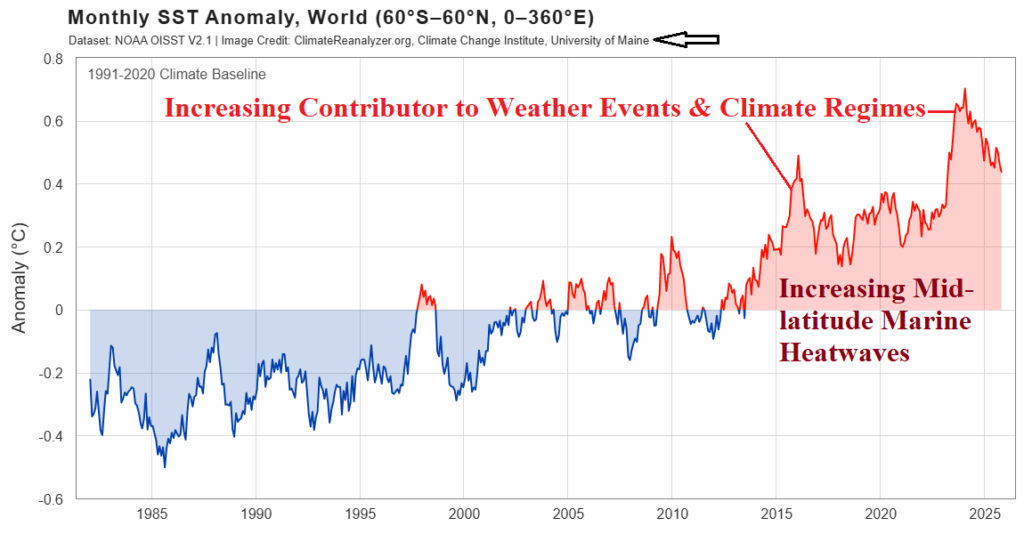
The Warming Oceans Increasingly Contributing to High Impact Weather/Climate in 2025

Globally, 2025 projects as the third warmest on record (DEC-25 data not yet available as of this writing). As of December 1st, the U.S. has observed the fifth warmest year in the 131-year period of record. A significant contributor to the warmer climate is the influence of increasing ocean temperature, most notable in the middle latitudes accelerated by the presence of marine heatwaves (MHW).
12/31/2025, 8:29 am EST

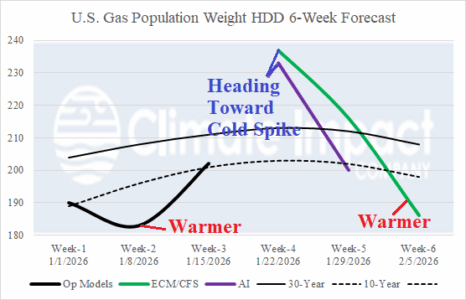
Busy Period Ahead: Wides Swings in U.S. HDD Forecasts!

Next week is trending warmer except GFS ENS which maintains a colder pattern. Forecast models are disagreeable for January 9-15 although majority of solutions are trending colder. The week-4 forecast is prohibitively cold according to CFS/ECM and AI. CFS/ECM trend toward a thaw by early February.
12/31/2025, 8:25 am EST

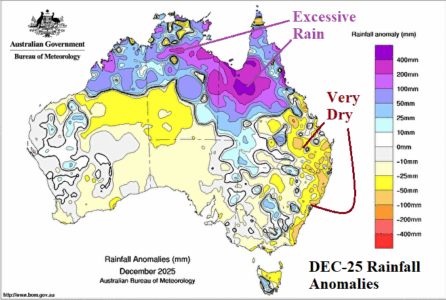
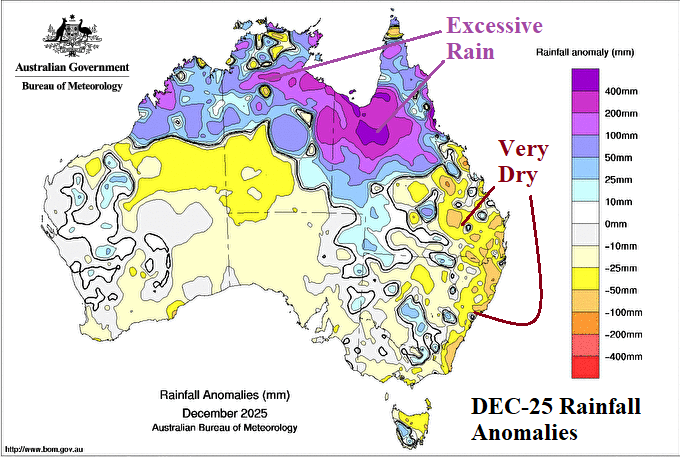
Explaining the Extremely Wet Northern Australia DEC-25 Climate

Prohibitive rainfall was observed across Northern Australia during December 2025 including departures from normal >400 MM (~16 in.) in northwest Queensland. Conversely, despite La Nina climate, the East Coast was extremely dry. The heavy convection driving the wet climate across Northern Australia caused previously warm SSTA to cool significantly, especially off the East Coast where 30-day changes exceed 4C.
12/30/2025, 6:02 am EST

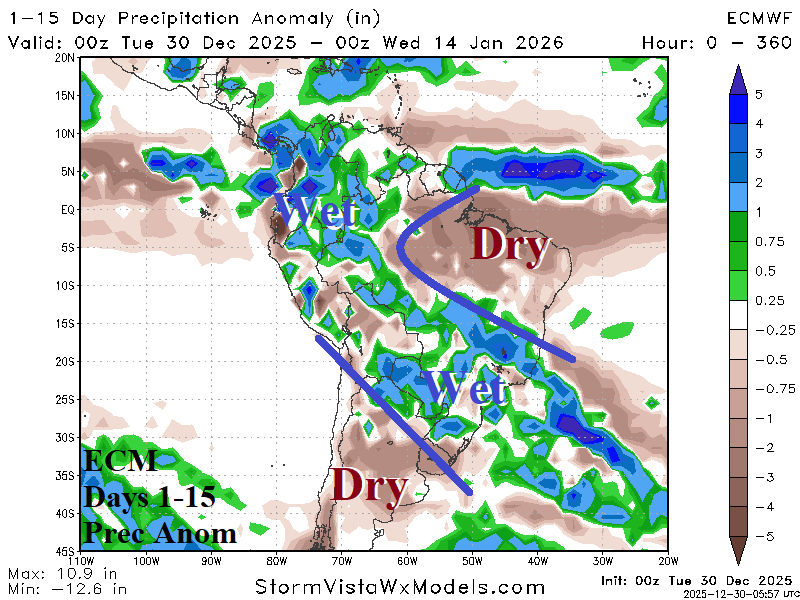
Arc of Heavy Rain in South America, Northern Australia Excessive Rainfall, and Losing the Western Canada Cold Air Source Region

Never a shortage of dramatic weather events as 2025 comes to a close. A lingering negative phase of the Antarctic oscillation (-AAO) causes a mid-latitude trough east of Argentina that extends northwestward to soak Brazil into the New Year. Meanwhile, excessive rainfall across Northern Australia will continue. The arctic air source region across Western Canada during December is likely to dissipate in early January due to a cold stratosphere.