News
09/09/2025, 4:57 am EDT
A map of the world with numbers and a map of the world AI-generated content may be incorrect.

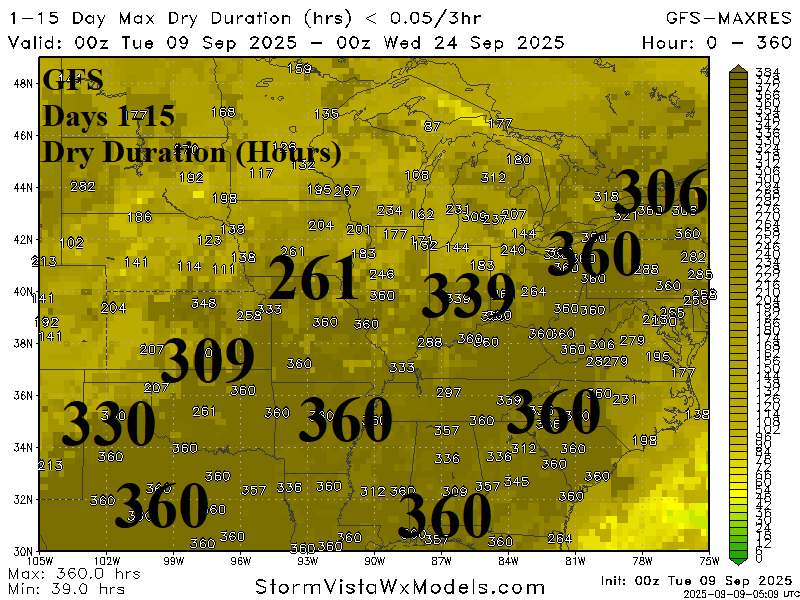
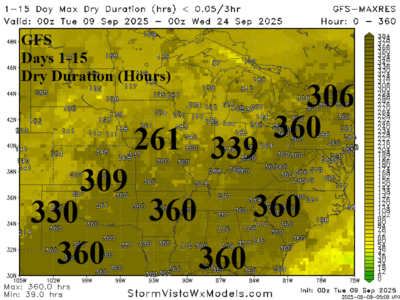
Long Duration Dryness Ohio Valley to Southeast U.S. Closes Calendar Summer

Late calendar summer dryness is excessive across the East/South U.S. as GFS indicates 360 consecutive hours of no rain from Central Texas to Western Pennsylvania and into the Southeast U.S. Consequently, drought development during late meteorological summer in the Ohio Valley is likely to expand southward.
09/08/2025, 5:48 am EDT
A map of the earth with green and orange colors AI-generated content may be incorrect.

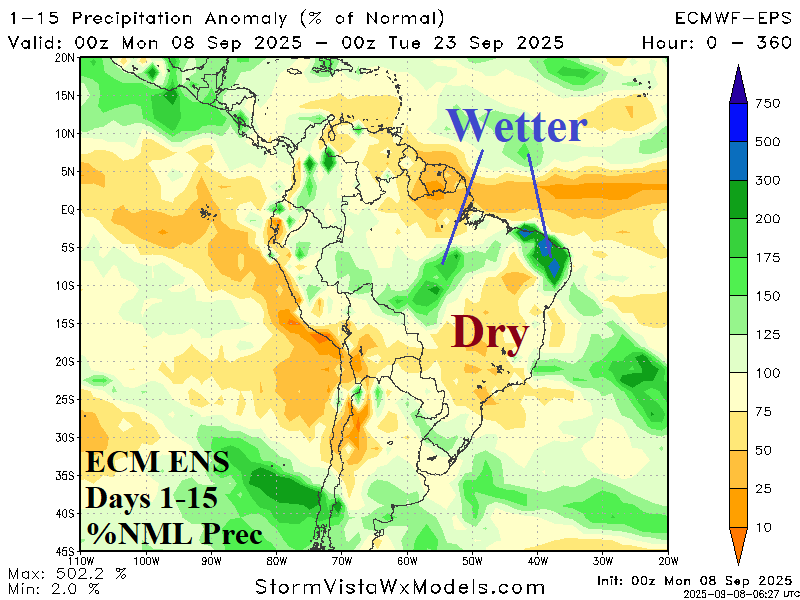
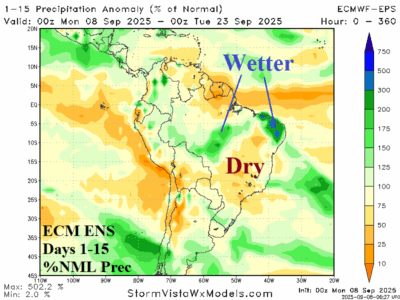
Extended-range Brazil Wet Weather Risk Easing Back

Extended-range forecasts offered beneficial rainfall to the Brazil drought area dating back to September 1st. How are these forecasts tracking? Generally, the wet risk remains although less impactful on the core of the drought area in East-central Brazil. ECM ENS has developing nearby rains during the medium range but leaves East Brazil dry in the latest 15-day forecast. GFS is trending somewhat drier. In the 16-30-day period, ECM is considerably less aggressive forecast wet weather in Brazil biasing the wet anomaly farther to the north.
09/08/2025, 5:44 am EDT
A map of the world AI-generated content may be incorrect.

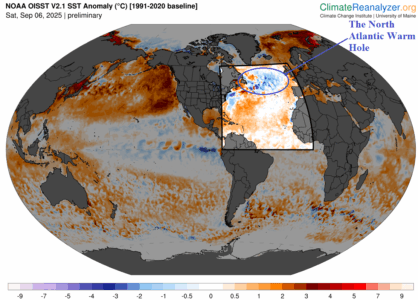
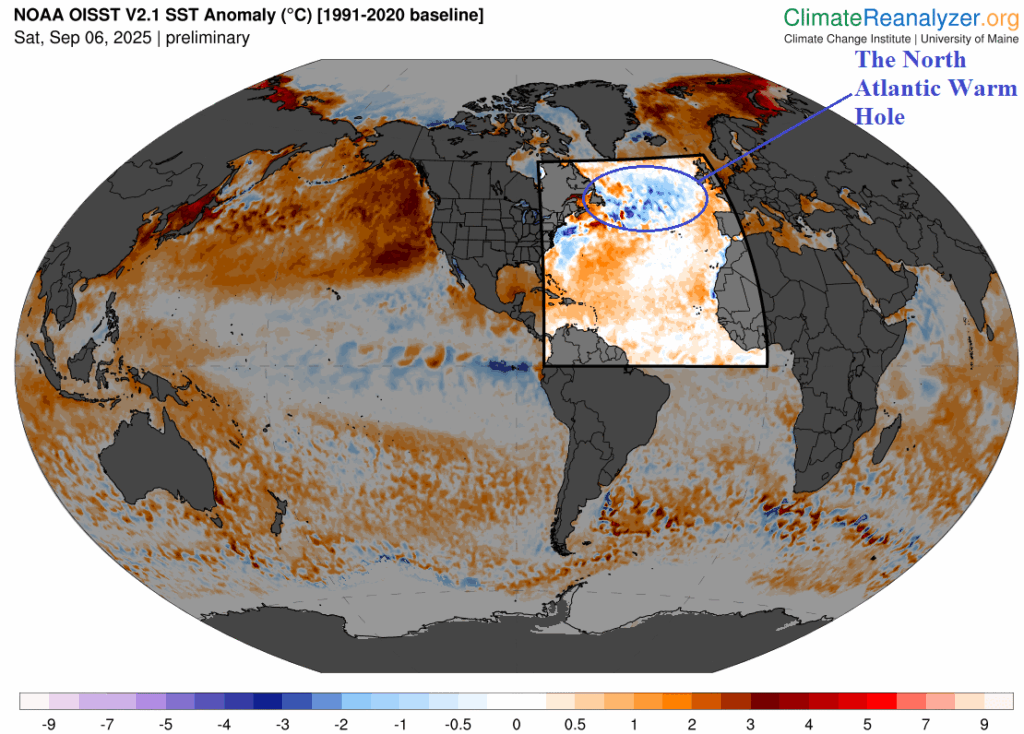
Is Upper Air Pattern Associated NAWH Inhibiting TC Season?

Vividly present is the NAWH pattern south of Greenland. Aloft, the cooler water is linked to a summer of 2025 upper trough. The 15-day forecast maintains this pattern. The upper trough forces the subtropical ridge farther south. The ridge is forcing dry air into the subtropics/northern tropics inhibiting tropical cyclone development.
09/07/2025, 12:04 pm EDT
A map of the weather AI-generated content may be incorrect.

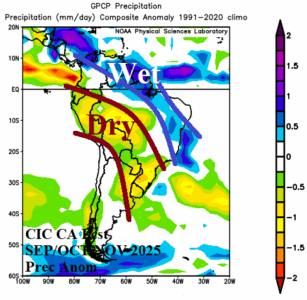
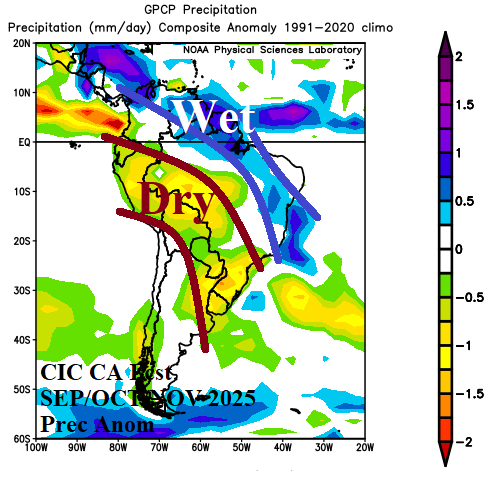
South America and Australia Spring 2025 Outlook Review

In South America, a drier than normal projection is indicated with average confidence stretching from Peru to Bolivia to Northeast Argentina and Southeast Brazil. A wet regime is likely across northern continent to Northeast Brazil. Anomalous heat builds across northern continent to Central Brazil and across North Chile. The outlooks are based on an analog whereas La Nina and negative Indian Ocean dipole (-IOD) are present during spring coupled with large marine heat waves east of Argentina and east of Australia and New Zealand.