03/13/2026, 5:31 am EDT

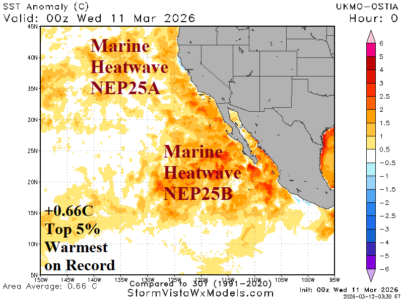
Are Marine Heatwaves Correlated to the Upper Air Pattern Causing Sensible Weather?

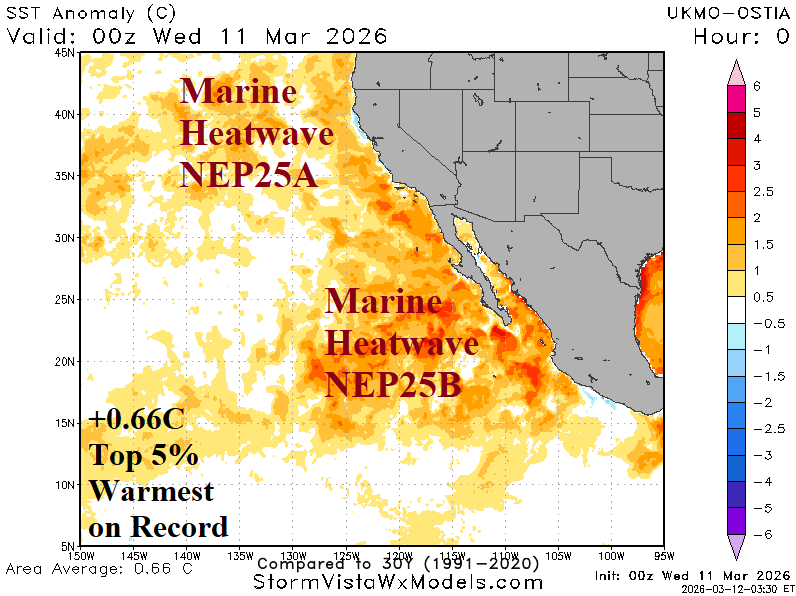
Two marine heatwaves (MHW) are located off the U.S. and Baja California West Coast. MHW NEP25A reached record aerial coverage last autumn although weaker now while MHW NEP25B formed late last year, persisted all winter, and strengthened. Meanwhile, the Gulf of Mexico SSTA is +1.35C ranking in the top 1% warmest (since 1982).
03/13/2026, 5:10 am EDT

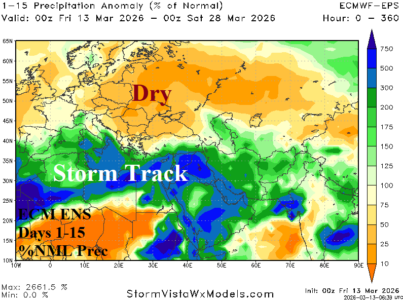
Europe Dry-to-Drought Risk Expansion; Middle East Shifts Stormy

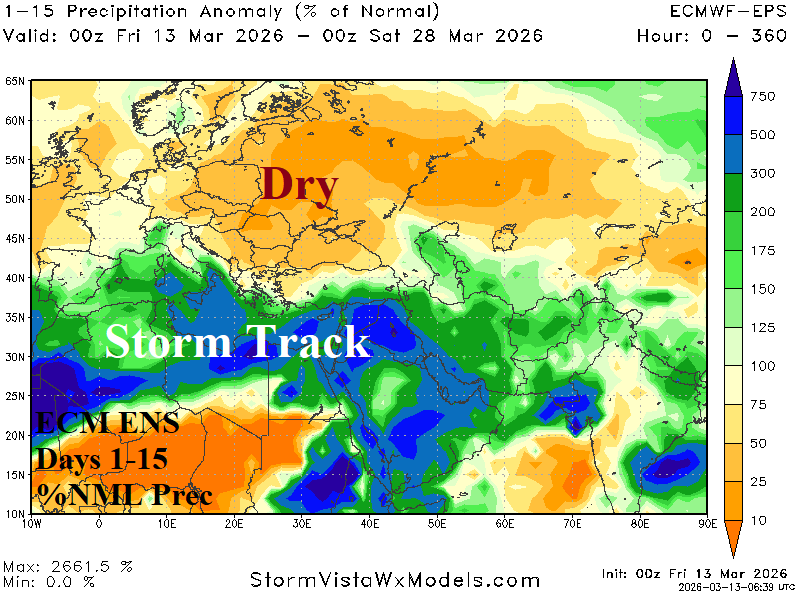
The ECM ENS 15-day percent of normal rainfall forecast indicates an evolving storm track stretching across the Mediterranean Sea and reaching the Middle East. The wet weather pattern which also affects North Africa is supported by an elongated upper-level low-pressure trough.
03/12/2026, 5:33 am EDT

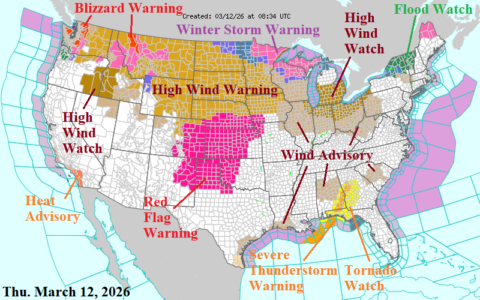
High Wind Events Northern U.S. Through Early Next Week

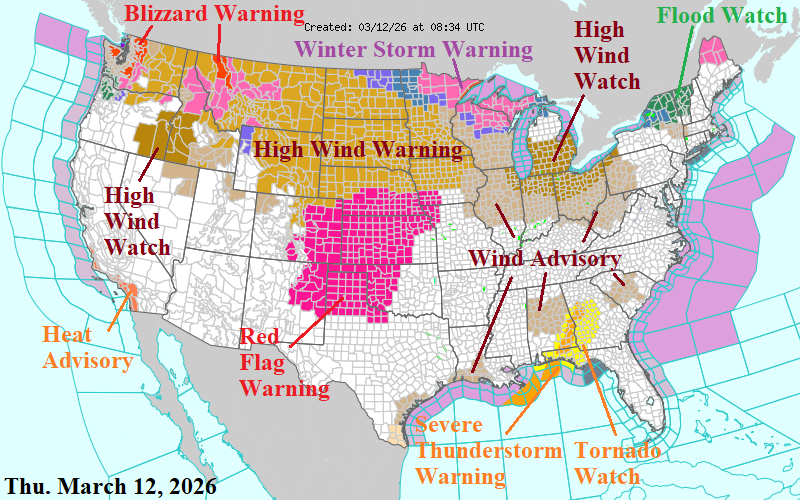
A major high wind event extends from the Northern Rockies to the Midwest U.S. today and tonight featuring wind gusts above hurricane force in the northwest Great Plains today, near 70 mph Midwest tonight, and gusting 55-65 mph in the Ohio Valley midday tomorrow. A second storm brings wind gusts to 45-60 mph Sunday night across the Midwest and Ohio Valley shifting across the Northeast Corridor with severe storms on Monday.
03/11/2026, 9:51 am EDT

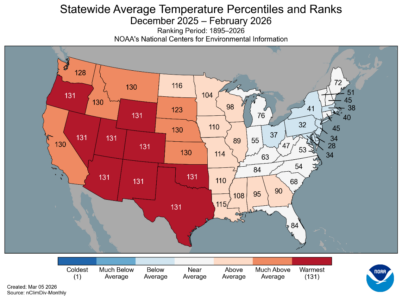
Winter 2025-26 State Temperature/Precipitation Rankings. Record Warm West/South; Scarry Dry Mid-south U.S.

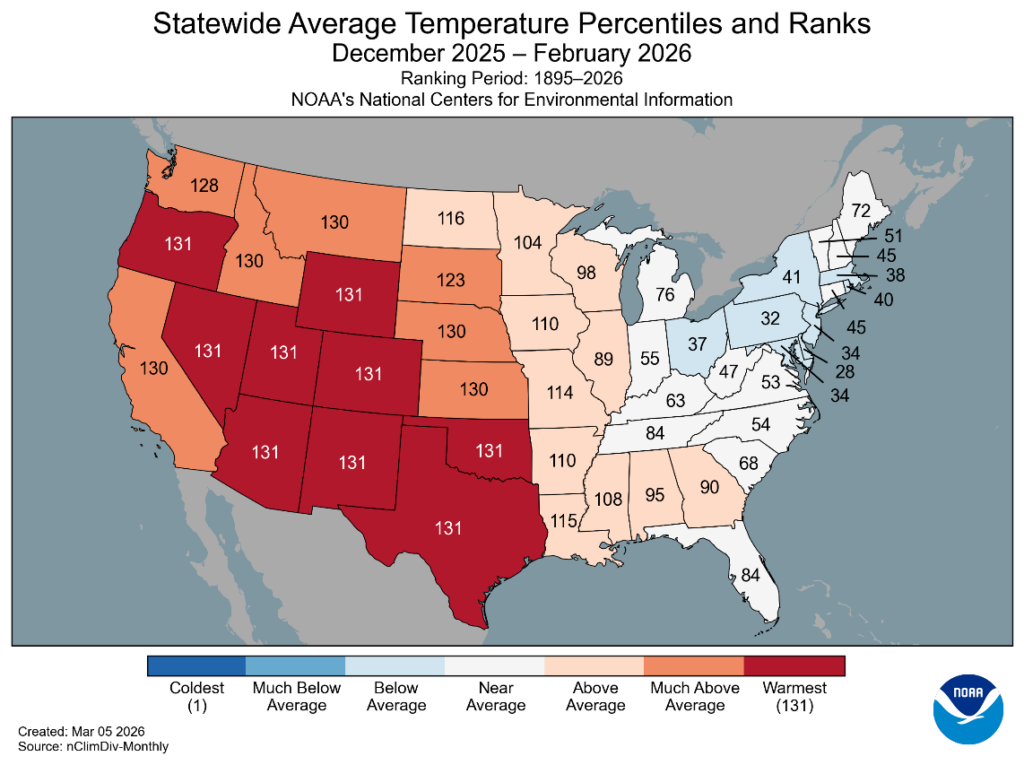
U.S. meteorological winter 2025-26 was the warmest on record for 9 western U.S. states from Oregon to Texas. The western half of the U.S. finished MUCH ABOVE or RECORD warm. The only colder than normal states were Ohio, Pennsylvania, Maryland, Delaware, New Jersey, New York, and Massachusetts. Delaware was the coldest state (historically). U.S. county temperature rankings reveal much of the Southwest U.S. including the southern half of California were record warm during 2025-26 meteorological winter. Much of the Northeast U.S. Corridor was marginally colder than normal during the winter season.
03/11/2026, 5:37 am EDT

-PNA Pattern Rules U.S. Weather Pattern Next 15 Days

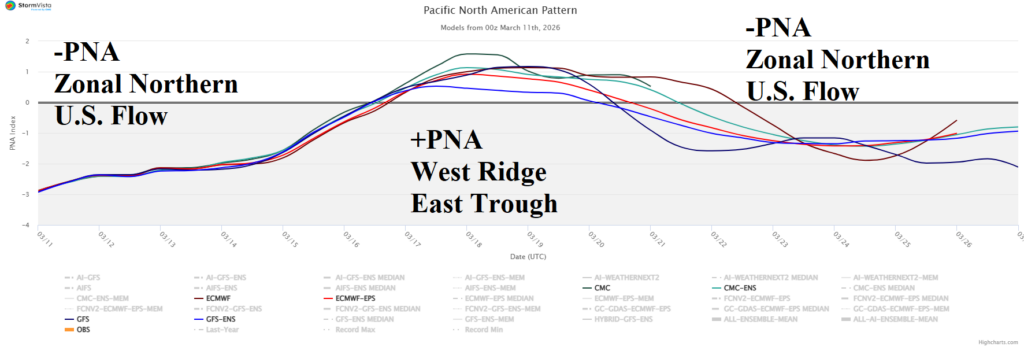
The pick of the day climate signal is the Pacific North America (PNA) regime. The 15-day outlook reveals ongoing negative phase into the weekend helping to fuel a Pineapple Express into Washington, shift to positive phase next week causing an amplified upper ridge to roast the Southwest U.S., and return to negative phase sustaining the cool/stormy North and warm/dry South split pattern.
03/11/2026, 4:44 am EDT

Dry Concerns West/Southwest Great Plains Emerging

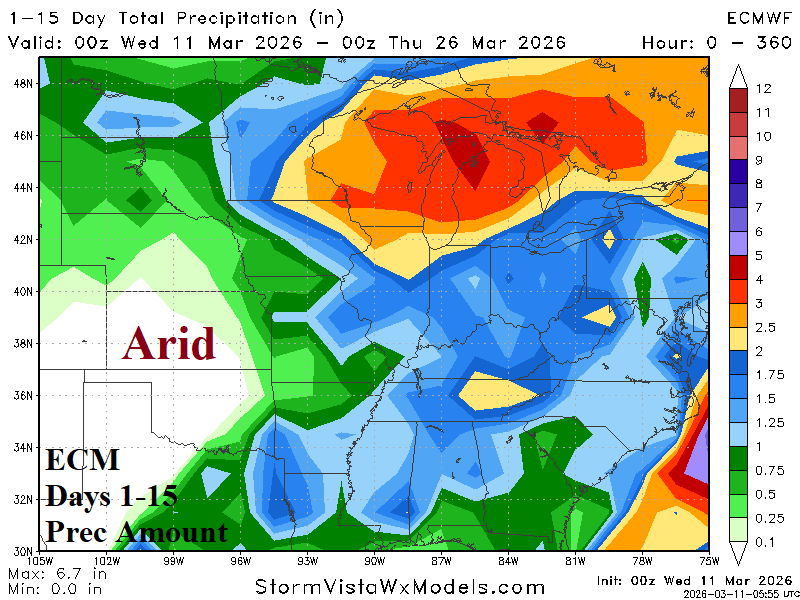
A combination of zonal flow in the 1-5-day and 11-15-day period and titanic Southwest U.S. high pressure ridging in the 6-10-day period leaves the west and southwest Great Plains without rain and increasingly very warm in the latest ECM 15-day forecast. Texas to Oklahoma shift wetter in the 16-30-day period while the western Great Plains stay dry and very warm. U.S. hard red winter wheat becomes a hot spot for drought development.
03/09/2026, 5:02 pm EDT

12Z Models Become Convincing on Significant Cold East-central Next Week (and Hot Weather Southwest)

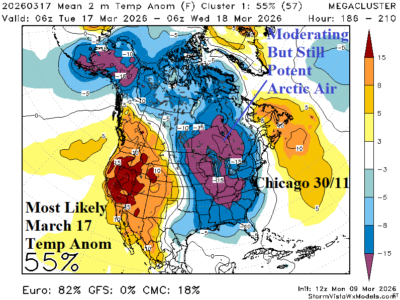
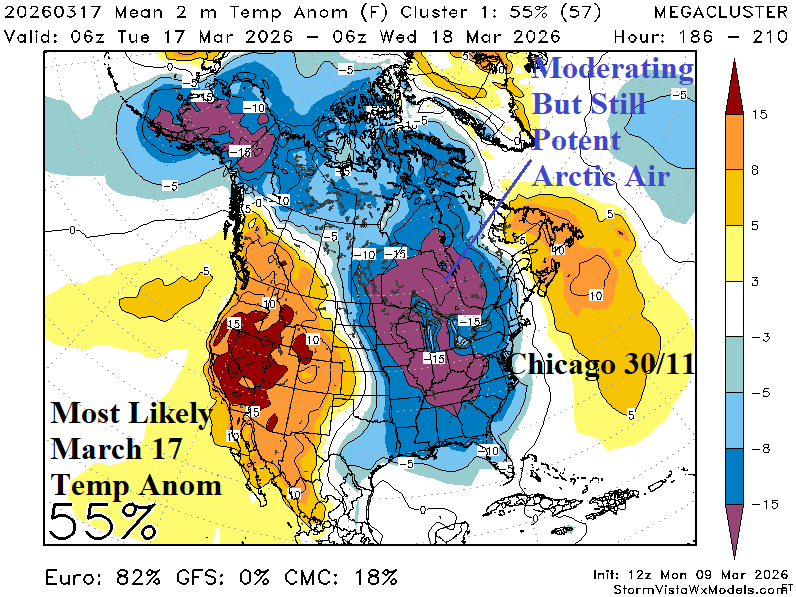
At midday, most forecast models agree that cross polar arctic air moves into North America and gains (anomalous) intensity flowing southward into the North-central/East-central U.S. March 16-17. At that time a small but potent polar vortex enhances the cold. This event may be related to the breakdown of a lengthy stratospheric warming event in the polar region.
03/09/2026, 2:04 pm EDT

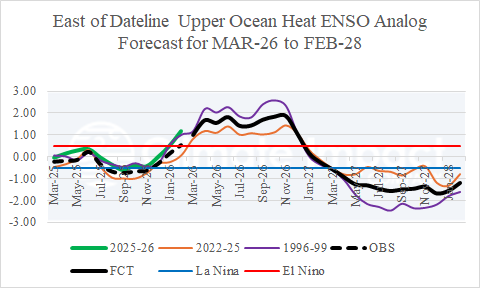
Big El Nino in 2026 Possible Followed by Returning La Nina in 2027

The Climate Impact Company MAR-26 to FEB-28 ENSO phase forecast is based on a constructed analog utilizing upper ocean heat anomalies east of the Dateline, Nino34 SSTA, and southern oscillation index. The upper ocean heat in the eastern equatorial East Pacific became immense during February and is the leading indicator of El Nino risk ahead.
03/09/2026, 5:27 am EDT

-PNA/+NAO Influences on U.S. Climate

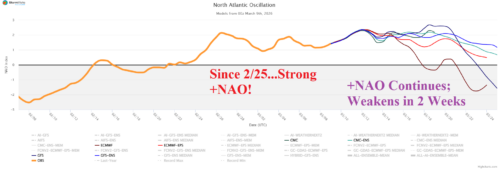
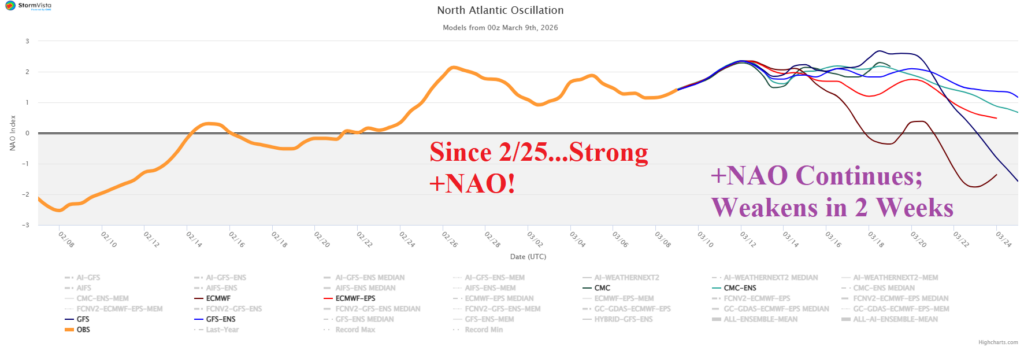
Vigorous positive phase of the North Atlantic oscillation is the lead climate signal supporting the warm pattern across the U.S. during the past 14 days. The negative phase of the Pacific North America (-PNA) has dominated in recent weeks although under-performing as a wet/snowy weather maker in the Northwest/West U.S. while the attendant dry signal for the Southeast is strong.
03/06/2026, 3:12 pm EST

Mega-cluster Ensemble “Most Likely” Forecast Indicates Cold Spike East March 18th

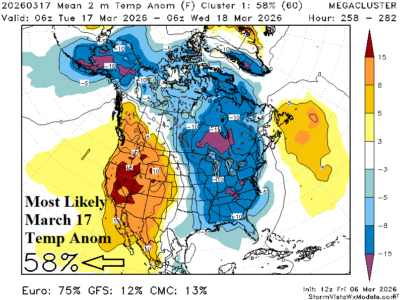
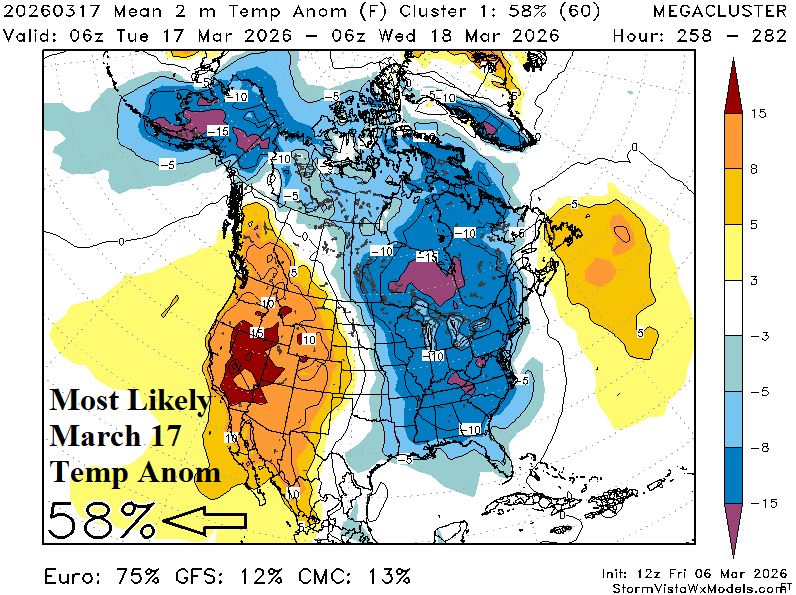
At midday, 7 of 14 forecasts (combining dynamic and AI models) are cold in the East during the 11-15-day period. ECM OP and Weather Next V2 appear coldest while GFS OP is warmest. Support from climate signals to substantiate the cold forecast is poor. However, the mega-cluster ensemble “most likely” March 17th scenario is heavily biased by ECM which supports vigorous chill in the East and equally impressive warmth over Nevada. ECM, GFS, and CMC are near equally shared to generate a “caveat” forecast for March 18 which is very cold across the eastern half of the U.S.
03/06/2026, 6:01 am EST

AIFS ENS and ECM ENS Remain Top North America Medium-range Forecast Models

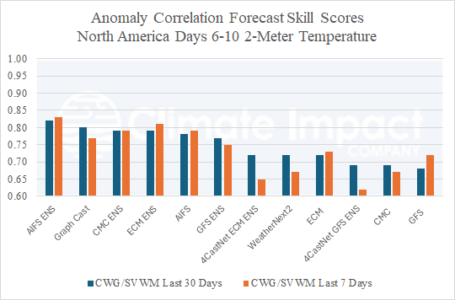
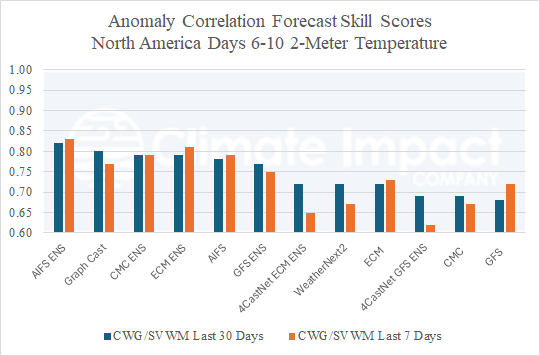
A check on skill scores for North America medium range forecasts as meteorological winter closes. Using anomaly correlation provided by CWG/SVMW, the 6-10-day skill scores indicate AIFS ENS remains (routinely) the top model. ECM ENS typically ranks second to AIFS ENS and collectively, using both 30-day and 7-day skill scores, that ranking remains.
03/05/2026, 5:39 am EST

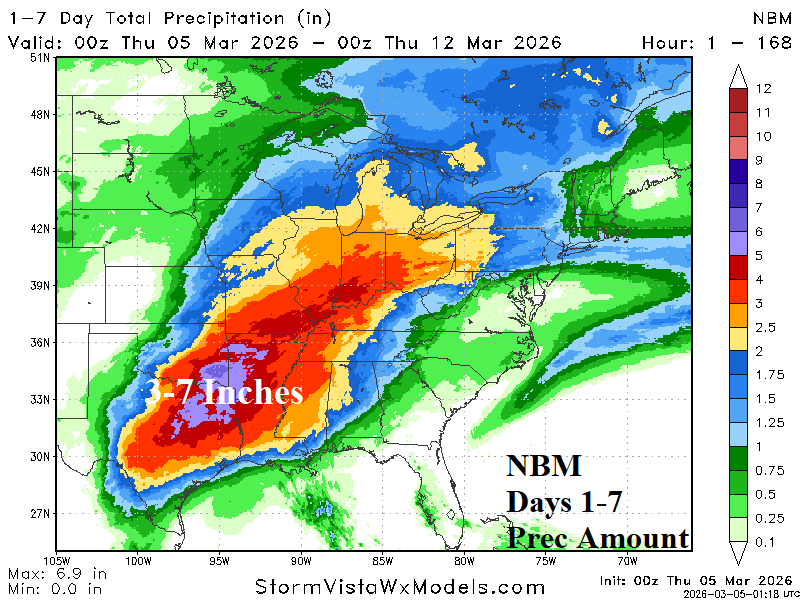
U.S. Severe Storms/Flooding Rainfall

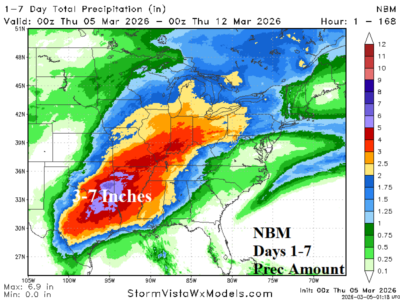
The severe weather pattern continues today and into the weekend. Severe thunderstorms including a tornado risk reform across the southern Great Plains later today and tonight. A widening area of severe storms and tornado risk stretch across the eastern Great Plains and include Texas to the Midwest States tomorrow.