News
02/16/2026, 11:52 am EST
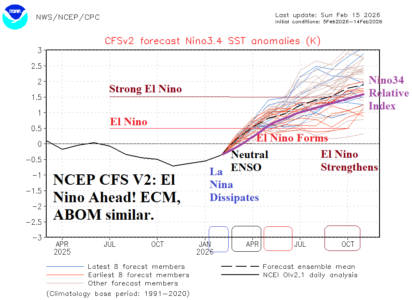
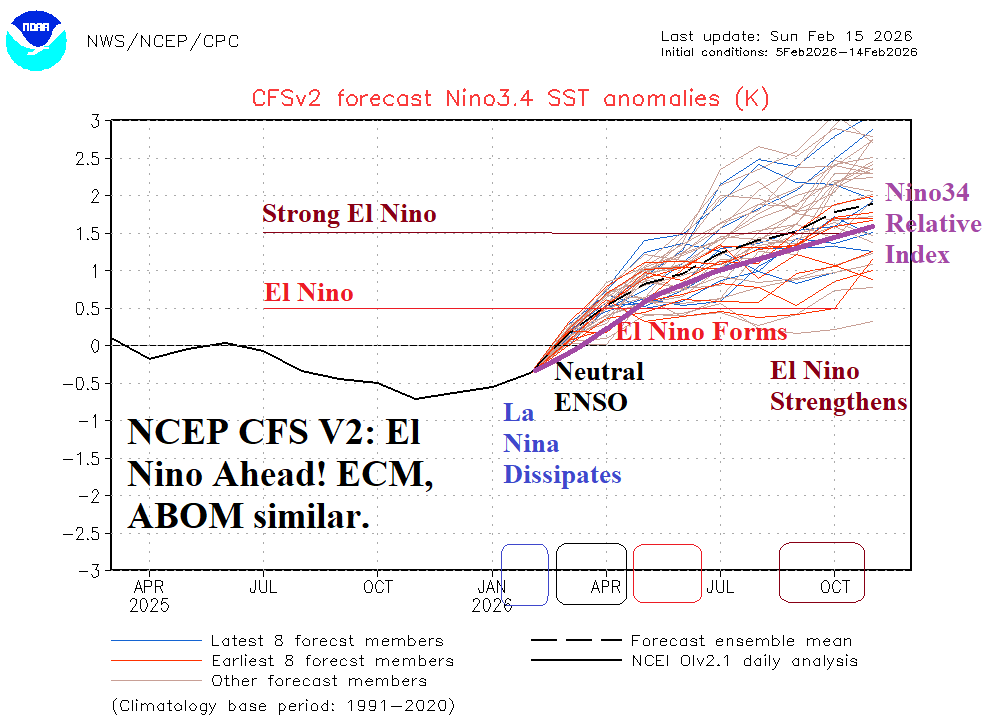
Oceanic La Nina Ends, Subsurface Warming Validates El Nino Forecasts for Mid-year. But! Atmosphere Not Responding Yet.

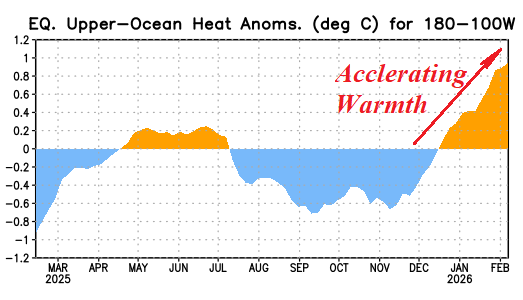
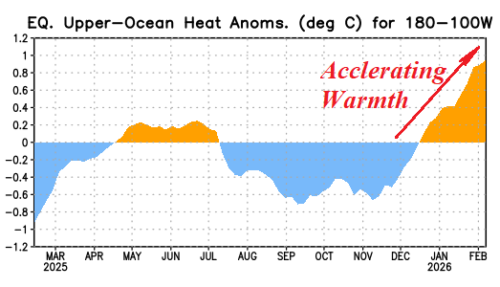
The subsurface eastern equatorial Pacific continues too steadily warm. A Kelvin Wave moving east across the Dateline during early December reached waters off northwest South America recently while a second Kelvin Wave emerged near and east of the Dateline and is drifting eastward. The atmosphere remains slow to respond as southern oscillation index (SOI) stays positive and 15-day forecasts maintain the positive phase.
02/13/2026, 5:55 am EST

Support To Keep U.S. Warm Increasing; Comments on New NOAA RONI Index

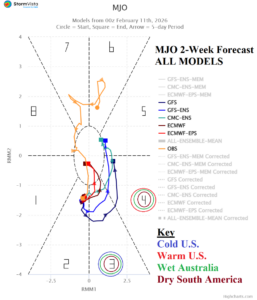
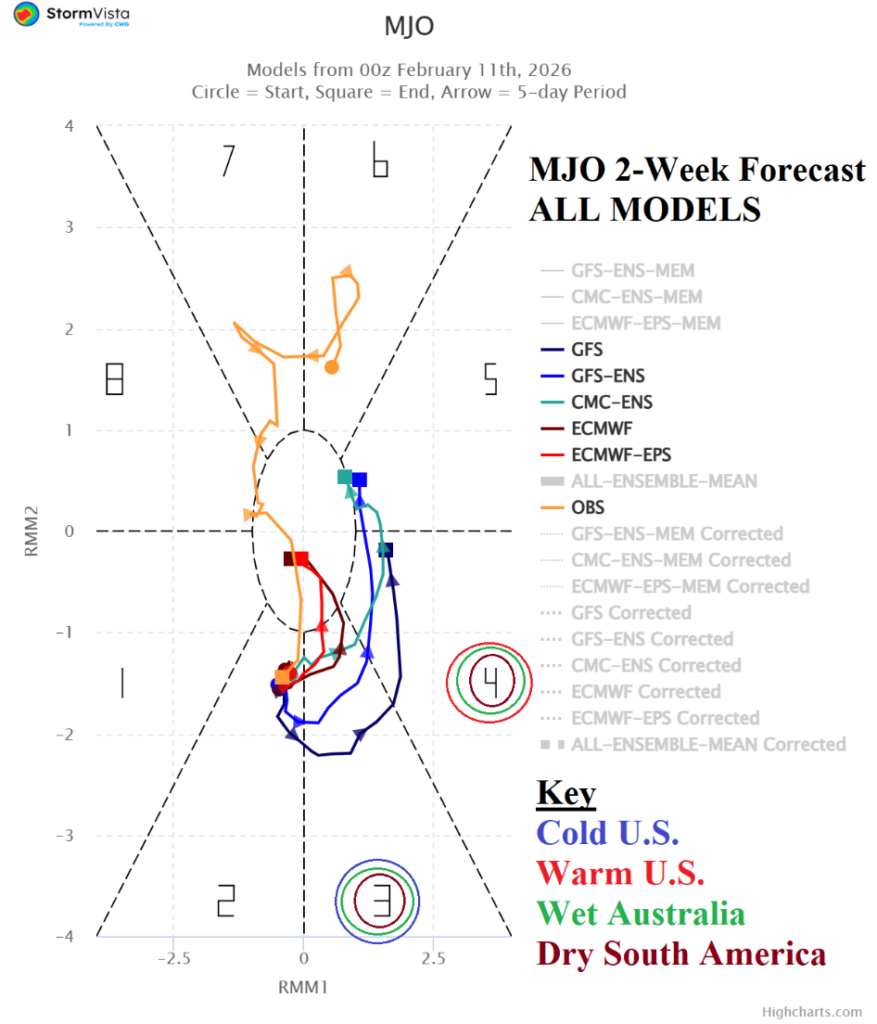
GFS indicates a progressive MJO toward the Dateline in the 8-14/11-15-day period. If so, ongoing U.S. warmth continues and could become stronger. Yesterday, NOAA introduced the Relative Operational Nino Index (RONI) which provides a new Nino34 index accounting for the historical general warming of the global tropics. But! Does this new index effectively identify ENSO pattern change and intensity?
02/12/2026, 9:29 am EST

Based On 30-Day/7-Day Rainfall Observations, Least Wet CMC ENS Preferred Forecasting Argentina/Brazil Rainfall

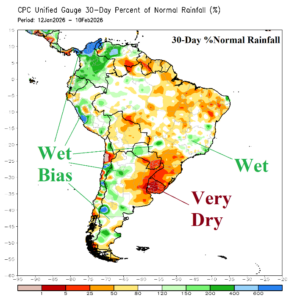
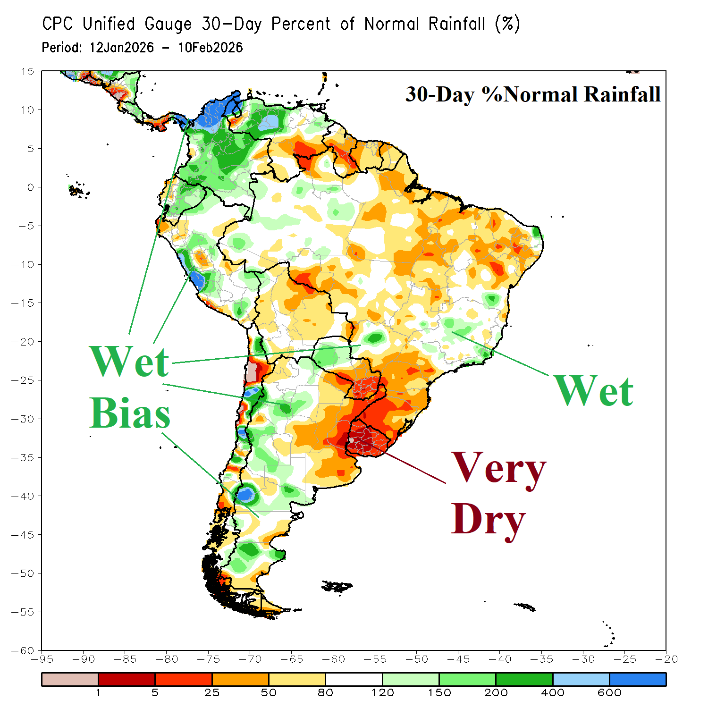
The 30-day percent of normal rainfall observations identify a steady very dry signature centered on Uruguay and vicinity with a patchy wet bias across west and south portions of Argentina plus East Brazil. The 7-day observations are drier except wetter Central Argentina, Northeast Brazil, and parts of Brazil due east of Paraguay.
02/11/2026, 12:54 pm EST

MJO Strengthens, Influences Australia/South America Climate

The Madden Julian oscillation (MJO) has been active and a key contributor to climate patterns of the past several months. The MJO trend continues through mid-to-late February. Models indicate a strengthening phase_3 (East Indian Ocean/West Maritime Continent) over the next 10 days shifting east to phase_4 (Eastern Maritime Continent) in the 11-15-day period.